
'%20fill='%23a9976d'/%3e%3cpath%20id='Path_251'%20data-name='Path%20251'%20d='M8,35a1,1,0,0,1,1-1H23a1,1,0,0,1,0,2H9A1,1,0,0,1,8,35Z'%20transform='translate(-8%20-22)'%20fill='%23a9976d'/%3e%3cpath%20id='Path_252'%20data-name='Path%20252'%20d='M9,22a1,1,0,0,0,0,2h8a1,1,0,0,0,0-2Z'%20transform='translate(-8%20-16)'%20fill='%23a9976d'/%3e%3c/svg%3e)
'%20fill='%23a9976d'/%3e%3c/g%3e%3c/svg%3e)
麻糬─中國?日本?客家?身世成謎
主題探索
文化美食
分享
'%3e%3cg%20id='Ellipse_27'%20data-name='Ellipse%2027'%20transform='translate(813%20250)'%20fill='none'%20stroke='%23ccac89'%20stroke-width='1'%3e%3ccircle%20cx='16'%20cy='16'%20r='16'%20stroke='none'/%3e%3ccircle%20cx='16'%20cy='16'%20r='15.5'%20fill='none'/%3e%3c/g%3e%3cg%20id='facebook'%20transform='translate(824.105%20258.296)'%3e%3cpath%20id='Path_243'%20data-name='Path%20243'%20d='M8.894.111V2.556H7.441a1.361,1.361,0,0,0-1.074.333,1.534,1.534,0,0,0-.278,1v1.75H8.8L8.441,8.38H6.089v7.028H3.255V8.38H.894V5.639H3.255V3.62A3.582,3.582,0,0,1,4.218.949,3.5,3.5,0,0,1,6.783,0,15.317,15.317,0,0,1,8.894.111Z'%20transform='translate(0%200)'%20fill='%23ccac89'/%3e%3c/g%3e%3c/g%3e%3c/svg%3e)

'%3e%3cg%20id='Ellipse_29'%20data-name='Ellipse%2029'%20transform='translate(901%20250)'%20fill='none'%20stroke='%23ccac89'%20stroke-width='1'%3e%3ccircle%20cx='16'%20cy='16'%20r='16'%20stroke='none'/%3e%3ccircle%20cx='16'%20cy='16'%20r='15.5'%20fill='none'/%3e%3c/g%3e%3cg%20id='link-45deg'%20transform='translate(902.607%20253.105)'%3e%3cg%20id='Group_479'%20data-name='Group%20479'%20transform='translate(7.393%205.896)'%3e%3cpath%20id='Path_241'%20data-name='Path%20241'%20d='M10.246,17.821,8.507,19.56a3.8,3.8,0,0,0,5.378,5.378L16.2,22.62a3.8,3.8,0,0,0-1.05-6.12l-.743.743a1.27,1.27,0,0,0-.2.252,2.535,2.535,0,0,1,1.091,4.23L12.99,24.042A2.536,2.536,0,0,1,9.4,20.455l1.005-1a5.093,5.093,0,0,1-.162-1.631Z'%20transform='translate(-7.393%20-12.02)'%20fill='%23ccac89'/%3e%3cpath%20id='Path_242'%20data-name='Path%20242'%20d='M18.236,9.327a3.8,3.8,0,0,0,1.05,6.12l.982-.984a2.535,2.535,0,0,1-1.136-4.241L21.448,7.9a2.536,2.536,0,1,1,3.587,3.587l-1.005,1a5.1,5.1,0,0,1,.162,1.631l1.739-1.739A3.8,3.8,0,1,0,20.553,7.01Z'%20transform='translate(-13.011%20-5.896)'%20fill='%23ccac89'/%3e%3c/g%3e%3c/g%3e%3c/g%3e%3c/svg%3e)
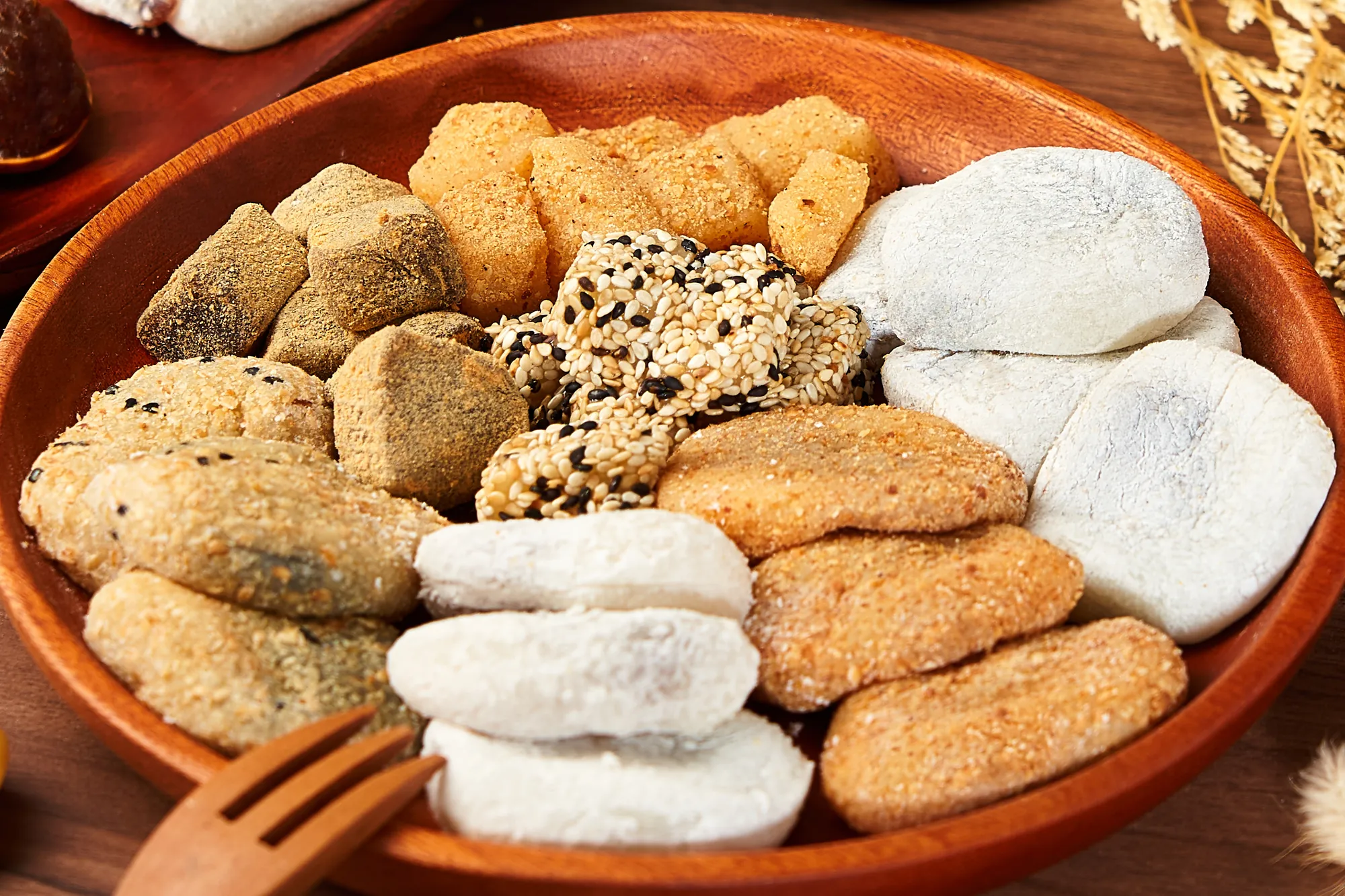
麻糬是由糯米製成的小甜食,流行於台灣、日本、韓國、大陸華南地區,名稱各異。台灣常見的麻糬,具體反映多元文化對台灣飲食的影響。
◤文.圖/看見台灣基金會編輯群
為
什麼台灣會稱呼「麻糬」?其實沒有史料可以定論,只能說,不排除是閩裔台灣人受到客家麻糬和日本和菓子的影響;而日本和菓子可能是由中國傳入的。
麻糬的發音和日本語Mochi相近(本意為餅,譯名和菓子,經常有餡料,較大又有餡料的稱「大福」);客語發音為「粢粑」(無餡料),福建閩南語漢字為「麻糍」(無餡料)。
▋客家人逢年過節必吃麻糬
由於本身僅具有淡淡的糯米香氣,故經常包餡於其中或沾黏粉衣食用以增添風味。甜鹹皆宜,較常見者有以花生糖粉或芝麻糖粉作為餡料或粉衣,和以紅豆或綠豆等作為餡料者。
過往以勞動為主的台灣農業社會中,特別是客家族群,吃來易有飽足感的麻糬便是每逢節日、喜慶招待客人的點心,頗有族群儀式感。
原住民族中之阿美族亦有以小米製成的麻糬,稱為「杜侖(turon)」,現在已成為花蓮知名伴手禮。
近年台灣食品商製作美味彈牙的台灣麻糬,外銷海外超過50多個國家。產品品項繁多,加入各式台灣水果口味、甜食內餡等麻糬都可見到,還有限定的珍珠奶茶、古坑咖啡口味!
探索更多
芭樂─國民水果,國宴、米其林都現蹤
芭樂,台灣國民水果代表之一,原產於熱帶美洲,地理大發現時期引入台灣。台灣四季皆產芭樂,夜市、街邊到處有賣,主要產區為高雄大社、燕巢及彰化社頭。
酪梨─綽號「幸福果」,台灣版本更適合做酪梨牛奶
酪梨因為形狀像梨、果肉吃起來像乳酪,在台灣稱之為「酪梨」。早期延續日治時代以「鱷梨」稱之,或是取其「窮人奶油」的美稱,稱之為「油梨」。
貢丸─發音來自台語的「打」
貢丸或作「摃丸」,為以豬肉作為原料之加工食品,台灣各處皆可見,亦為餐廳小吃、家戶間常見之食品。台灣的貢丸以新竹所產最為出名,常用以煮湯和另一知名物產米粉搭配,成為具代表性的街邊小食。