
'%20fill='%23a9976d'/%3e%3cpath%20id='Path_251'%20data-name='Path%20251'%20d='M8,35a1,1,0,0,1,1-1H23a1,1,0,0,1,0,2H9A1,1,0,0,1,8,35Z'%20transform='translate(-8%20-22)'%20fill='%23a9976d'/%3e%3cpath%20id='Path_252'%20data-name='Path%20252'%20d='M9,22a1,1,0,0,0,0,2h8a1,1,0,0,0,0-2Z'%20transform='translate(-8%20-16)'%20fill='%23a9976d'/%3e%3c/svg%3e)
'%20fill='%23a9976d'/%3e%3c/g%3e%3c/svg%3e)
刈包─虎咬豬諧音「福咬住」
主題探索
文化美食
分享
'%3e%3cg%20id='Ellipse_27'%20data-name='Ellipse%2027'%20transform='translate(813%20250)'%20fill='none'%20stroke='%23ccac89'%20stroke-width='1'%3e%3ccircle%20cx='16'%20cy='16'%20r='16'%20stroke='none'/%3e%3ccircle%20cx='16'%20cy='16'%20r='15.5'%20fill='none'/%3e%3c/g%3e%3cg%20id='facebook'%20transform='translate(824.105%20258.296)'%3e%3cpath%20id='Path_243'%20data-name='Path%20243'%20d='M8.894.111V2.556H7.441a1.361,1.361,0,0,0-1.074.333,1.534,1.534,0,0,0-.278,1v1.75H8.8L8.441,8.38H6.089v7.028H3.255V8.38H.894V5.639H3.255V3.62A3.582,3.582,0,0,1,4.218.949,3.5,3.5,0,0,1,6.783,0,15.317,15.317,0,0,1,8.894.111Z'%20transform='translate(0%200)'%20fill='%23ccac89'/%3e%3c/g%3e%3c/g%3e%3c/svg%3e)

'%3e%3cg%20id='Ellipse_29'%20data-name='Ellipse%2029'%20transform='translate(901%20250)'%20fill='none'%20stroke='%23ccac89'%20stroke-width='1'%3e%3ccircle%20cx='16'%20cy='16'%20r='16'%20stroke='none'/%3e%3ccircle%20cx='16'%20cy='16'%20r='15.5'%20fill='none'/%3e%3c/g%3e%3cg%20id='link-45deg'%20transform='translate(902.607%20253.105)'%3e%3cg%20id='Group_479'%20data-name='Group%20479'%20transform='translate(7.393%205.896)'%3e%3cpath%20id='Path_241'%20data-name='Path%20241'%20d='M10.246,17.821,8.507,19.56a3.8,3.8,0,0,0,5.378,5.378L16.2,22.62a3.8,3.8,0,0,0-1.05-6.12l-.743.743a1.27,1.27,0,0,0-.2.252,2.535,2.535,0,0,1,1.091,4.23L12.99,24.042A2.536,2.536,0,0,1,9.4,20.455l1.005-1a5.093,5.093,0,0,1-.162-1.631Z'%20transform='translate(-7.393%20-12.02)'%20fill='%23ccac89'/%3e%3cpath%20id='Path_242'%20data-name='Path%20242'%20d='M18.236,9.327a3.8,3.8,0,0,0,1.05,6.12l.982-.984a2.535,2.535,0,0,1-1.136-4.241L21.448,7.9a2.536,2.536,0,1,1,3.587,3.587l-1.005,1a5.1,5.1,0,0,1,.162,1.631l1.739-1.739A3.8,3.8,0,1,0,20.553,7.01Z'%20transform='translate(-13.011%20-5.896)'%20fill='%23ccac89'/%3e%3c/g%3e%3c/g%3e%3c/g%3e%3c/svg%3e)
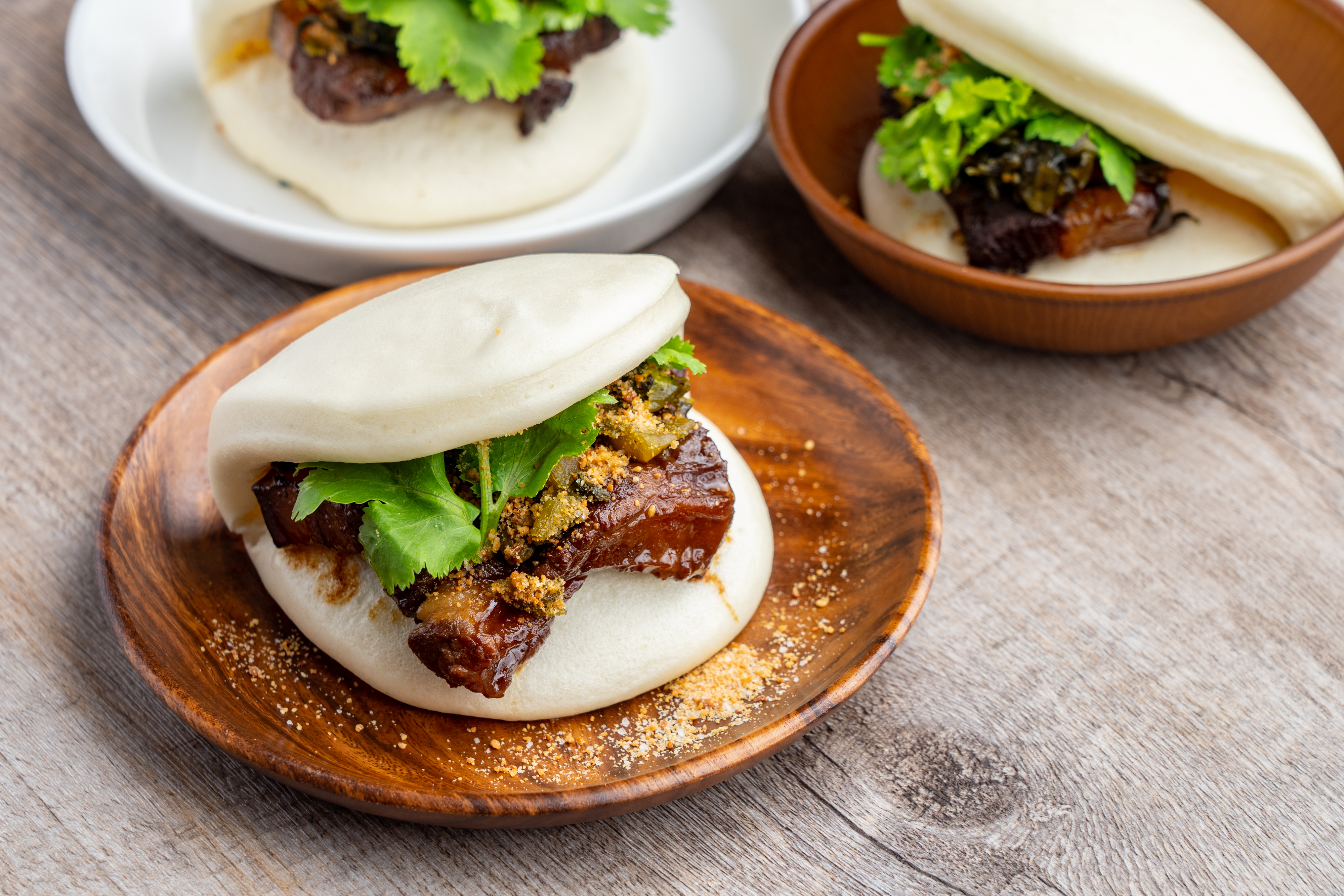
問:如何向台灣人介紹漢堡?答:「美國的刈包。」問:如何向美國人形容刈包?答:「台灣的漢堡。」
◤文.圖/看見台灣基金會編輯群
台
灣人依循節氣、節日吃食,其中有四個重要節氣食物,分別為「清明潤餅、端午粽子、中秋月餅、尾牙刈包」。
刈包,是尾牙時犒賞員工常見的料理,樣子像錢包,討來年發財的喜氣。
刈包以小麥麵粉製成白胖討喜的包體,當中夾入花生粉、酸菜和香菜,抹上濃郁的醬香後再放上數塊肥瘦相間的滷肉,即成早期節儉年代中一道引人饞涎的美食。
如今,隨台灣經濟成長、生活富足,刈包已成為街市間尋常小吃。
▋過去僅在節日食用
台灣現存史料中,關於刈包最早之詳細記載為1927年,台灣士紳黃旺成於日記記錄:
"
"
「今天是舊曆的尾衙(牙),傳來要求做虎咬豬為職工慰勞。」
其中虎咬豬(開口麵皮像老虎)即指刈包,當時台灣小麥為稀有穀物,麵食價格遠高於米食,因此僅特定階級或特定節日能食用。
而「虎咬豬」音似台語所謂「福咬住」,內夾的酸菜於客家話中又稱為福菜,因此刈包不僅代表珍饈,更有討口彩之福氣意味。
今日,刈包不僅是深受台灣人喜愛的小吃,更曾成為國宴主菜之一。
隨台裔廚師在國外大放異彩,刈包開始在海外流行。台灣則有數家老店至今仍在製作絕頂美味的刈包,亦有數家入選《米其林美食指南》,是台灣不可不嘗的美味小吃之一。
探索更多
梅子─青梅外銷轉內需,找到新生命力
梅原產於中國,台灣的梅樹也是300多年前從中國福建、廣東等地引入,主要栽種在高雄、南投、台東、台南等縣市的中低海拔山區。
白蘿蔔─吉祥蔬菜,語意:好彩頭
蘿蔔在中國栽種歷史悠長,北魏時期(約533至544年)成書的《齊民要術》即已對蘿蔔的種植有一定的了解;台灣栽種白蘿蔔的歷史,推估應隨先民來台時引入,歷經清領及日治時期,已成為庶民餐桌上不可或缺的食物。
胡麻油─黑白芝麻油、香油用法不同
胡麻油為台灣常見油品,胡麻又稱芝麻。在人類歷史上,芝麻出現得相當早,而胡麻油亦為最古老的食用油品之一。4000多年前的埃及及蘇丹即食用芝麻,後經絲路進中國,再傳到台灣。