◤文.圖/看見台灣基金會編輯群
看見台灣基金會編輯群
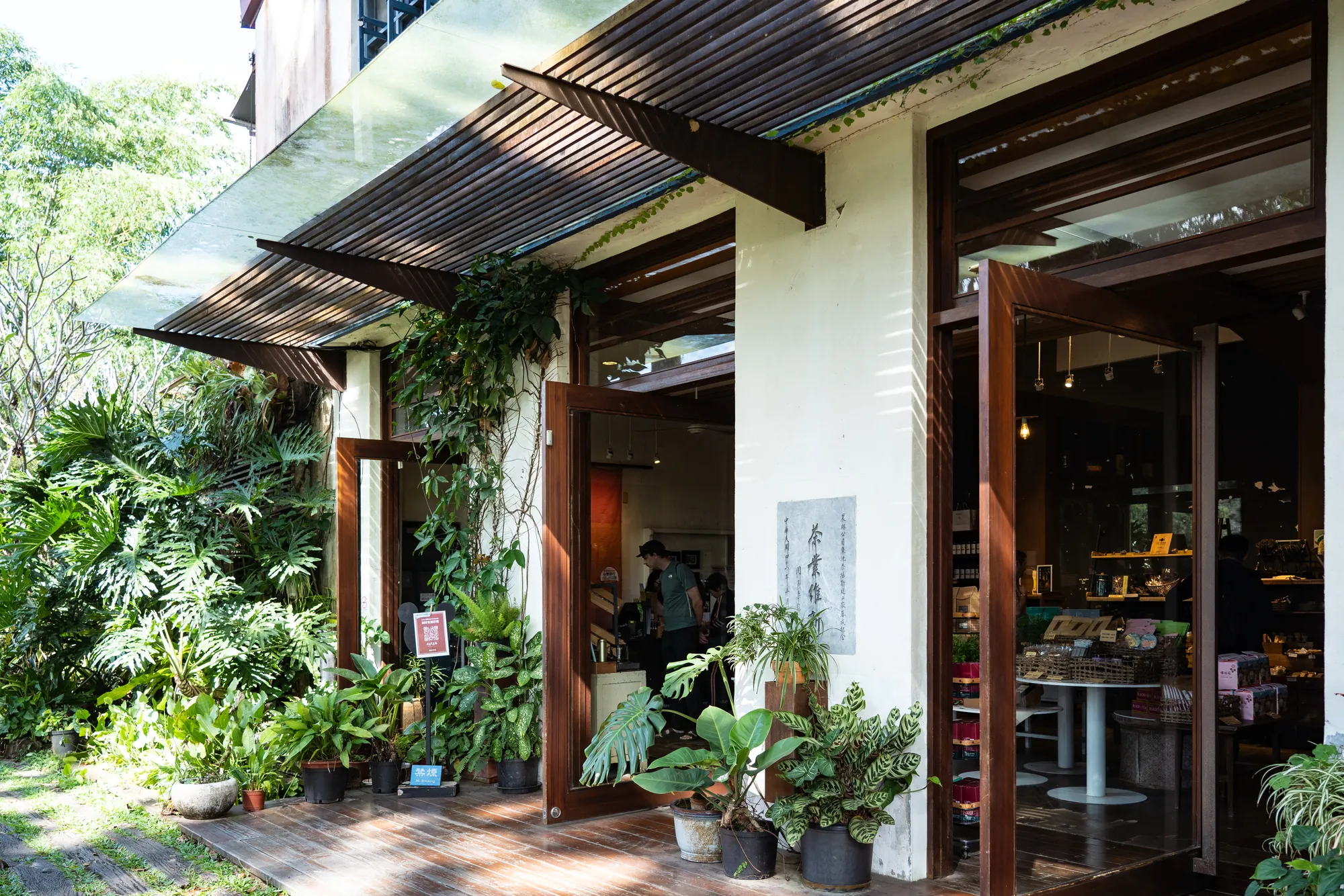
坐落於南投魚池鄉的日月老茶廠成立於1956年,前身為台灣農林公司的魚池茶場,是日月潭紅茶產業的重要核心。這棟走過一甲子的老建築,曾見證台灣紅茶外銷的風光年代,卻也隨著產業式微,走入沉寂。當紅茶出口市場萎縮,茶廠一度僅剩五位製茶師苦撐。門市店長童士軒回憶,那是一個「世界正在改變」的時刻,過去仰賴大量生產、批發導向的慣行農法,不僅難以維持生計,也逐漸對周邊山林生態造成壓力。
2003年起,日月老茶廠啟動關鍵轉型。茶園決定全面停止使用化肥與農藥,重新思考茶與環境的關係,並成為取得慈心有機認證(編按:由慈心有機驗證公司提供的台灣有機農產品驗證,確保無化學農藥肥料,獲美歐雙認證)的茶園。童士軒指出,轉型後的核心不再是追求產量,而是回到土地本身。自然農法讓茶樹與雜草共生,雖然產能下降,卻換來更純淨、層次分明的茶湯風味。
建築與自然的共生智慧
對自然的尊重,也體現在茶廠空間的保存方式。日月老茶廠採取「修舊如舊」的原則,完整保留1950年代的藍色木造窗框,這裡同時也是電視劇《茶金》的取景地。其中最具代表性的,是名為「卷軸窗」的設計。這並非單純的美學語彙,而是為了順應山勢,將自然山風導入室內,協助完成製茶過程中關鍵的「走水」(指新鮮茶葉自然或強制失水過程)工法。
今日的日月老茶廠,已由單一加工場域轉型為結合製茶、生態與飲食體驗的文化基地。來訪者不僅能參與導覽,更可透過品茗,細細感受「紅玉」(台茶18號)所展現的薄荷、肉桂與淡淡花香。茶廠也發展出多款以紅茶為核心的飲食應用,例如以紅玉紅茶沖煮的冷泡茶、紅茶拿鐵,以及搭配茶湯風味設計的茶點。讓茶不只是被「喝」,而是成為一種可被咀嚼、回味的風土語言。這種融合慢活的生活哲學,不僅深受台灣人喜愛,也成功吸引外國觀光客。
從輝煌、沉寂到重生,日月老茶廠不只是當地人的記憶,更希望能將這穿越時空般的美好滋味,代代相傳,成為台灣共有的文化資產。
☛ 日月老茶廠獲選為「文化部第一屆百大文化基地」

'%20fill='%23a9976d'/%3e%3cpath%20id='Path_251'%20data-name='Path%20251'%20d='M8,35a1,1,0,0,1,1-1H23a1,1,0,0,1,0,2H9A1,1,0,0,1,8,35Z'%20transform='translate(-8%20-22)'%20fill='%23a9976d'/%3e%3cpath%20id='Path_252'%20data-name='Path%20252'%20d='M9,22a1,1,0,0,0,0,2h8a1,1,0,0,0,0-2Z'%20transform='translate(-8%20-16)'%20fill='%23a9976d'/%3e%3c/svg%3e)
'%20fill='%23a9976d'/%3e%3c/g%3e%3c/svg%3e)
'%3e%3cg%20id='Ellipse_27'%20data-name='Ellipse%2027'%20transform='translate(813%20250)'%20fill='none'%20stroke='%23ccac89'%20stroke-width='1'%3e%3ccircle%20cx='16'%20cy='16'%20r='16'%20stroke='none'/%3e%3ccircle%20cx='16'%20cy='16'%20r='15.5'%20fill='none'/%3e%3c/g%3e%3cg%20id='facebook'%20transform='translate(824.105%20258.296)'%3e%3cpath%20id='Path_243'%20data-name='Path%20243'%20d='M8.894.111V2.556H7.441a1.361,1.361,0,0,0-1.074.333,1.534,1.534,0,0,0-.278,1v1.75H8.8L8.441,8.38H6.089v7.028H3.255V8.38H.894V5.639H3.255V3.62A3.582,3.582,0,0,1,4.218.949,3.5,3.5,0,0,1,6.783,0,15.317,15.317,0,0,1,8.894.111Z'%20transform='translate(0%200)'%20fill='%23ccac89'/%3e%3c/g%3e%3c/g%3e%3c/svg%3e)

'%3e%3cg%20id='Ellipse_29'%20data-name='Ellipse%2029'%20transform='translate(901%20250)'%20fill='none'%20stroke='%23ccac89'%20stroke-width='1'%3e%3ccircle%20cx='16'%20cy='16'%20r='16'%20stroke='none'/%3e%3ccircle%20cx='16'%20cy='16'%20r='15.5'%20fill='none'/%3e%3c/g%3e%3cg%20id='link-45deg'%20transform='translate(902.607%20253.105)'%3e%3cg%20id='Group_479'%20data-name='Group%20479'%20transform='translate(7.393%205.896)'%3e%3cpath%20id='Path_241'%20data-name='Path%20241'%20d='M10.246,17.821,8.507,19.56a3.8,3.8,0,0,0,5.378,5.378L16.2,22.62a3.8,3.8,0,0,0-1.05-6.12l-.743.743a1.27,1.27,0,0,0-.2.252,2.535,2.535,0,0,1,1.091,4.23L12.99,24.042A2.536,2.536,0,0,1,9.4,20.455l1.005-1a5.093,5.093,0,0,1-.162-1.631Z'%20transform='translate(-7.393%20-12.02)'%20fill='%23ccac89'/%3e%3cpath%20id='Path_242'%20data-name='Path%20242'%20d='M18.236,9.327a3.8,3.8,0,0,0,1.05,6.12l.982-.984a2.535,2.535,0,0,1-1.136-4.241L21.448,7.9a2.536,2.536,0,1,1,3.587,3.587l-1.005,1a5.1,5.1,0,0,1,.162,1.631l1.739-1.739A3.8,3.8,0,1,0,20.553,7.01Z'%20transform='translate(-13.011%20-5.896)'%20fill='%23ccac89'/%3e%3c/g%3e%3c/g%3e%3c/g%3e%3c/svg%3e)