Millet is one of several traditional staples in indigenous diets, alongside taro, sweet potato, pigeon beans, and rice. Yet millet holds a uniquely sacred position. The rituals surrounding it—planting, harvesting, consuming, brewing millet wine, using it in ceremonial objects, and hosting elaborate festivals in its honor—reveal its profound spiritual significance in indigenous life.

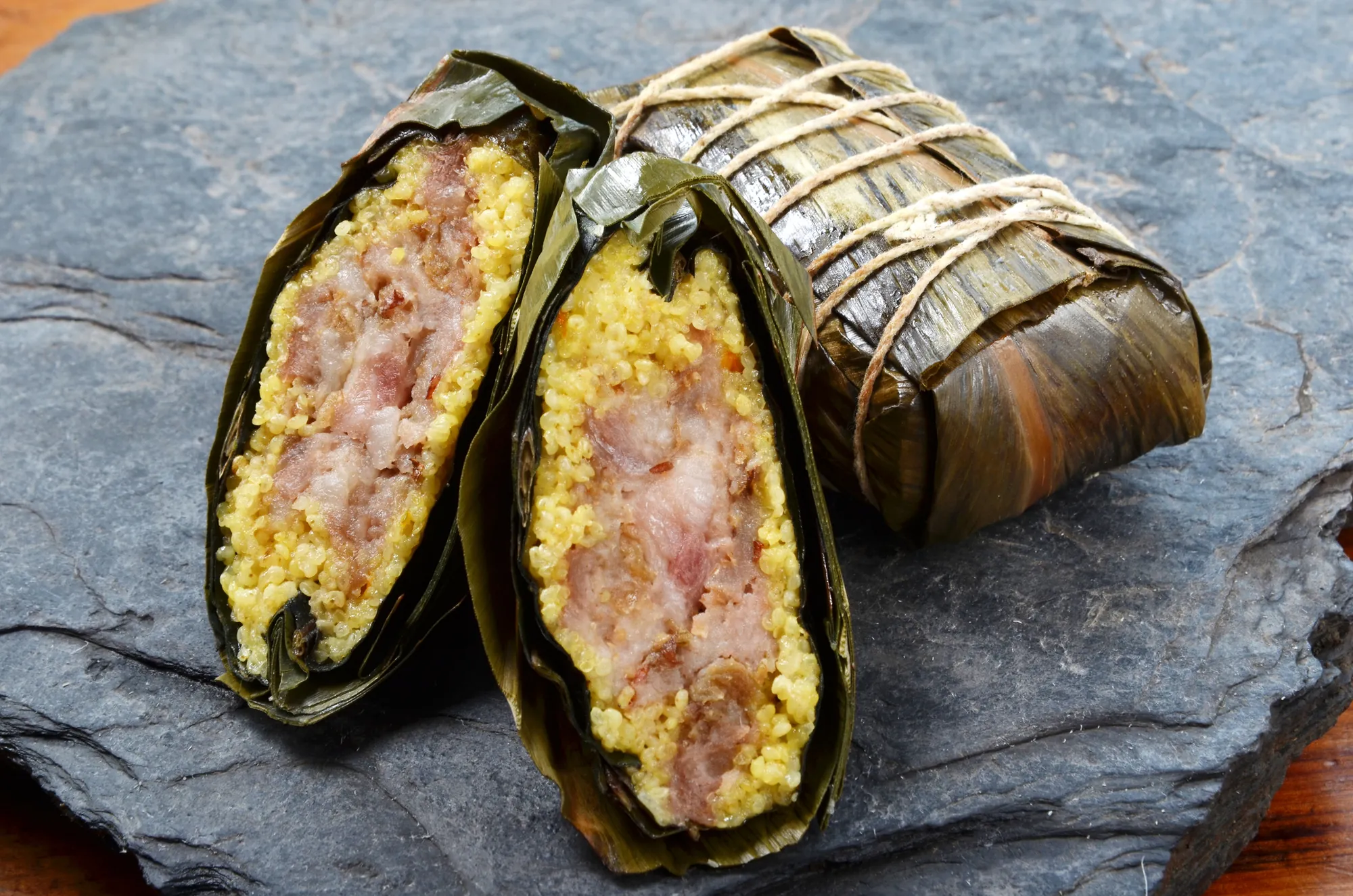
Today, successful cultivation efforts in indigenous territories and the rise of cultural tourism have brought millet products into the mainstream marketplace. These foods now circulate as visible markers of ethnic identity, available for purchase. One particularly notable example appears each year during the Dragon Boat Festival: abai, often called “millet zongzi” by Han Chinese consumers. During the festival, abai gets displayed and sold alongside traditional zongzi (rice dumpling), drawing comparisons between the indigenous and Han Chinese versions of this wrapped delicacy.

Not Quite Zongzi: Abai Millet Cakes

In culinary terms, abai (qavai in Paiwan, abai in Rukai, abay in Pinuyumayan) resembles a millet cake more than a dumpling. The traditional preparation begins with soaked millet ground into a slurry, drained until nearly dry, then kneaded into an elongated dough. A simpler version uses millet flour directly. The dough gets filled with fatty pork or fish, wrapped first in shoo-fly plant, then enclosed in an outer layer of shell ginger or banana leaves before being boiled or steamed.

According to oral histories recorded by the Taitung District Agricultural Research and Extension Station, elders from the Taromak community describe abai as a harvest festival food, eaten just once annually after the millet crop comes in.

The indigenous food that actually resembles Han Chinese zongzi more closely is called cinafu.

Cinafu (cinavu in Paiwan, cinabu in Rukai, inavu in Pinuyumayan)—sometimes romanized as "chinafu"—is a distinct specialty of the Paiwan and Rukai peoples in southern Taiwan.

The distinctions between abai and cinafu vary depending on who you ask. In common understanding today, cinafu differs from abai primarily in two ways: it uses whole soaked millet grains wrapped around meat, and it's reserved exclusively for significant Paiwan life events—weddings, births, blessings before long journeys, and festival ceremonies—when families prepare it to share with relatives and friends.

An elder from Liangshan community recalled in an oral history:
"Life was hard back then. Our daily meals were millet, sweet potato, and taro. Sometimes we'd even have to chop firewood and trade it in the next village over for provisions. Only during festivals or weddings could we eat cinavu with meat inside. At weddings, they'd make them especially large so everyone could share."

Yet historical records complicate this distinction. A Japanese colonial-era ethnographic survey, Report on the Investigation of Customs of the Savage Tribes, documented Paiwan foodways and noted:

"Sticky cakes are called qavai, and there are two methods of preparation... The traditional method resembles Japanese dango. First, millet is pounded in a mortar to remove the hull and bran, then washed with water and soaked for half a day. After draining in a basket, it's pounded again into powder. The powder is kneaded with water, then combined with peanuts, meat, or seafood, shaped variously, and served steamed or grilled. These millet cakes have several names... When filled with meat or beans, formed into lengths of five to six inches and widths of one to two inches, and wrapped in shell ginger leaves, they are called cinavu."

This suggests that historically, cinavu was understood as a subcategory of qavai—the broader term for millet cakes.

Ritual Offerings: Celebrating the Millet Harvest

What most people simply call "harvest festivals" actually encompasses a complex calendar of Indigenous ceremonies.

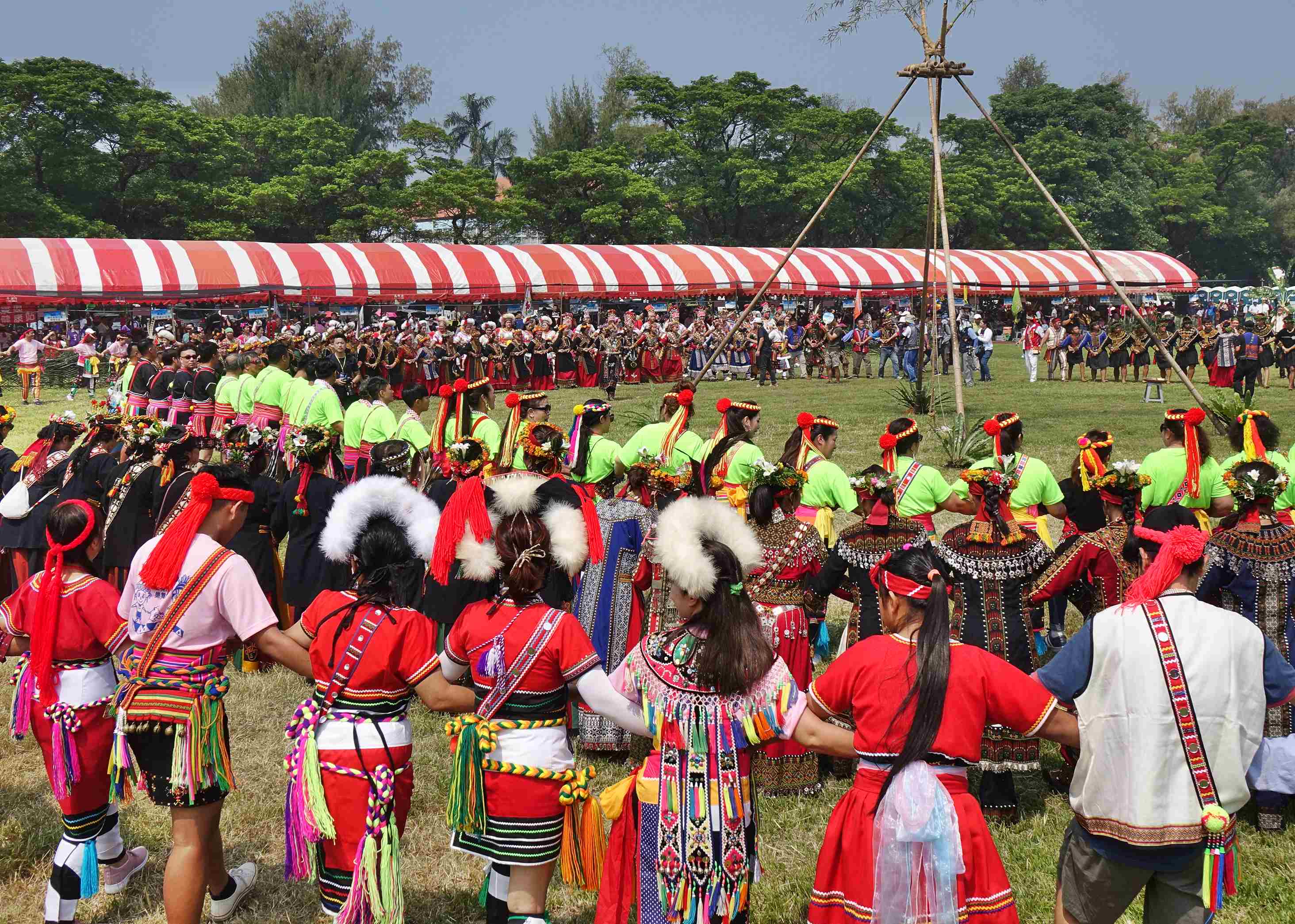
Tribal festivals revolve around agricultural cycles, with millet at the very center. In Pingtung County alone, the Rukai people hold millet harvest festivals while the Paiwan observe Maljeveq—a major ceremony held once every five years—both deeply tied to this sacred grain.

An Indigenous harvest festival ceremony (Image: iStock)


Research conducted by National Pingtung University on the Liangshan community reveals the intricate rhythm of millet cultivation. The harvest festival occurs around July or August; the first planting follows in October through December, with harvesting in January and soil preparation in February. A second planting runs from March to May, with harvest in June, followed by a fallow period. Come September, the cycle begins anew with weeding and the mixing of grass clippings with cattle manure to enrich the soil naturally.

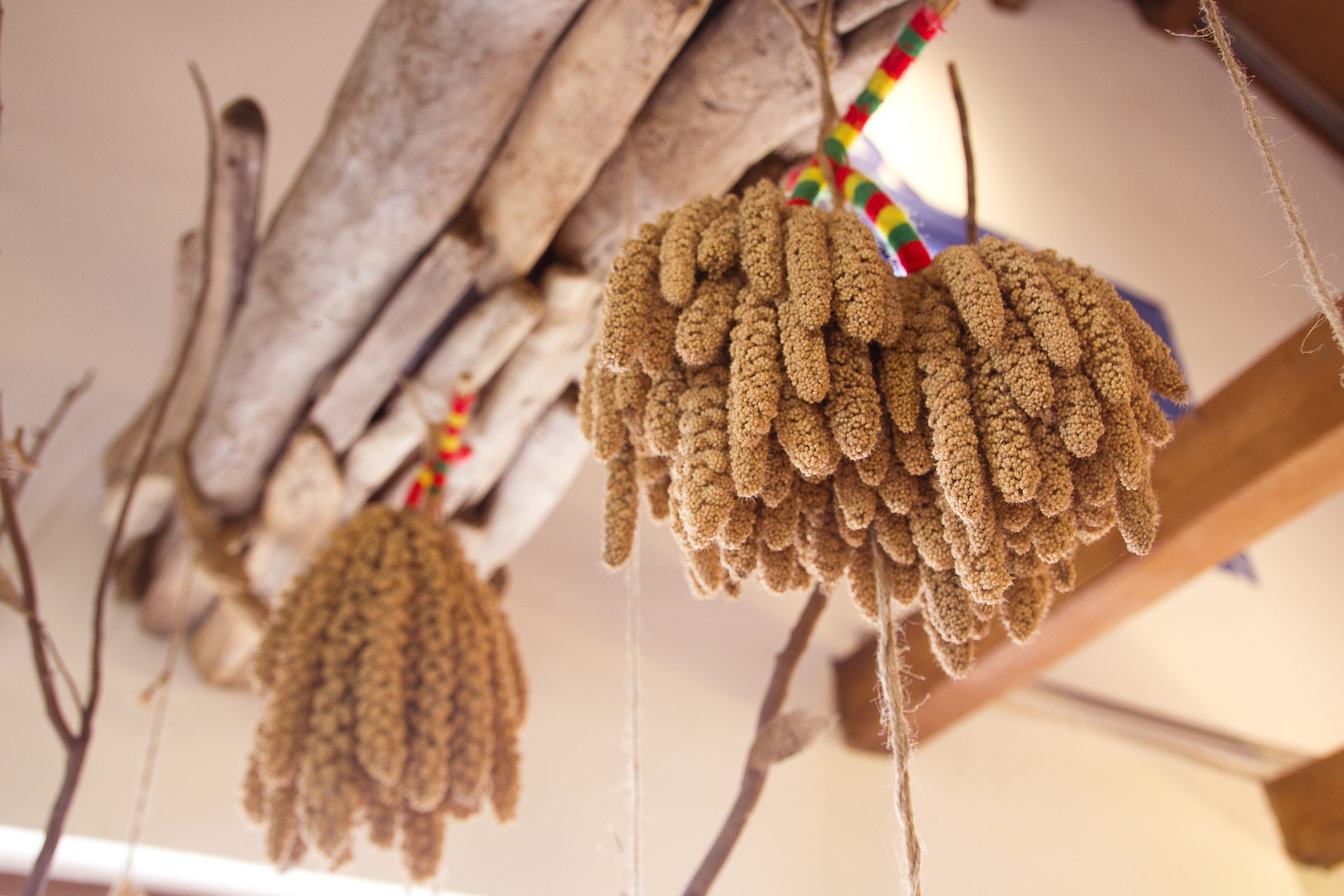
For indigenous communities, millet carries profound cultural weight. It appears in daily meals, wedding ceremonies, and harvest celebrations. When millet is offered as part of a bride price, it communicates deep respect—a way of saying, "I honor your noble family."

Among the Paiwan, every stage of millet cultivation—from land clearing and sowing to weeding and harvest—is marked by ritual. The ceremony held upon completing agricultural work is called Masalut.

Tan Chang-Guo, associate professor in the Department of Public and Cultural Affairs at National Taitung University, explains the term's deeper meaning in his book The Paiwan People: "Masalut means 'the crossing of the year.' It's an annual rite of passage for the entire community and every household within it."

Millet carries deep cultural and spiritual significance (Image: iStock)


Scholar Chu Hai-Liang, in Gifts of Nature: The Culinary World of Taiwan's Indigenous Peoples, describes Paiwan agricultural ceremonies during the Japanese colonial period:

"The Paiwan believe that a millet deity resides in millet. When selecting seed millet, they choose only large, uniform grains, which must undergo ritual blessing before they can serve as seeds. Once the seed millet is chosen, a year-long cycle of agricultural work and ceremonies begins."

According to his account, Paiwan agricultural rituals include the land-clearing ceremony, millet-sowing ceremony, new-sprout ceremony, pre-harvest ceremony, millet-cutting ceremony, and millet-harvest ceremony. These observances reveal how thoroughly Paiwan ritual life centers on this sacred crop.

A 1987 survey by Hsu Koun-min, professor at the Graduate Institute of Austronesian Studies at National Taitung University, documented similar practices in villages throughout Wutai Township in Pingtung County. Traditional ceremonies included roasting millet cakes as offerings to ancestral spirits, accompanied by prayers and blessings.

For the Rukai people, millet's sacred status sets it apart from everyday fare. Too precious for daily consumption, it serves instead as an essential ritual offering, and the religious calendar follows the millet growth cycle accordingly.

The Rukai millet harvest spans roughly two months, punctuated by various ceremonial activities. The festivals in July and August, following the harvest, represent the spiritual pinnacle of the year.

During the hunting ceremony (watsapi), when hunters return to the village, female shamans burn millet stalks and use them in purification rites—waving the stalks and sprinkling water to drive away impurities and misfortune. Millet abai become communal ritual food, shared among all participants.

Reviving Millet: From Farm to Table

Through successive periods of rule—first by China’s Qing dynasty, then by Japan—rice cultivation gradually replaced indigenous millet farming in Taiwan. Millet lost its place as a dietary staple. What had been the foundation of indigenous food culture began fading during modernization and urbanization, creating a crisis of cultural preservation and transmission.

Fortunately, researchers in academia committed themselves to preserving millet varieties. Chang Song-Bin, professor in the Department of Life Sciences at National Cheng Kung University, conducted surveys mapping the distribution of millet strains across Taiwan, establishing the island's most comprehensive millet germplasm database.

Warren H.J. Kuo, a seed science specialist who taught in National Taiwan University's Department of Agronomy for over thirty years, played an equally crucial role. He repatriated a collection of native Taiwanese millet seeds from the U.S. National Plant Germplasm System, becoming a pivotal figure in Taiwan's millet revival efforts.

In response to climate change, the Food and Agriculture Organization of the United Nations (FAO) designated 2023 as the International Year of Millets. Taiwan, however, had already begun its millet restoration work years earlier.

Today, government agricultural research stations, NGOs, and research teams across Taiwan actively collaborate with indigenous communities to promote and restore millet cultivation. This once-threatened crop is gradually gaining recognition among the broader public.

As Professor Kuo emphasizes, preserving heirloom crop varieties means more than storing them in national seed banks. True conservation requires farmers to keep planting them, allowing seeds to evolve year after year, adapting to changing climates and environments.

In late May 2024, Taiwan deposited approximately 170 precious millet varieties in the Svalbard Global Seed Vault in the Arctic—securing a vital backup for Taiwan's millet heritage.