


◤Text and Images / iSee Taiwan Foundation Editorial Team
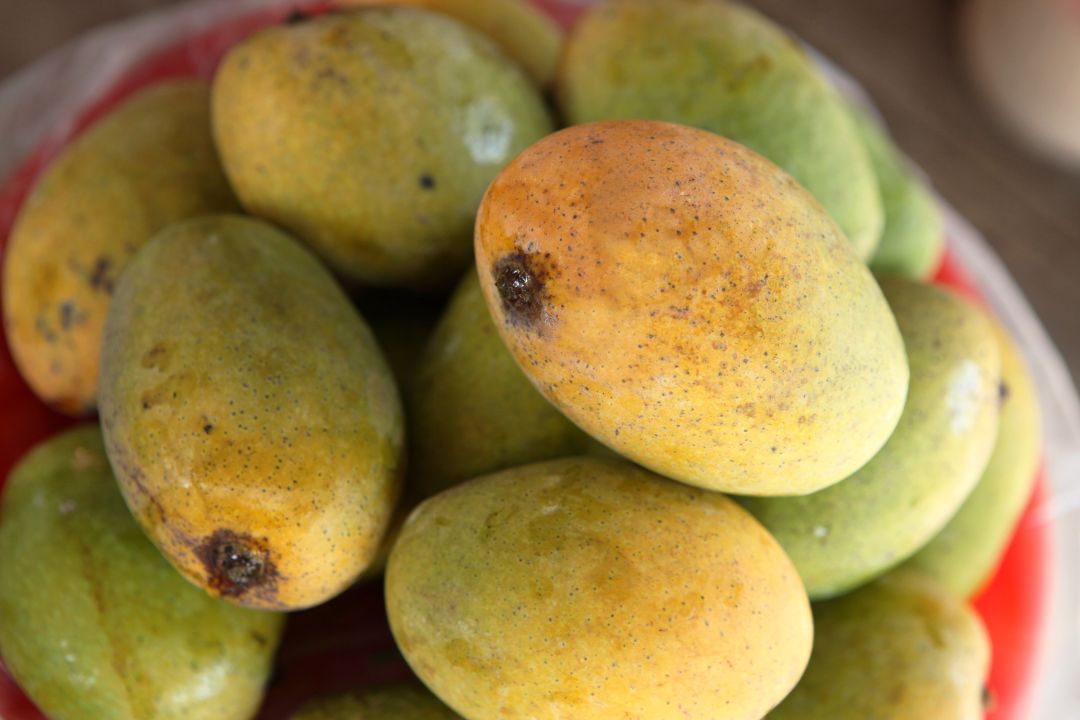
In Pingtung's midsummer heat, no fruit stirs memories for people from southern Taiwan quite like the tu mango—known in Taiwanese as thóo-suāinn-á. Small in size and slightly fibrous, it wins devotees with an intensely tart, aromatic flavor. For many, it remains the defining taste of childhood summers.
Despite its name suggesting a native species, the tu mango was introduced to Taiwan by the Dutch in the seventeenth century. The Taiwan Prefecture Gazetteer, in its section on fruits, records that the variety was “brought over from their homeland by the Red Barbarians”—a historical designation for the Dutch. Three kinds were noted: fragrant, firm, and fleshy, with the fragrant variety considered the finest. This account confirms that tu mangoes have been cultivated in Taiwan for over three hundred years.
Drought-resistant and hardy, the tu mango took root in Pingtung's mountainous terrain. The areas around Laiyi Township and Sandimen Township remain key growing regions to this day. During harvest season, farmers often pickle unripe green fruit into suāinn-á-tshenn, or pickled green tu mango. Tart and crunchy, it is beloved served over shaved ice or simply chilled—a summer snack many remember as impossible to replace.
From Tart Green to Fragrant Ripe
Years of agricultural improvement have considerably raised the tu mango's sugar content and refined its texture while preserving the tart, layered character that sets it apart. This sweet-tart balance has earned it a devoted following among discerning food lovers.
Beyond the tu mango, Pingtung cultivates several improved varieties: Irwin, Jinhuang (金煌), Yuwen (玉文), and Keitt. Irwin is the most widely grown and popular variety in Pingtung and across Taiwan, prized for its intense fragrance and firm flesh. Yuwen, a cross between Jinhuang and Irwin, yields large fruit with a smooth, fine-grained texture.
For many of Pingtung's Indigenous communities, the tu mango is more than a seasonal fruit—it appears in ceremonies and communal gatherings as a symbol of sweetness and solidarity. In recent years, small Indigenous farmers in the Sandimen area have embraced grass-cover cultivation, allowing wild grasses to grow alongside the mango trees, forgoing herbicides, and replacing chemical fertilizers with natural compost.
Yields are lower, but the fruit carries a deeper, more concentrated flavor. The practice also helps protect the hillside slopes from erosion.