
'%20fill='%23a9976d'/%3e%3cpath%20id='Path_251'%20data-name='Path%20251'%20d='M8,35a1,1,0,0,1,1-1H23a1,1,0,0,1,0,2H9A1,1,0,0,1,8,35Z'%20transform='translate(-8%20-22)'%20fill='%23a9976d'/%3e%3cpath%20id='Path_252'%20data-name='Path%20252'%20d='M9,22a1,1,0,0,0,0,2h8a1,1,0,0,0,0-2Z'%20transform='translate(-8%20-16)'%20fill='%23a9976d'/%3e%3c/svg%3e)
'%20fill='%23a9976d'/%3e%3c/g%3e%3c/svg%3e)
養殖蝦─曾是養殖蝦王國,目前展開2.0篇章
主題探索
文化美食
分享
'%3e%3cg%20id='Ellipse_27'%20data-name='Ellipse%2027'%20transform='translate(813%20250)'%20fill='none'%20stroke='%23ccac89'%20stroke-width='1'%3e%3ccircle%20cx='16'%20cy='16'%20r='16'%20stroke='none'/%3e%3ccircle%20cx='16'%20cy='16'%20r='15.5'%20fill='none'/%3e%3c/g%3e%3cg%20id='facebook'%20transform='translate(824.105%20258.296)'%3e%3cpath%20id='Path_243'%20data-name='Path%20243'%20d='M8.894.111V2.556H7.441a1.361,1.361,0,0,0-1.074.333,1.534,1.534,0,0,0-.278,1v1.75H8.8L8.441,8.38H6.089v7.028H3.255V8.38H.894V5.639H3.255V3.62A3.582,3.582,0,0,1,4.218.949,3.5,3.5,0,0,1,6.783,0,15.317,15.317,0,0,1,8.894.111Z'%20transform='translate(0%200)'%20fill='%23ccac89'/%3e%3c/g%3e%3c/g%3e%3c/svg%3e)

'%3e%3cg%20id='Ellipse_29'%20data-name='Ellipse%2029'%20transform='translate(901%20250)'%20fill='none'%20stroke='%23ccac89'%20stroke-width='1'%3e%3ccircle%20cx='16'%20cy='16'%20r='16'%20stroke='none'/%3e%3ccircle%20cx='16'%20cy='16'%20r='15.5'%20fill='none'/%3e%3c/g%3e%3cg%20id='link-45deg'%20transform='translate(902.607%20253.105)'%3e%3cg%20id='Group_479'%20data-name='Group%20479'%20transform='translate(7.393%205.896)'%3e%3cpath%20id='Path_241'%20data-name='Path%20241'%20d='M10.246,17.821,8.507,19.56a3.8,3.8,0,0,0,5.378,5.378L16.2,22.62a3.8,3.8,0,0,0-1.05-6.12l-.743.743a1.27,1.27,0,0,0-.2.252,2.535,2.535,0,0,1,1.091,4.23L12.99,24.042A2.536,2.536,0,0,1,9.4,20.455l1.005-1a5.093,5.093,0,0,1-.162-1.631Z'%20transform='translate(-7.393%20-12.02)'%20fill='%23ccac89'/%3e%3cpath%20id='Path_242'%20data-name='Path%20242'%20d='M18.236,9.327a3.8,3.8,0,0,0,1.05,6.12l.982-.984a2.535,2.535,0,0,1-1.136-4.241L21.448,7.9a2.536,2.536,0,1,1,3.587,3.587l-1.005,1a5.1,5.1,0,0,1,.162,1.631l1.739-1.739A3.8,3.8,0,1,0,20.553,7.01Z'%20transform='translate(-13.011%20-5.896)'%20fill='%23ccac89'/%3e%3c/g%3e%3c/g%3e%3c/g%3e%3c/svg%3e)
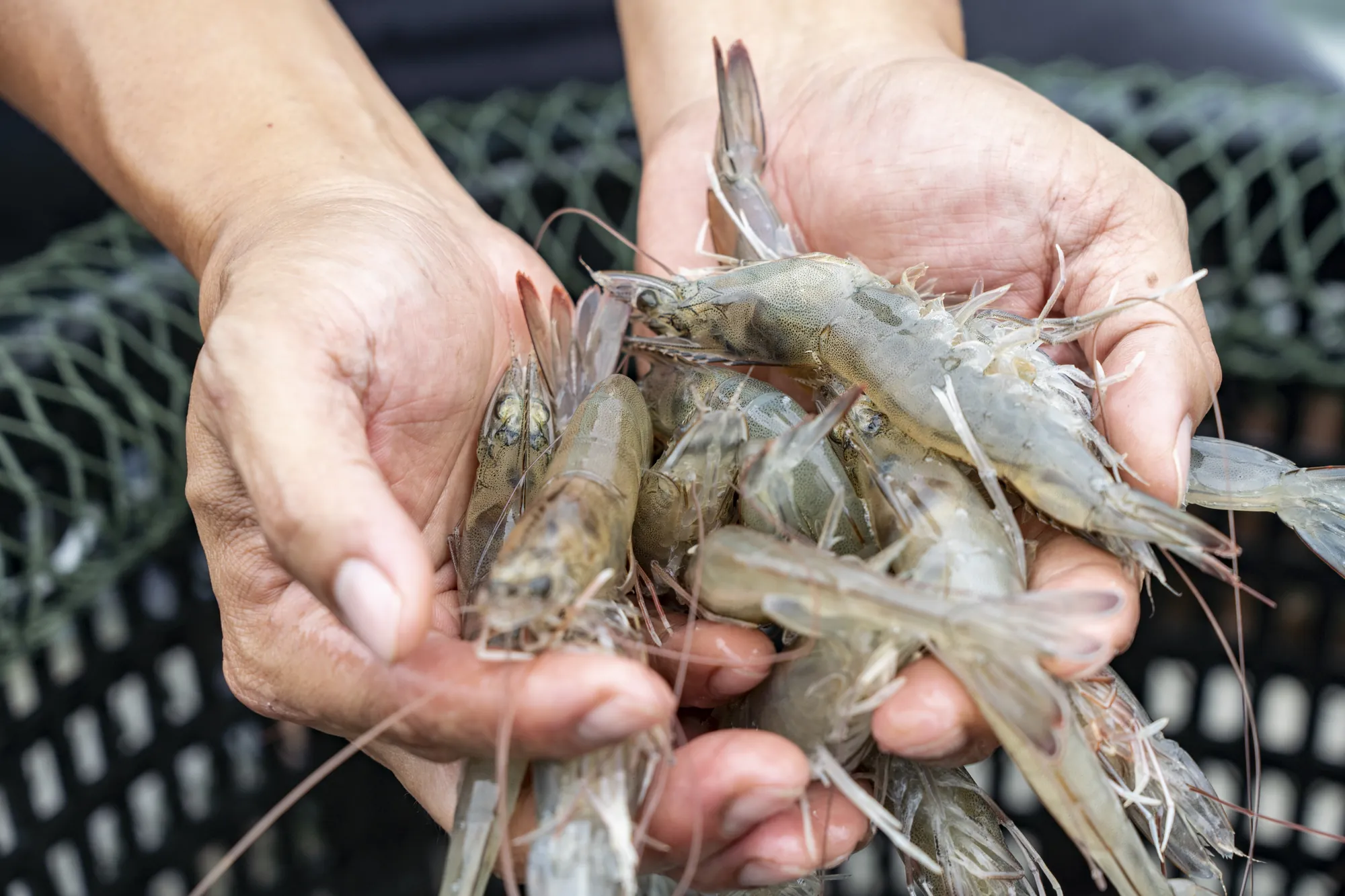
蝦子是台灣人的熱門海鮮。300年前出版的《臺灣縣志》有一段紀錄:「台灣蝦有數種,鬚長於身,海中生者大,溪澗生者小……。」描述台灣有海水蝦也有淡水蝦可供食用。
◤文.圖/看見台灣基金會編輯群
日
治時期,台灣蝦驚艷了在台的日本人。當時台北大稻埕、北投酒家菜都有用豬肉片包覆蝦仁後再沾蛋液、裹粉、油炸的「金錢蝦餅」,熱騰騰上桌香氣撲鼻,金黃酥脆、有如金幣的表皮象徵吉利,搭配番茄醬口感豐富,是宴客最有面子的料理。
台灣曾有「養蝦王國」稱號,1987年台灣養殖蝦的年產量為9.5萬噸,占全球的四分之一,意思是全世界每四尾養殖蝦,就有一尾來自台灣;日本每兩尾草蝦中就有一尾來自台灣。
這全得歸功於台灣領先國際的養殖技術,小小一尾草蝦為台灣賺進極為可觀的外匯;而創造整套養殖技術的水產養殖學者廖一久,也贏得了「台灣草蝦之父」稱號。
▋養殖蝦近年走出逆境
然而1987年前後,因為養殖業者長期密集養殖而影響了水質,草蝦傳出白點病,產量頓時銳減,草蝦產業遭受重挫,一度因為草蝦疫情有望趁勢而起的斑節蝦,不久也遭遇疾病打擊。
經過養殖業者多年努力,台灣養殖蝦產業近年來終於逐漸走出逆境。養殖蝦種從昔日的草蝦轉而以白蝦為主:2022年全台白蝦產值近22億元台幣,主要採海水養殖。
而常見於釣蝦場、俗稱「泰國蝦」的淡水長臂大蝦,產值也有超過15億元台幣。養殖業者更注重環境,透過智慧化設備提升飼養效率;加上政府以產銷履歷協助養蝦業者,通力合作來提升國產蝦的競爭力。
探索更多
薑─嫩薑用於做菜,老薑用於養身
薑,不僅是華人飲食文化中不可或缺的食材,更承載著深厚的歷史。台灣的嫩薑與老薑更以優越品質享譽國際,征服日本、荷蘭等國餐桌。
黃豆──田裡的肉,外銷日本的「綠金」
黃豆,一般泛稱大豆,種子顏色有黃、綠、棕、黑等,綠色的稱為青豆、黑色的稱為黑豆,而黃豆因為最常見,因此普遍將黃豆代稱為「大豆」。
鵝─早期,養鵝是農家副業
台灣從17、18世紀起已有養鵝紀錄,飼養「華鵝」,主要是傳統農家副業。1974年自丹麥引進「白羅曼鵝」後,白羅曼鵝才成為飼養主流,至今占比逾97%。