logo icon
Story of the Day
logo icon
search icon

Misty Sulfur Springs: Sipping Into Jiujia Culture—Beitou, the Michelin Three-Star Destination Worth a Special Journey

share
Facebook Share IconLine Share IconCopy Link Icon
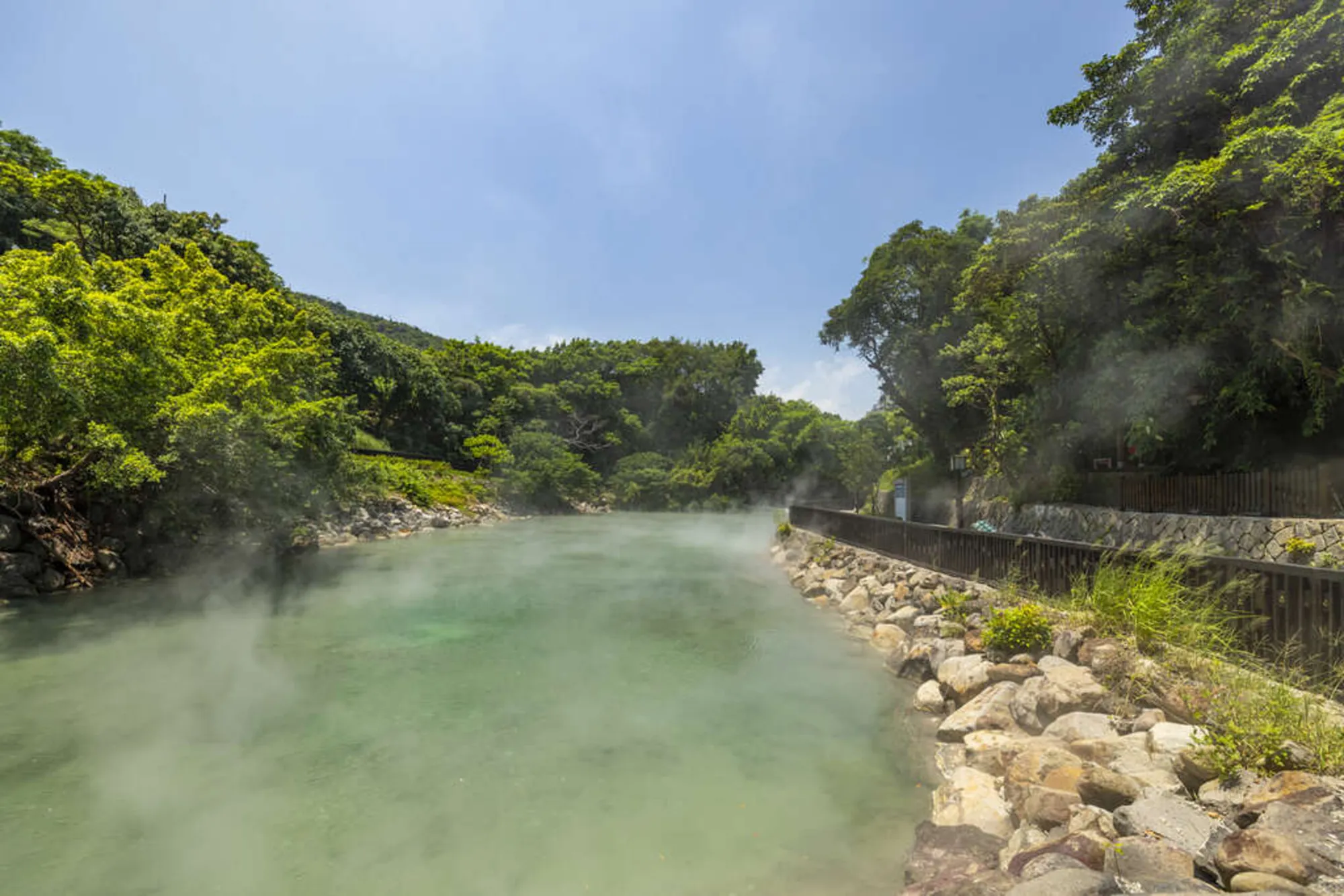
Pulitzer Prize-winning New York Times journalist Andrew Jacobs once vividly described the sulfurous smell wafting through Beitou's air as "rotten eggs." But this isn't a slight—it's actually your cue. When that distinctive scent hits your nostrils, welcome to Beitou, a three-star destination deemed "worth a special journey" by France's Michelin Green Guide. (Photo source: Department of Information and Tourism, Taipei City Government)

「There is nothing quite as bracing as the smell of rotten eggs in the morning.」This storied district is where mountain trails beckon at every turn, and century-old thermal traditions still pulse through the streets. As Jacobs memorably put it: "There is nothing quite as bracing as the smell of rotten eggs in the morning."

Don't be put off—that telltale sulfur scent is your invitation to one of Taiwan's most treasured hot spring havens. As Andrew noted, when you catch a whiff of that distinctive scent, you've arrived at Beitou, a three-star destination that France's Michelin Green Guide has deemed "worth a special journey."

Embracing Verdant Mountains and Century-Old Landscapes

While hot springs dot Taiwan from north to south, Beitou holds a special advantage—a leisurely 30-minute ride on the Tamsui-Xinyi MRT line from Taipei Main Station, making it a beloved destination for both domestic and international travelers.

Over 400 years ago, the indigenous Ketagalan people of the Pingpu tribes settled here. The perpetual mists and steam rising from the sulfur springs struck fear into their hearts—they believed such mysterious phenomena could only mean witches dwelled in these lands.

According to Japanese anthropologist Ino Kanori's records, Pataauw meant "witch" in the Basay language. During the Qing Dynasty, this was phonetically translated into Taiwanese as "Beitou," which became the area's enduring name.

Centuries later, the witch legends have long faded, but Thermal Valley—nestled beside Beitou Park at the end of Zhongshan Road—still shrouds itself year-round in sulfurous mists. The soft, unstable ground once caused frequent accidents as visitors slipped and suffered burns, earning it the ominous nicknames "Hell Valley" and "Ghost Lake."

In reality, Thermal Valley serves as one of Beitou's hot spring sources and boasts the highest water temperatures among the Datun volcanic group. Its jade-green waters earned the poetic moniker "Sulfur Spring Jade Mist" and ranked among Taiwan's celebrated Eight Famous Scenic Spots and Twelve Views during Japanese rule. Today, stone walkways and protective railings make the area visitor-friendly, while wisps of white steam drift atmospherically through the landscape.

Beyond hot springs, natural sulfur deposits represent another of nature's gifts to Beitou. These twin treasures have drawn international visitors to this corner of Taiwan for centuries.

Spanish colonizers arrived in Beitou as early as 1632 to mine sulfur, followed by the Dutch a few years later. In 1697, Qing Dynasty scholar Yu Yonghe crossed the treacherous "Black Water Ditch" (today's Taiwan Strait) to harvest sulfur in Beitou, documenting his journey in his Small Sea Travel Diaries.

Taipei Public Library’s Beitou Branch houses a “Beitou Sulfur Caves” stele, with inscribed verses from Yu’s records, describing "more than fifty streams of white vapor shooting up from the earth's depths, bubbling and splashing, rising over a foot from the ground..."

During the Qing period in 1893, German trading company manager R.N. Ohly established a private hot spring club at the General's Residence in Beitou's Zhongxin New Village—marking the true beginning of Beitou's hot spring development.

A Hot Spring Relay That Put Taiwan on the World Map

But it was Japanese businessman Hirata Gengo—famous for establishing Taiwan's first hot spring inn, Tenguan—who truly put Beitou's thermal waters on the map.

After visiting Beitou seeking therapeutic relief for his ailments, Hirata discovered the healing properties of the blue sulfur springs. Not only did he open his inn, but he also penned Records of Beitou Hot Springs, earning recognition as the pioneer of Beitou hot spring development.

When World War II ended, the Hirata family returned to Japan and Tenguan fell into ruin. Years later, Japan's century-old hot spring establishment Kagaya arrived in Taiwan, building a Japanese-style hot spring resort on the original site. They faithfully transplanted Kagaya's signature elements—traditional sukiyazukuri architecture, tea ceremony culture, and the famed omotenashi (sincere and wholehearted hospitality) service of their nakai (female attendants).

Following Kagaya's lead, a wave of luxury hot spring hotels has made Beitou home—including Grand View Resort, Beitou Regent, Hotel Royal Beitou, The Gaia Hotel, and the exclusive Villa 32 with just five guest rooms.

These establishments have moved beyond strictly Japanese aesthetics, each carving out distinct identities: certified Japanese onsen (hot spring) bathing instructors, Taiwanese-style service with locally sourced elements, wellness-focused themes, thermal suites with 270-degree forest vistas, and mysteriously exclusive reservation-only policies. Each caters perfectly to guests seeking restorative experiences.

Hokutolite: The Stone That Bears Taiwan's Name

What truly launched Beitou onto the world stage was the blue sulfur spring from Thermal Valley—containing trace amounts of radium—and the 1905 discovery of Hokutolite Japanese scholar Okamoto Yaohachiro in Beitou Creek. This rare mineral, formed in hot spring environments and containing small amounts of radioactive radium, exists only in Beitou's springs and Japan's Tamagawa Onsen in Akita Prefecture.

In 1913, Hokutolite received its official name, becoming the only mineral in the world named after a Taiwanese location.

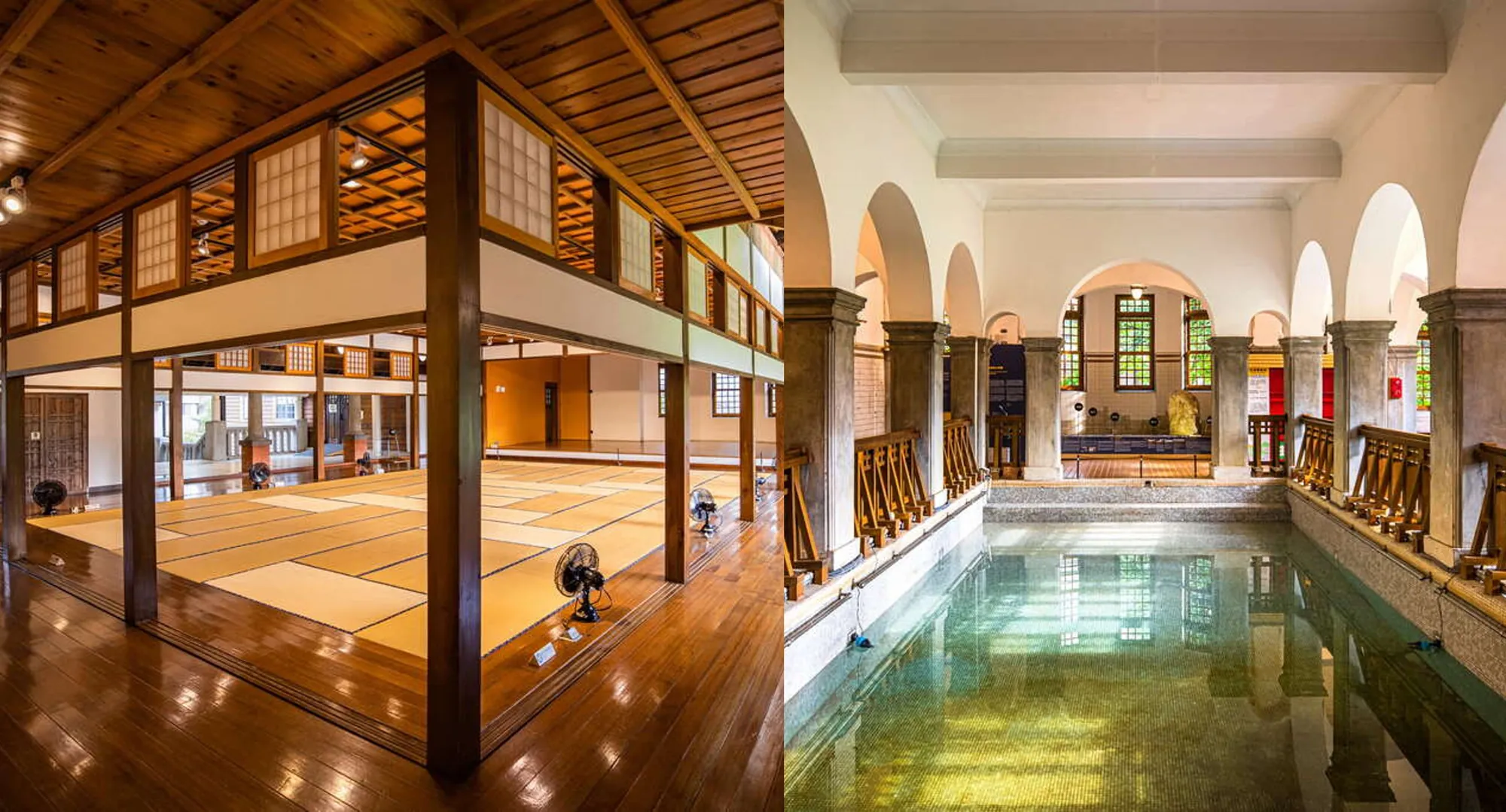
That same year saw the completion of the Beitou Public Baths (now the Beitou Hot Springs Museum), a striking East-meets-West two-story structure that was East Asia's largest public bathhouse at the time—even drawing a visit from Japan's Crown Prince Hirohito for inspection. The 1921 Beitou Folk Arts Museum, Taiwan's largest surviving two-story pure wooden Japanese structure, rounded out the developments that put Beitou firmly on the map.

Beitou Hot Spring Museum (Photo source: Department of Information and Tourism, Taipei City Government)

Jiujiacai Cuisine: A Unique Culinary Heritage

During Beitou's hot spring heyday, the area inherited the legacy of Dadaocheng's premier establishments like Penglai Pavilion (蓬萊閣) and Jiangshan House (江山樓), cultivating an exquisite jiujiacai cuisine (a Taiwanese fusion of Japanese, Fujian, and Cantonese cooking styles) rooted in Japanese colonial-era culture.

In those days, jiujia were described as upscale, sophisticated dining establishments catering to society's elite—the go-to venues for entertaining distinguished guests and conducting business deals.

The cuisine emphasized meticulous preparation and precise cooking techniques. Elaborate garnishing and theatrical presentation were essential. Most crucially, ingredients had to be premium and lavish—think shark fin tips, tiger shark skin, deer tendons, and Japanese dried scallops—these pricey delicacies were essential for maintaining both host and guest dignity.

Famous jiujiacai dishes include: Ke-á Ti-Tōo Pih, Jiû-Hî Lê-Bah Suàn, Pâi-Kut-So (crispy pork ribs), and Tshuan-Kut Thong-Sim Môa (deboned stuffed eel roll). The elaborate Ke-á Ti-Tōo Pih involves stuffing turtle meat into a cleaned pig's stomach, then inserting the entire stomach into a deboned chicken—an incredibly complex and time-consuming preparation. Jiû-Hî Lê-Bah Suàn serves as a hangover remedy, combining dried squid, canned conch meat, and garlic shoots into a rich yet refreshing broth.

Every dish had to demonstrate the host's sincere hospitality, but the steep prices meant these delicacies remained largely exclusive to the upper classes.

Beitou's development interweaves precious natural ecology with traditional culture: the Beitou Hot Springs Museum, reborn from abandoned public baths, champions both historical preservation and sustainable renewal; the eco-friendly Beitou Library ranks among the world's 10 coolest green buildings. Next time you're soaking in Taiwan's hot springs, make Beitou your destination.

Beitou's stories are endless—worth visiting again and again.

Explore more
台式香腸─有人潮的地方就有它
香腸為肉品保存方式之一,因肉類為珍貴蛋白質來源,冷藏設備出現之前,人們即以各種方式,試圖延長肉品保存期限。而香腸便是其中一種常見的製作方式,世界諸文明皆可見到製作香腸的文化,台灣也不例外。
Discover Penghu's Ocean Flavors! Inside the Fishing Village Food Scene
In the dead of night along Penghu's tidal flats, a masked woman wearing a headlamp is tshiō-hái (Taiwanese for "illuminating the sea," or night harvesting at low tide). Bent at the waist, turning over stones, she searches for crowned turban shells, top-shells, and nua-kha-a (Taiwanese for a local octopus species) hidden beneath the rocky crevices. (Photo source: Rene Hung)
三杯雞──黑芝麻油與九層塔,淬煉經典台味
三杯雞是台灣家喻戶曉的料理,其特殊香氣的背後,深藏著早期農村社會的惜物智慧與在地特色。