
'%20fill='%23a9976d'/%3e%3cpath%20id='Path_251'%20data-name='Path%20251'%20d='M8,35a1,1,0,0,1,1-1H23a1,1,0,0,1,0,2H9A1,1,0,0,1,8,35Z'%20transform='translate(-8%20-22)'%20fill='%23a9976d'/%3e%3cpath%20id='Path_252'%20data-name='Path%20252'%20d='M9,22a1,1,0,0,0,0,2h8a1,1,0,0,0,0-2Z'%20transform='translate(-8%20-16)'%20fill='%23a9976d'/%3e%3c/svg%3e)
'%20fill='%23a9976d'/%3e%3c/g%3e%3c/svg%3e)
麻豆文旦──古時候,是御用水果
地方探索
主題探索
南部
文化美食
分享
'%3e%3cg%20id='Ellipse_27'%20data-name='Ellipse%2027'%20transform='translate(813%20250)'%20fill='none'%20stroke='%23ccac89'%20stroke-width='1'%3e%3ccircle%20cx='16'%20cy='16'%20r='16'%20stroke='none'/%3e%3ccircle%20cx='16'%20cy='16'%20r='15.5'%20fill='none'/%3e%3c/g%3e%3cg%20id='facebook'%20transform='translate(824.105%20258.296)'%3e%3cpath%20id='Path_243'%20data-name='Path%20243'%20d='M8.894.111V2.556H7.441a1.361,1.361,0,0,0-1.074.333,1.534,1.534,0,0,0-.278,1v1.75H8.8L8.441,8.38H6.089v7.028H3.255V8.38H.894V5.639H3.255V3.62A3.582,3.582,0,0,1,4.218.949,3.5,3.5,0,0,1,6.783,0,15.317,15.317,0,0,1,8.894.111Z'%20transform='translate(0%200)'%20fill='%23ccac89'/%3e%3c/g%3e%3c/g%3e%3c/svg%3e)

'%3e%3cg%20id='Ellipse_29'%20data-name='Ellipse%2029'%20transform='translate(901%20250)'%20fill='none'%20stroke='%23ccac89'%20stroke-width='1'%3e%3ccircle%20cx='16'%20cy='16'%20r='16'%20stroke='none'/%3e%3ccircle%20cx='16'%20cy='16'%20r='15.5'%20fill='none'/%3e%3c/g%3e%3cg%20id='link-45deg'%20transform='translate(902.607%20253.105)'%3e%3cg%20id='Group_479'%20data-name='Group%20479'%20transform='translate(7.393%205.896)'%3e%3cpath%20id='Path_241'%20data-name='Path%20241'%20d='M10.246,17.821,8.507,19.56a3.8,3.8,0,0,0,5.378,5.378L16.2,22.62a3.8,3.8,0,0,0-1.05-6.12l-.743.743a1.27,1.27,0,0,0-.2.252,2.535,2.535,0,0,1,1.091,4.23L12.99,24.042A2.536,2.536,0,0,1,9.4,20.455l1.005-1a5.093,5.093,0,0,1-.162-1.631Z'%20transform='translate(-7.393%20-12.02)'%20fill='%23ccac89'/%3e%3cpath%20id='Path_242'%20data-name='Path%20242'%20d='M18.236,9.327a3.8,3.8,0,0,0,1.05,6.12l.982-.984a2.535,2.535,0,0,1-1.136-4.241L21.448,7.9a2.536,2.536,0,1,1,3.587,3.587l-1.005,1a5.1,5.1,0,0,1,.162,1.631l1.739-1.739A3.8,3.8,0,1,0,20.553,7.01Z'%20transform='translate(-13.011%20-5.896)'%20fill='%23ccac89'/%3e%3c/g%3e%3c/g%3e%3c/g%3e%3c/svg%3e)
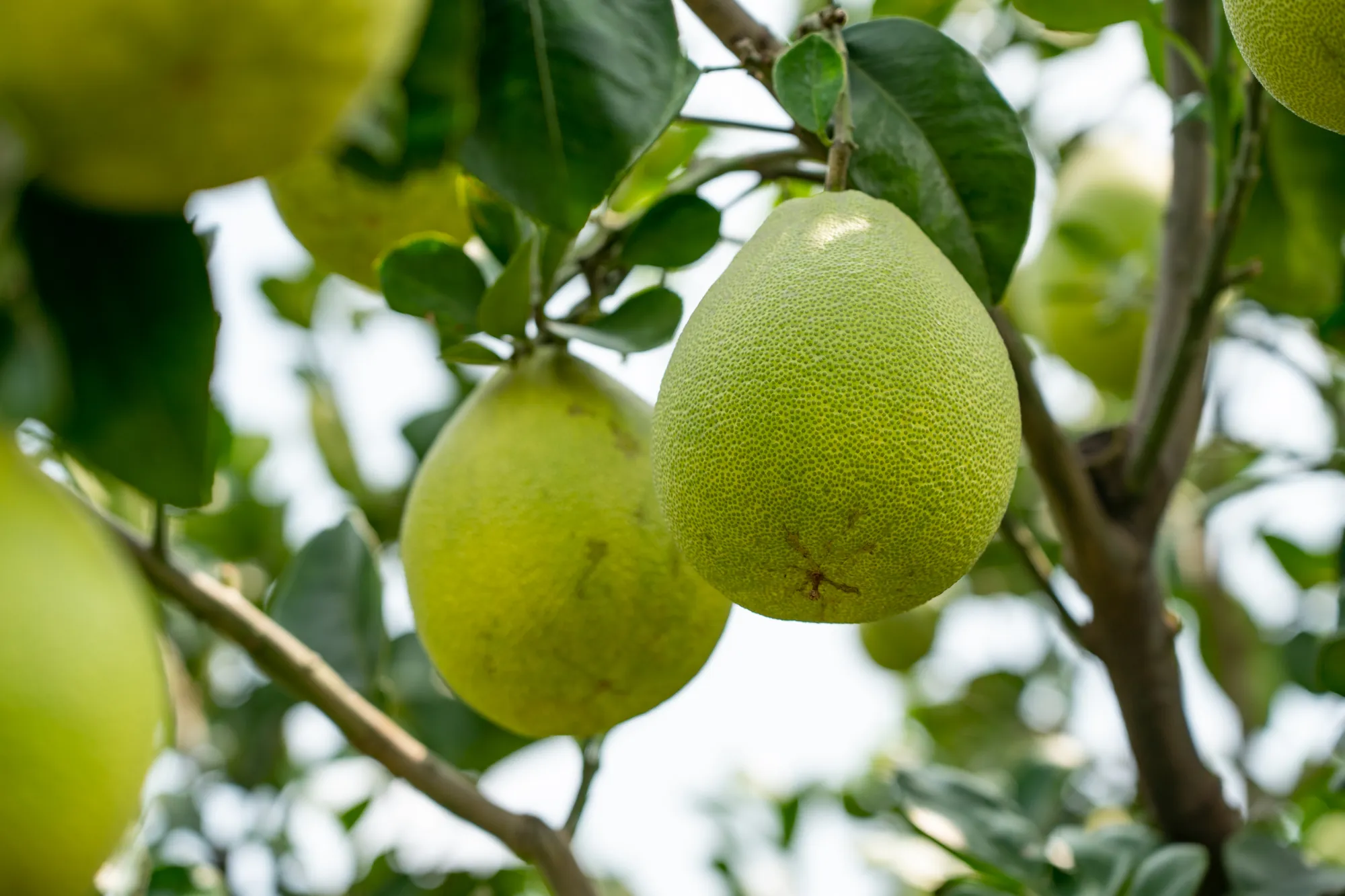
文旦,或稱柚子、文旦柚,外型呈洋梨狀,為中秋節的應景水果,中秋拜月、饋贈親友,文旦都是最佳選擇。
◤文.圖 / 看見台灣基金會編輯群
在
台灣若提到柚子,「麻豆」這個地名是必定提及的關鍵字,全因台南麻豆文旦太出名,文旦不只內銷,也外銷往中、日等國,是以麻豆即為文旦之代名詞。
麻豆何以能成為台灣第一的文旦產地呢?話說300年前,麻豆不僅尚未種植文旦,還是台灣重要的貿易港。然而滄海桑田,在人為開墾和溪流沖積的影響下,麻豆逐漸成為內陸聚落,僅留部分貿易港口的遺跡。雖然繁華不再,但富含礦物質的土壤,意外開啟麻豆的新篇章。
▋麻豆文旦柔軟多汁有彈性,清廷、日本天皇都喜歡
清代商人偶然引進文旦樹,所結果實甜美更勝原產地中國福建,成為台灣本土新品種「麻豆文旦」。
跟烏龍茶一樣,移植到台灣之後,因為風土與人文造就新的不凡價值。
麻豆文旦外觀呈圓錐或洋梨形,果皮是淡淡的黃綠色,果肉則有淡白色、淡黃白色或淡粉紅色幾種。口感柔軟多汁帶點彈性,偶爾有淡淡的苦味,不違和地襯托出文旦的清香,「麻豆文旦」逐漸累積起知名度,更是入貢清廷以及日治時期總督府敬呈日本天皇的御用水果。
探索更多
木瓜─米其林必嘗台灣美味:木瓜牛奶
從清朝的「番木瓜」到外銷日本的台農品種,台灣木瓜透過改良與精緻栽培,成功打造口感香甜的風味,也為機能食品開創更多可能。
柑橘─全世界、台灣都是產量最大水果
柑橘,泛指各種芸香科柑橘屬水果,包括橘、柚、檸檬、葡萄柚等,彼此雜交出的品種約200種,台灣民眾俗稱的柑橘,其實只涉及「橘」這一類。
鵝─早期,養鵝是農家副業
台灣從17、18世紀起已有養鵝紀錄,飼養「華鵝」,主要是傳統農家副業。1974年自丹麥引進「白羅曼鵝」後,白羅曼鵝才成為飼養主流,至今占比逾97%。