


◤Text and Images / iSee Taiwan Foundation Editorial Team
Lukang Township, Changhua County, was once spoken of in the saying "first Tainan, second Lukang, third Mengjia (Taiwanese name for present-day Wanhua District, Taipei)," and was one of the most prosperous ports of Qing-dynasty Taiwan. As immigrants from Quanzhou and from Fujian and Guangdong crossed the sea, foods from many places gathered and mingled here, and miancha took root amid those years of port-street life.
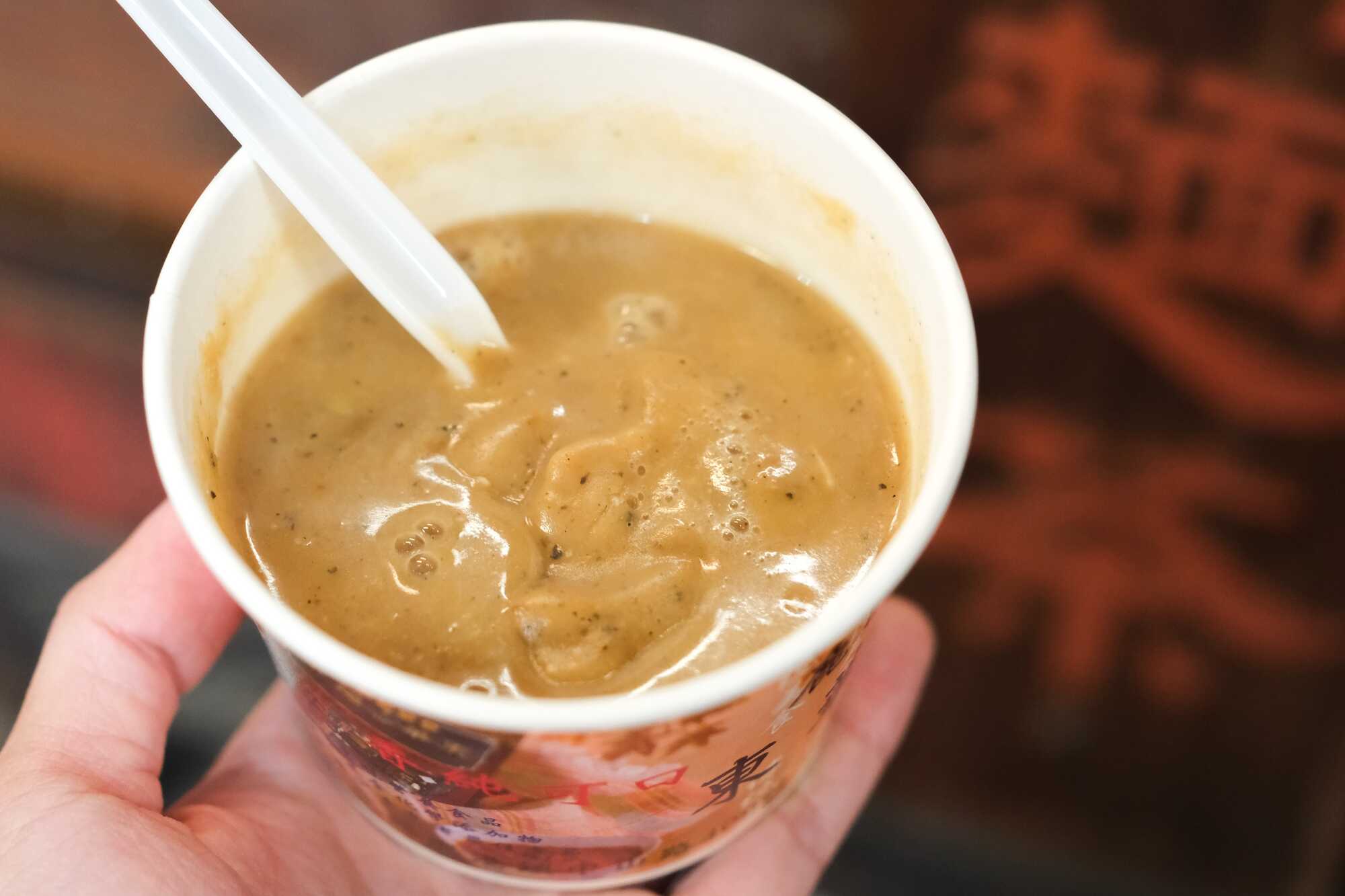
Miancha began as a folk snack of northern China. The Qing-dynasty poet Yang Mi-ren wrote in Dumen zhuzhici (Bamboo Branch Lyrics of the Capital): "For three big coins they sell fine flowers; sliced cake and fried dough clamor in the din; at dawn a bowl of sweet rice-milk gruel, and just after chatang, miancha again." In a few lines, it shows that miancha was already a familiar everyday taste. When this northern snack reached Lukang, port families adjusted it to local taste, slow-frying it with sesame, peanut, sugar, and fat over a gentle flame; brewed with hot water, it turned thick, smooth, and fine, sweet and rich on the palate, gradually becoming one of Lukang's most emblematic old-time flavors. In leaner years, moreover, many families who could not afford milk powder treated miancha as a daily nutritional supplement for their children-a bowl of warm, filling food made with nothing but hot water.
Sweet Meets Savory-Lukang's Own Way of Eating It
Traditional Lukang miancha is made in a way close to the old method of chao (roasted grain flour): bread flour, lard, sugar, and sesame or peanut are stir-fried together repeatedly, slow-roasted for about fifteen to twenty minutes until the wheat fragrance releases layer by layer. A moment's carelessness with the heat can scorch it bitter, so it takes real experience and patience. Many old Lukang shops still insist on stir-frying by hand: "Men Men Cha Cha," for one, keeps to gentle-flame frying and brews each bowl to order; "A Zhen Miancha," in the heart of the old street, is known for a rich, smooth paste eaten with mahua (Mandarin for "fried dough twists"); and "Yanzhong Miancha" is likewise handmade, preserving the old-time taste.
To brew it, hot water is poured in slowly and stirred into a thick paste; then, to taste, sesame powder is added, or it is eaten together with mahua or youtiao (Mandarin for "fried dough sticks"), sweet and savory mingling in an especially beguiling way. This way of eating keeps the foundation of northern miancha while folding in the fine rhythm of Lukang's port-street life. Walk into Lukang's old street today and one can still catch the familiar scent of roasting flour at the bend of a winding lane. From the far-from-home taste of port immigrants to the shared taste-memory of Lukang people today, this seemingly ordinary bowl of miancha roasts up not just flour but the warmth of a century of life in an ancient town.