
'%20fill='%23a9976d'/%3e%3cpath%20id='Path_251'%20data-name='Path%20251'%20d='M8,35a1,1,0,0,1,1-1H23a1,1,0,0,1,0,2H9A1,1,0,0,1,8,35Z'%20transform='translate(-8%20-22)'%20fill='%23a9976d'/%3e%3cpath%20id='Path_252'%20data-name='Path%20252'%20d='M9,22a1,1,0,0,0,0,2h8a1,1,0,0,0,0-2Z'%20transform='translate(-8%20-16)'%20fill='%23a9976d'/%3e%3c/svg%3e)
'%20fill='%23a9976d'/%3e%3c/g%3e%3c/svg%3e)
醬瓜─清苦農村生活中溫暖的鹹香
主題探索
文化美食
分享
'%3e%3cg%20id='Ellipse_27'%20data-name='Ellipse%2027'%20transform='translate(813%20250)'%20fill='none'%20stroke='%23ccac89'%20stroke-width='1'%3e%3ccircle%20cx='16'%20cy='16'%20r='16'%20stroke='none'/%3e%3ccircle%20cx='16'%20cy='16'%20r='15.5'%20fill='none'/%3e%3c/g%3e%3cg%20id='facebook'%20transform='translate(824.105%20258.296)'%3e%3cpath%20id='Path_243'%20data-name='Path%20243'%20d='M8.894.111V2.556H7.441a1.361,1.361,0,0,0-1.074.333,1.534,1.534,0,0,0-.278,1v1.75H8.8L8.441,8.38H6.089v7.028H3.255V8.38H.894V5.639H3.255V3.62A3.582,3.582,0,0,1,4.218.949,3.5,3.5,0,0,1,6.783,0,15.317,15.317,0,0,1,8.894.111Z'%20transform='translate(0%200)'%20fill='%23ccac89'/%3e%3c/g%3e%3c/g%3e%3c/svg%3e)

'%3e%3cg%20id='Ellipse_29'%20data-name='Ellipse%2029'%20transform='translate(901%20250)'%20fill='none'%20stroke='%23ccac89'%20stroke-width='1'%3e%3ccircle%20cx='16'%20cy='16'%20r='16'%20stroke='none'/%3e%3ccircle%20cx='16'%20cy='16'%20r='15.5'%20fill='none'/%3e%3c/g%3e%3cg%20id='link-45deg'%20transform='translate(902.607%20253.105)'%3e%3cg%20id='Group_479'%20data-name='Group%20479'%20transform='translate(7.393%205.896)'%3e%3cpath%20id='Path_241'%20data-name='Path%20241'%20d='M10.246,17.821,8.507,19.56a3.8,3.8,0,0,0,5.378,5.378L16.2,22.62a3.8,3.8,0,0,0-1.05-6.12l-.743.743a1.27,1.27,0,0,0-.2.252,2.535,2.535,0,0,1,1.091,4.23L12.99,24.042A2.536,2.536,0,0,1,9.4,20.455l1.005-1a5.093,5.093,0,0,1-.162-1.631Z'%20transform='translate(-7.393%20-12.02)'%20fill='%23ccac89'/%3e%3cpath%20id='Path_242'%20data-name='Path%20242'%20d='M18.236,9.327a3.8,3.8,0,0,0,1.05,6.12l.982-.984a2.535,2.535,0,0,1-1.136-4.241L21.448,7.9a2.536,2.536,0,1,1,3.587,3.587l-1.005,1a5.1,5.1,0,0,1,.162,1.631l1.739-1.739A3.8,3.8,0,1,0,20.553,7.01Z'%20transform='translate(-13.011%20-5.896)'%20fill='%23ccac89'/%3e%3c/g%3e%3c/g%3e%3c/g%3e%3c/svg%3e)
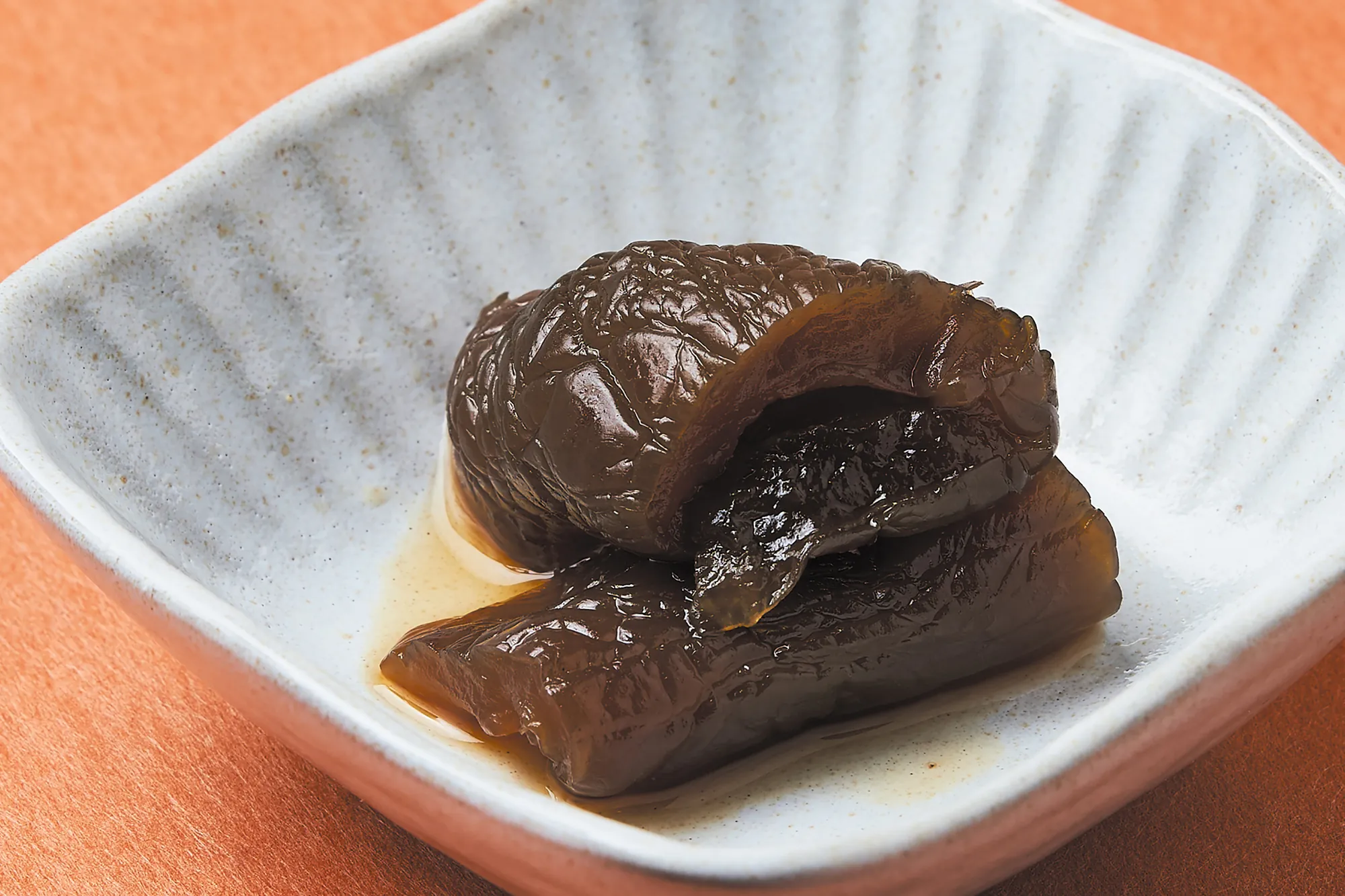
醬瓜為台灣常見的傳統醃漬料理,簡單易做,廣見於家戶之間。醬瓜使用小黃瓜(又稱小胡瓜、小花瓜、花胡瓜、刺瓜仔)用黃豆醬油醃漬而成。
◤文.圖/看見台灣基金會編輯群
這
個十分尋常的醃漬料理,背後其實承載著一段厚重的常民文化:早期來台的先民由於食物來源有限、生活清苦,所以無論客家或閩南族群中皆可見到醬瓜的身影,一來利於保存,而其醬油鹹香則為有限食材帶來溫暖的滋味。
早期白米是珍貴食材,農民種植的白米,大部分外銷賺外匯,「賣油娘子水梳頭」(意指:好東西優先拿去賺養家費,自己不享受)自己則只取用少量白米煮成粥當做主食,混入澱粉地瓜增加飽足感,再配上醬瓜,為平淡又平凡的一餐,添加了幸福感。
▋台灣人皆有的味覺記憶之一
醬瓜是以小黃瓜以鹽巴、糖、醬油、稍微燙煮進行醃漬處理即成,醃漬後的小黃瓜可長期保存,且富有醬油的鹹香甘醇,並保留小黃瓜脆嫩多汁的口感,由於製作簡便快速,許多家庭皆能自行製作,也因此成為許多台灣人皆有的味覺記憶之一。
適宜搭配僅有淺淺飯香的清粥食用,當成開胃小點,或是加在其他料理中增加風味,醬瓜相關的料理則包括瓜仔肉、脆瓜蒸肉餅、瓜仔雞湯、瓜仔排骨湯等。
綜觀世界,不同文化圈中皆有醃漬小黃瓜的食用方式。台式醬瓜之作法應由先民自中國攜入;而日式脆瓜,在製作上由於亦使用醬油,故其風味和台式十分相近。西方社會傳統的醃黃瓜,則是在糖、鹽、醋之外再加入大蒜、蒔蘿、龍蒿等香料,因此風味上和東亞以醬油、甜為基調之甜鹹風格明顯不同。
探索更多
胡麻油─黑白芝麻油、香油用法不同
胡麻油為台灣常見油品,胡麻又稱芝麻。在人類歷史上,芝麻出現得相當早,而胡麻油亦為最古老的食用油品之一。4000多年前的埃及及蘇丹即食用芝麻,後經絲路進中國,再傳到台灣。
鳳梨─台灣鳳梨品種,世界第一
無論是鮮果、加工食品,或是鳳梨酥,台灣鳳梨正以它的獨特風味,征服全球市場。
夜市─東南亞旅客最有熟悉感的台灣街頭饗宴
對東南亞的旅客而言,夜市與街頭小吃並不陌生;但台灣夜市的魅力,在於把地方食材、廟口文化、庶民生活與觀光體驗,濃縮在一條燈火通明的街道裡。從蚵仔煎、豆花、鹽酥雞到冰品,夜市不只是滿足味蕾的地方,也是外國旅客最容易感受台灣日常活力的現場。