


◤Text and Images / iSee Taiwan Foundation Editorial Team
One of the twenty-four traditional solar terms, Qingming is the time when most families return to their hometowns to sweep graves and pay respects to their ancestors. The festival also carries distinct culinary customs: tsháu-á-kué, ai ban, and run bing are all served cold—a practice believed to trace back to the ancient Cold Food Festival. Originally observed to honor Jie Zitui, a loyal minister of the Spring and Autumn period (c. 770–481 BCE), the Cold Food Festival forbade the use of fire; its traditions gradually merged with those of Qingming.
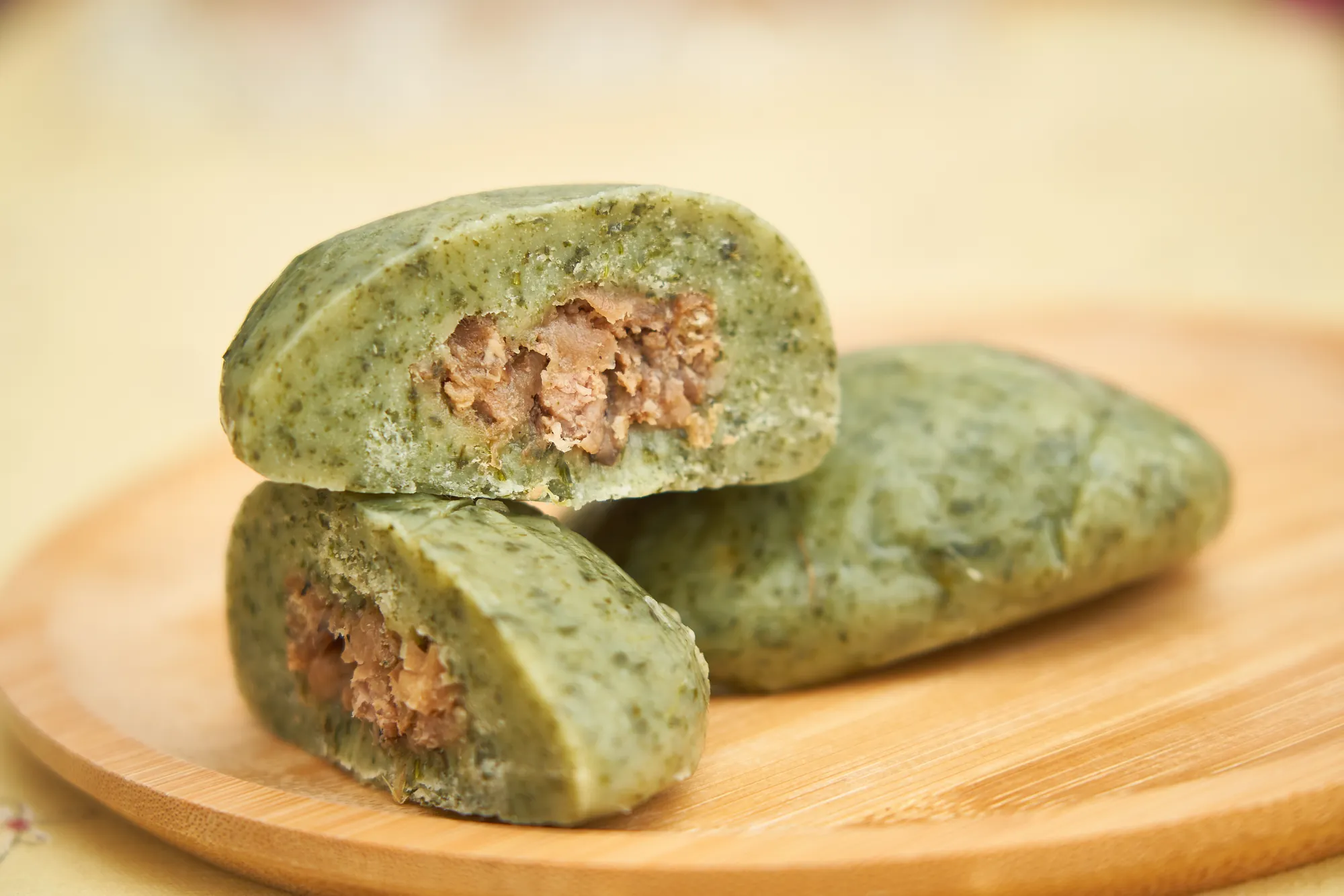
The custom of offering tsháu-á-kué to ancestors in Taiwan dates to the Qing-governed period. The Revised Gazetteer of Fujian-Taiwan Prefecture records: "On the third day of the third month, cudweed (Gnaphalium affine) is gathered and combined with rice flour to make cakes for ancestor worship." The practice carries the blessing "offering rice cakes brings wealth," with the wish that descendants enjoy prosperity and peace. The cakes are made by kneading glutinous rice dough with pressed cudweed juice—hence the name tsháu-á-kué, or herb rice cake. Hakka communities substitute mugwort for cudweed, calling their version ai ban.
Tsháu-á-kué and Run Bing: Seasonal Staples
Tsháu-á-kué fillings typically include shredded radish, crispy fried shallots, dried shiitake mushroom, and dried shrimp; sweet versions are filled with red bean or mung bean paste. Each cake is roughly palm-sized, laid on a sea hibiscus (Hibiscus tiliaceus) leaves or shell ginger leaf and steamed until it takes on a natural green hue. Run bing is a spring roll made with a thin, pliable wrapper folded around stir-fried fillings—shredded radish, cabbage, celery, cilantro, bean sprouts, sausage or red yeast pork, dried bean curd, and sliced egg. A staple of Hokkien culinary culture, it is shared among family and friends throughout the Qingming season.
Today, tsháu-á-kué, ai ban, and run bing have long since moved beyond the ancestral altar. Now everyday snacks as much as ritual offerings, they carry the flavors of a Taiwanese spring—and the warmth of family gathered together.