


◤Text and Images / iSee Taiwan Foundation Editorial Team
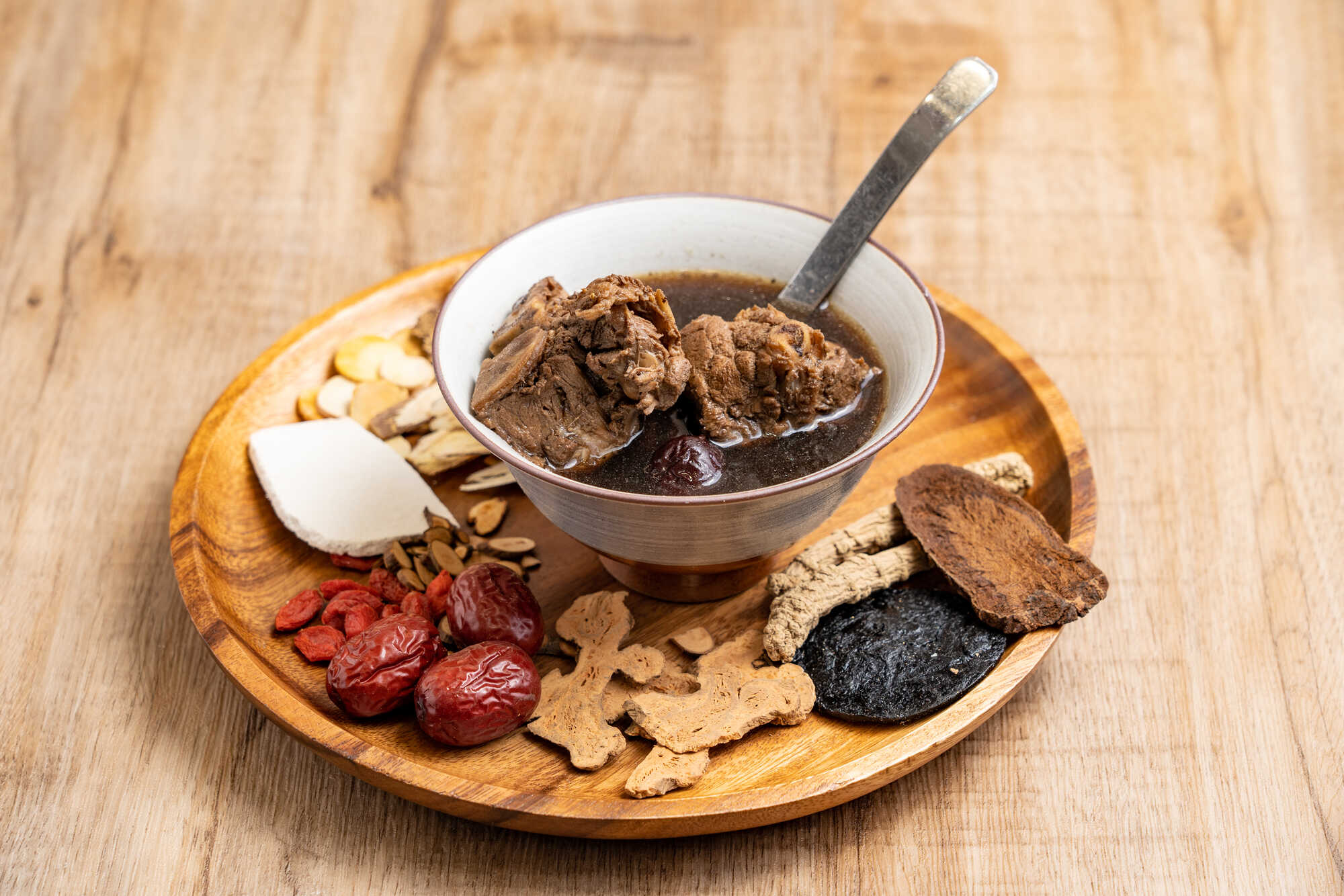
Strolling along Zhongshan Road in Taichung City, you catch it before you see it: the warm, faintly sweet scent of Chinese herbal medicine drifting on the air. This stretch has long been Taichung's foremost traditional Chinese medicine district-a dense cluster of herbal apothecaries that served as a major distribution hub for medicinal ingredients as far back as the Japanese colonial era. With such ready access to rare and everyday herbs alike, the area naturally gave rise to a culinary tradition built around medicinal broths and restorative soups. The most iconic of these is Shi Quan Da Bu Tang (or "Ten Tonic Soup"), a warming tonic that reigns supreme in the winter months.
The formula layers two classical prescriptions. Si Jun Zi Tang ("Four Gentlemen Decoction")-comprising ginseng, white atractylodes, poria, and licorice-tonifies qi; Si Wu Tang ("Four Agents Decoction")-dong quai (Chinese angelica), chuan xiong (Sichuan lovage), white peony root, and processed rehmannia-replenishes the blood. Together they form Ba Zhen Tang, the "eight-treasure decoction." Add astragalus to further strengthen qi and cinnamon to warm the body's yang energy, and you arrive at the complete ten-ingredient formula. This dual tonic-nourishing both qi and blood simultaneously-was no small feat to assemble in leaner times. The concentration of herbalists along Zhongshan Road made it possible.
From Recovery Room to Night Market
Once prescribed strictly for post-surgical recovery or low vitality-requiring a family member to visit the apothecary, collect the precisely weighed herbs, and simmer them at home for hours-Shi Quan Da Bu Tang has long since outgrown the medicine cabinet. Today it appears at street stalls, late-night eateries, and chain restaurants alike, a daily wellness option as accessible as a bowl of noodles. Come winter, steam rises from roadside pots of deep-amber broth, often ladled over braised chicken or pork ribs, or served alongside a tangle of mī-suànn (vermicelli) that has soaked up every drop of the medicinal stock.
That Shi Quan Da Bu Tang flourished here is no accident. Zhongshan Road's apothecaries provided the raw material; Taiwan's deep-rooted belief in the healing power of food provided the appetite. What began as a convalescent tonic has become an everyday act of self-care, a quiet reminder that in Taiwan, the line between the kitchen and the medicine chest has always been thin.