
'%20fill='%23a9976d'/%3e%3cpath%20id='Path_251'%20data-name='Path%20251'%20d='M8,35a1,1,0,0,1,1-1H23a1,1,0,0,1,0,2H9A1,1,0,0,1,8,35Z'%20transform='translate(-8%20-22)'%20fill='%23a9976d'/%3e%3cpath%20id='Path_252'%20data-name='Path%20252'%20d='M9,22a1,1,0,0,0,0,2h8a1,1,0,0,0,0-2Z'%20transform='translate(-8%20-16)'%20fill='%23a9976d'/%3e%3c/svg%3e)
'%20fill='%23a9976d'/%3e%3c/g%3e%3c/svg%3e)
彩色粄條──美濃的永續發展與實踐
'%3e%3cg%20id='Ellipse_27'%20data-name='Ellipse%2027'%20transform='translate(813%20250)'%20fill='none'%20stroke='%23ccac89'%20stroke-width='1'%3e%3ccircle%20cx='16'%20cy='16'%20r='16'%20stroke='none'/%3e%3ccircle%20cx='16'%20cy='16'%20r='15.5'%20fill='none'/%3e%3c/g%3e%3cg%20id='facebook'%20transform='translate(824.105%20258.296)'%3e%3cpath%20id='Path_243'%20data-name='Path%20243'%20d='M8.894.111V2.556H7.441a1.361,1.361,0,0,0-1.074.333,1.534,1.534,0,0,0-.278,1v1.75H8.8L8.441,8.38H6.089v7.028H3.255V8.38H.894V5.639H3.255V3.62A3.582,3.582,0,0,1,4.218.949,3.5,3.5,0,0,1,6.783,0,15.317,15.317,0,0,1,8.894.111Z'%20transform='translate(0%200)'%20fill='%23ccac89'/%3e%3c/g%3e%3c/g%3e%3c/svg%3e)

'%3e%3cg%20id='Ellipse_29'%20data-name='Ellipse%2029'%20transform='translate(901%20250)'%20fill='none'%20stroke='%23ccac89'%20stroke-width='1'%3e%3ccircle%20cx='16'%20cy='16'%20r='16'%20stroke='none'/%3e%3ccircle%20cx='16'%20cy='16'%20r='15.5'%20fill='none'/%3e%3c/g%3e%3cg%20id='link-45deg'%20transform='translate(902.607%20253.105)'%3e%3cg%20id='Group_479'%20data-name='Group%20479'%20transform='translate(7.393%205.896)'%3e%3cpath%20id='Path_241'%20data-name='Path%20241'%20d='M10.246,17.821,8.507,19.56a3.8,3.8,0,0,0,5.378,5.378L16.2,22.62a3.8,3.8,0,0,0-1.05-6.12l-.743.743a1.27,1.27,0,0,0-.2.252,2.535,2.535,0,0,1,1.091,4.23L12.99,24.042A2.536,2.536,0,0,1,9.4,20.455l1.005-1a5.093,5.093,0,0,1-.162-1.631Z'%20transform='translate(-7.393%20-12.02)'%20fill='%23ccac89'/%3e%3cpath%20id='Path_242'%20data-name='Path%20242'%20d='M18.236,9.327a3.8,3.8,0,0,0,1.05,6.12l.982-.984a2.535,2.535,0,0,1-1.136-4.241L21.448,7.9a2.536,2.536,0,1,1,3.587,3.587l-1.005,1a5.1,5.1,0,0,1,.162,1.631l1.739-1.739A3.8,3.8,0,1,0,20.553,7.01Z'%20transform='translate(-13.011%20-5.896)'%20fill='%23ccac89'/%3e%3c/g%3e%3c/g%3e%3c/g%3e%3c/svg%3e)
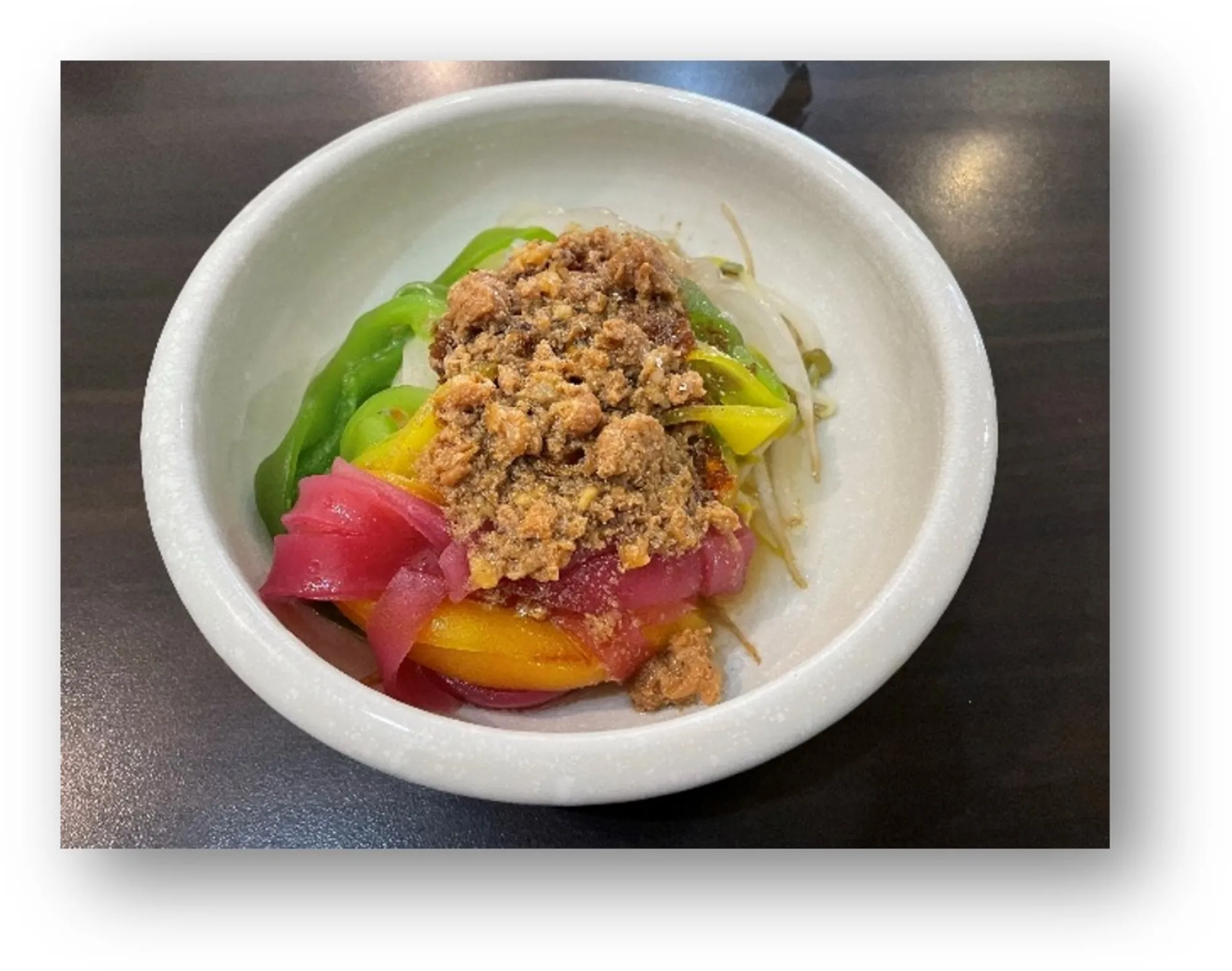
◤文.圖 / 看見台灣基金會編輯群
條是客家傳統吃食代表之一,更是美濃代名詞;今日,一碗彩色的粄條不只代表對傳統飲食的創新,也是美濃實踐永續發展的縮影。
彩色粄條是新一代美濃人以在地米與天然蔬果創作而成,以稻米競賽的常勝軍「高雄147號米」為基底,浸泡軟化後磨成細米漿,加入地瓜葉、火龍果、甜菜根、蝶豆花等蔬果汁調色,後倒入模具中蒸熟,約30秒至1分鐘成柔軟粄皮。蒸好後放涼固定,脫模再切成條狀。彩色粄條可用於清燙、涼拌、湯食或炒製,保持無添加、天然食材和手工製作,呈現健康又美觀的客家特色。
美濃客庄,除了粄條、紙傘,還有許多具地方特色的物產,如高雄147號米、白玉蘿蔔、野蓮、橙蜜香番茄等。
1909年是美濃發展的重要時刻,該年,竹仔門發電所竣工,為全台第三座水力發電廠、南台灣的第一座發電廠,更是一項綠能結合水利設施的工程。
它開啟南台灣電力時代的同時,發電後的尾水也流入水圳作為灌溉之用,使美濃可耕種的水田面積擴增8倍,達4,100甲。美濃成為南台灣重要穀倉,開啟自1936年起二期水稻、一期菸葉的70年繁華歲月。
▋在地優質米結合創意
2002年則是另一個關鍵時刻,這一年,台灣加入WTO,面對菸酒公賣局的改制,以及菸葉逐漸停止種植的衝擊,美濃農民在農會協助下,經十餘年的轉型,除了高雄147米每年一億五千萬元的產值,野蓮、敏豆、橙蜜香番茄,也於市場上各自創造出約4億元的產值。
現今,竹仔門發電所的舊機組已功成身退,新機組接下傳承的火炬,以竹門機組的新名稱,持續為南台灣提供綠色能源,而發電後的尾水依然流入獅子頭圳灌溉田地。
農民也接棒發展地方特色,和農會攜手以產銷履歷、有機、地產地銷的概念發展友善農業,契合聯合國近年所推廣的「Sustainable Gastronomy」理念,不追求產量,以一期稻作、一期裡作的耕作節奏,讓物產更豐富、土地有休養生息的機會。新一代的美濃人,也以在地的米、食材及創意,製作出彩色的粄條,和農民一起成為永續發展的實踐者。