


◤Text and Images / iSee Taiwan Foundation Editorial Team
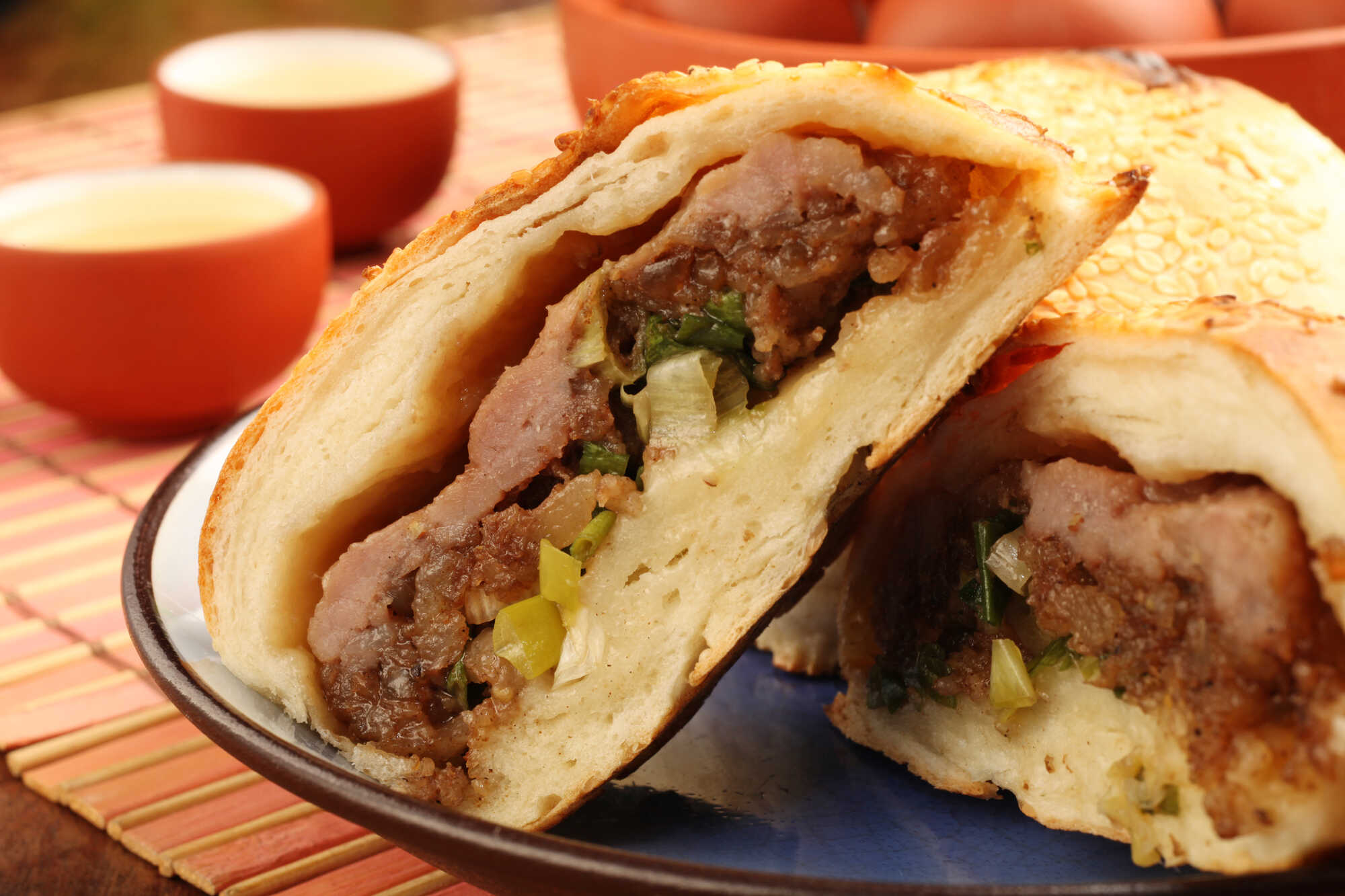
Taiwan's hujiao bing is widely regarded as a descendant of the Fuzhou scallion-and-pork bun. These kiln-baked rounds, stuffed with minced pork and green onion, were a staple of Fuzhou street food; as migrants and their apprentices crossed to Taiwan, the recipe evolved into something distinctly its own. After taking root in Taiwan's street food scene, pepper bun remained a niche specialty for some time. In the postwar decades, vendors grew scarce, though old shops in Wanhua, Dadaocheng, and a handful of other neighborhoods kept the tradition alive. From the 1980s onward, the boom in night markets and street food culture brought pepper bun back into the mainstream, and today it is a fixture at markets across the island.
As for its name, the most common explanation is straightforward: when this Fuzhou baked bun arrived in Taiwan, vendors began seasoning the filling generously with black pepper-and the name pepper bun followed naturally. The heat of the pepper plays off the savory pork and fragrant green onion, producing a filling that is bold, aromatic, and juicy. That combination is a large part of why pepper bun became one of Taiwan's most recognizable night-market snacks.
The Craft Behind the Kiln
Hujiao bing may look humble, but making it well demands real skill. Each stage-fermenting the dough, seasoning the filling, wrapping and sealing the bun-calls for accumulated experience. At the baking stage, the maker must press each dough round firmly against the interior wall of a kiln, where temperatures reach 200 to 300°C. Misjudge the heat, and the outer shell will either scorch or fail to develop its signature crispness. The technique itself echoes other traditions of high-heat, wall-baked flatbreads.
The most celebrated name in Taiwan's hujiao bing world is Fuzhou Shizu Hujiao Bing, located in Taipei's Raohe Street Night Market. Founded by Wu Yucheng, who trained under a Fuzhou master, the shop has upheld traditional kiln-baking methods for decades. It has become a must-try for domestic and international visitors alike-and has earned recognition from the Michelin Guide's Bib Gourmand program, bringing it to the attention of food lovers around the world.
From a humble Fuzhou bun to one of Taiwan's most-queued night-market staples, pepper bun is more than a snack. It is a record of migration-of a food tradition carried across the strait, adapted to a new home, and shaped by generations of local hands into something unmistakably Taiwanese.