
'%20fill='%23a9976d'/%3e%3cpath%20id='Path_251'%20data-name='Path%20251'%20d='M8,35a1,1,0,0,1,1-1H23a1,1,0,0,1,0,2H9A1,1,0,0,1,8,35Z'%20transform='translate(-8%20-22)'%20fill='%23a9976d'/%3e%3cpath%20id='Path_252'%20data-name='Path%20252'%20d='M9,22a1,1,0,0,0,0,2h8a1,1,0,0,0,0-2Z'%20transform='translate(-8%20-16)'%20fill='%23a9976d'/%3e%3c/svg%3e)
'%20fill='%23a9976d'/%3e%3c/g%3e%3c/svg%3e)
九層塔─特殊地方種,台味十足
主題探索
文化美食
分享
'%3e%3cg%20id='Ellipse_27'%20data-name='Ellipse%2027'%20transform='translate(813%20250)'%20fill='none'%20stroke='%23ccac89'%20stroke-width='1'%3e%3ccircle%20cx='16'%20cy='16'%20r='16'%20stroke='none'/%3e%3ccircle%20cx='16'%20cy='16'%20r='15.5'%20fill='none'/%3e%3c/g%3e%3cg%20id='facebook'%20transform='translate(824.105%20258.296)'%3e%3cpath%20id='Path_243'%20data-name='Path%20243'%20d='M8.894.111V2.556H7.441a1.361,1.361,0,0,0-1.074.333,1.534,1.534,0,0,0-.278,1v1.75H8.8L8.441,8.38H6.089v7.028H3.255V8.38H.894V5.639H3.255V3.62A3.582,3.582,0,0,1,4.218.949,3.5,3.5,0,0,1,6.783,0,15.317,15.317,0,0,1,8.894.111Z'%20transform='translate(0%200)'%20fill='%23ccac89'/%3e%3c/g%3e%3c/g%3e%3c/svg%3e)

'%3e%3cg%20id='Ellipse_29'%20data-name='Ellipse%2029'%20transform='translate(901%20250)'%20fill='none'%20stroke='%23ccac89'%20stroke-width='1'%3e%3ccircle%20cx='16'%20cy='16'%20r='16'%20stroke='none'/%3e%3ccircle%20cx='16'%20cy='16'%20r='15.5'%20fill='none'/%3e%3c/g%3e%3cg%20id='link-45deg'%20transform='translate(902.607%20253.105)'%3e%3cg%20id='Group_479'%20data-name='Group%20479'%20transform='translate(7.393%205.896)'%3e%3cpath%20id='Path_241'%20data-name='Path%20241'%20d='M10.246,17.821,8.507,19.56a3.8,3.8,0,0,0,5.378,5.378L16.2,22.62a3.8,3.8,0,0,0-1.05-6.12l-.743.743a1.27,1.27,0,0,0-.2.252,2.535,2.535,0,0,1,1.091,4.23L12.99,24.042A2.536,2.536,0,0,1,9.4,20.455l1.005-1a5.093,5.093,0,0,1-.162-1.631Z'%20transform='translate(-7.393%20-12.02)'%20fill='%23ccac89'/%3e%3cpath%20id='Path_242'%20data-name='Path%20242'%20d='M18.236,9.327a3.8,3.8,0,0,0,1.05,6.12l.982-.984a2.535,2.535,0,0,1-1.136-4.241L21.448,7.9a2.536,2.536,0,1,1,3.587,3.587l-1.005,1a5.1,5.1,0,0,1,.162,1.631l1.739-1.739A3.8,3.8,0,1,0,20.553,7.01Z'%20transform='translate(-13.011%20-5.896)'%20fill='%23ccac89'/%3e%3c/g%3e%3c/g%3e%3c/g%3e%3c/svg%3e)
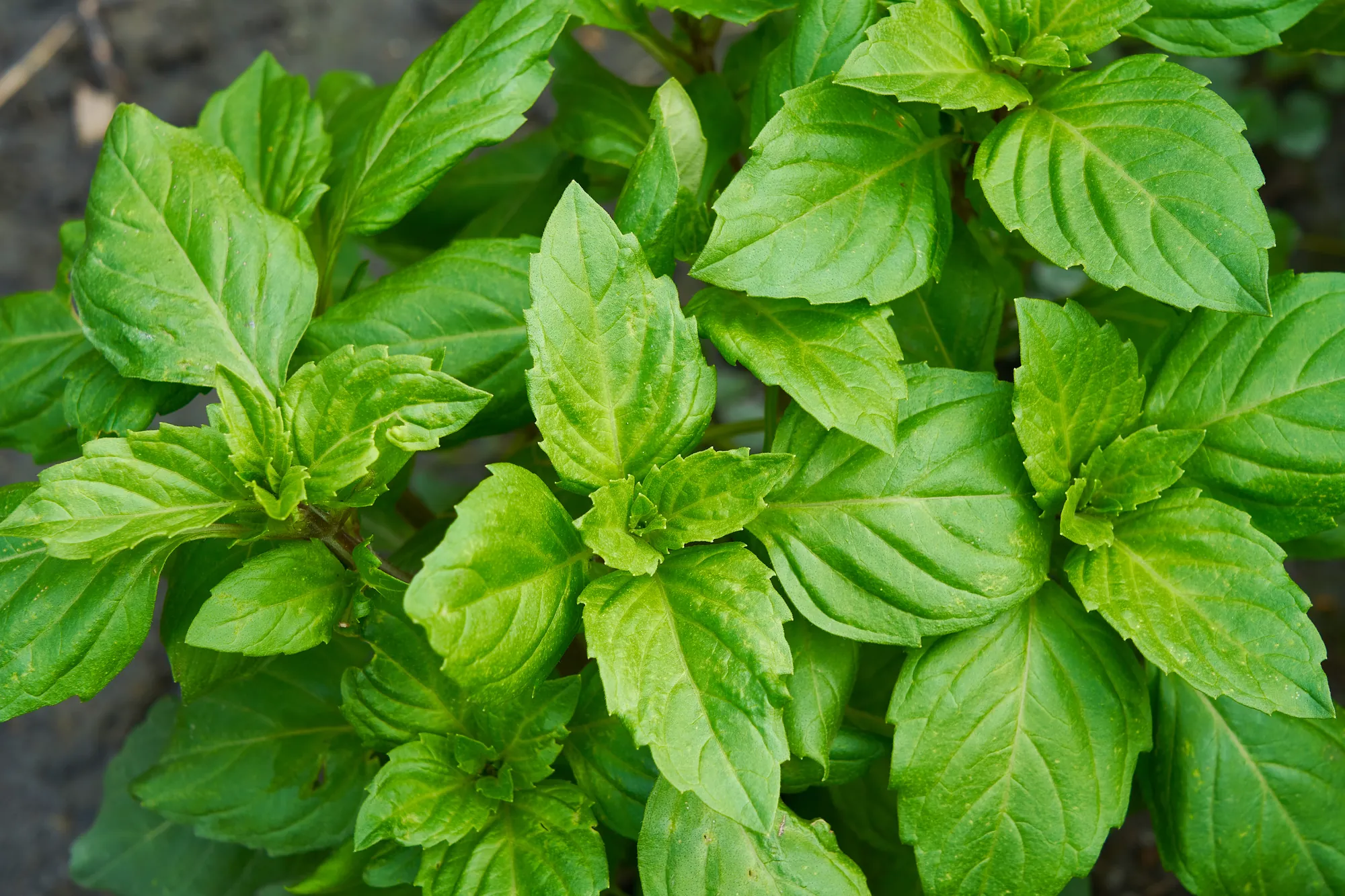
唇形科羅勒屬羅勒,約有160種,九層塔是羅勒的變種,屬於特殊的地方品種,香氣可說是「台味十足」,偏濃重,味道來自甲基蔞葉酚,主要功能是用防止蚊蟲叮咬,和義大利菜系常用的甜羅勒的香氣化學成分完全不同。
◤文.圖/看見台灣基金會編輯群
九
層塔是栽種歷史悠久的植物之一,五千年前印度就有種植紀錄,品種眾多,各地有不同稱謂。其學名中的Ocimum源於希臘字ozo,意為「氣味」或「香味」。
九層塔之稱呼,有一說法為因其花序層疊如塔狀,而「九層」非指其剛好九層,而是以九引申為多,用以形容此種植物花序層疊繁多。九層塔並非台灣原生種植物,台灣的九層塔,一般認為最初應是17世紀時由荷蘭人引進台灣,後適應於台灣的風土氣候,成為特殊的地方品種。
▋紅骨九層塔用於三杯,青骨用於湯品
九層塔有兩個品種:其一為莖呈紫色的紅骨九層塔,因香味濃郁,常見於台灣的三杯料理中;另有白骨九層塔(或是青骨九層塔),莖呈綠色,葉片具清香,適宜作湯底清燉,亦常見於鹹酥雞中提香解膩之用。
不論是紅骨或白骨九層塔,若從遺傳分子標誌結果觀察,皆為台灣的特殊地方品種,與其他品種之羅勒不同。九層塔喜歡曬太陽,台灣以中、南部為主要產地。
台灣一般將九層塔與羅勒分開稱呼,當提及「羅勒」時,所指為西式料理常用的「甜羅勒」,風味較紅骨九層塔柔和;此外,泰式料理打拋豬使用之「打拋葉」,其實亦為羅勒屬之植物,因自泰語神聖羅勒音譯而來故讀為「打拋」。
探索更多
紅藜─超級食物台灣原生版
藜麥,因其全營養的特性而有「超級食物」、「未來食品」美稱。2013年,聯合國宣布為國際藜麥年,旨在表彰安地斯山區原住民的貢獻,他們以永續經營的栽培方法,以傳統方式保存藜麥。
八寶芋泥─從前是富貴人家的象徵
「八寶」在過去是有錢人家的象徵,代表了「珍貴」與「多」的意思,至於哪八寶,則無定數。
洋蔥─不靠顏值,台灣洋蔥憑口味實力外銷
從日治時期的引進、種植失敗,到如今在屏東成功種植,並成為當地的重要農產,台灣洋蔥已逐漸走向國際市場,成為外銷的潛力商品。