
'%20fill='%23a9976d'/%3e%3cpath%20id='Path_251'%20data-name='Path%20251'%20d='M8,35a1,1,0,0,1,1-1H23a1,1,0,0,1,0,2H9A1,1,0,0,1,8,35Z'%20transform='translate(-8%20-22)'%20fill='%23a9976d'/%3e%3cpath%20id='Path_252'%20data-name='Path%20252'%20d='M9,22a1,1,0,0,0,0,2h8a1,1,0,0,0,0-2Z'%20transform='translate(-8%20-16)'%20fill='%23a9976d'/%3e%3c/svg%3e)
'%20fill='%23a9976d'/%3e%3c/g%3e%3c/svg%3e)
'%3e%3cg%20id='Ellipse_27'%20data-name='Ellipse%2027'%20transform='translate(813%20250)'%20fill='none'%20stroke='%23ccac89'%20stroke-width='1'%3e%3ccircle%20cx='16'%20cy='16'%20r='16'%20stroke='none'/%3e%3ccircle%20cx='16'%20cy='16'%20r='15.5'%20fill='none'/%3e%3c/g%3e%3cg%20id='facebook'%20transform='translate(824.105%20258.296)'%3e%3cpath%20id='Path_243'%20data-name='Path%20243'%20d='M8.894.111V2.556H7.441a1.361,1.361,0,0,0-1.074.333,1.534,1.534,0,0,0-.278,1v1.75H8.8L8.441,8.38H6.089v7.028H3.255V8.38H.894V5.639H3.255V3.62A3.582,3.582,0,0,1,4.218.949,3.5,3.5,0,0,1,6.783,0,15.317,15.317,0,0,1,8.894.111Z'%20transform='translate(0%200)'%20fill='%23ccac89'/%3e%3c/g%3e%3c/g%3e%3c/svg%3e)

'%3e%3cg%20id='Ellipse_29'%20data-name='Ellipse%2029'%20transform='translate(901%20250)'%20fill='none'%20stroke='%23ccac89'%20stroke-width='1'%3e%3ccircle%20cx='16'%20cy='16'%20r='16'%20stroke='none'/%3e%3ccircle%20cx='16'%20cy='16'%20r='15.5'%20fill='none'/%3e%3c/g%3e%3cg%20id='link-45deg'%20transform='translate(902.607%20253.105)'%3e%3cg%20id='Group_479'%20data-name='Group%20479'%20transform='translate(7.393%205.896)'%3e%3cpath%20id='Path_241'%20data-name='Path%20241'%20d='M10.246,17.821,8.507,19.56a3.8,3.8,0,0,0,5.378,5.378L16.2,22.62a3.8,3.8,0,0,0-1.05-6.12l-.743.743a1.27,1.27,0,0,0-.2.252,2.535,2.535,0,0,1,1.091,4.23L12.99,24.042A2.536,2.536,0,0,1,9.4,20.455l1.005-1a5.093,5.093,0,0,1-.162-1.631Z'%20transform='translate(-7.393%20-12.02)'%20fill='%23ccac89'/%3e%3cpath%20id='Path_242'%20data-name='Path%20242'%20d='M18.236,9.327a3.8,3.8,0,0,0,1.05,6.12l.982-.984a2.535,2.535,0,0,1-1.136-4.241L21.448,7.9a2.536,2.536,0,1,1,3.587,3.587l-1.005,1a5.1,5.1,0,0,1,.162,1.631l1.739-1.739A3.8,3.8,0,1,0,20.553,7.01Z'%20transform='translate(-13.011%20-5.896)'%20fill='%23ccac89'/%3e%3c/g%3e%3c/g%3e%3c/g%3e%3c/svg%3e)
◤文.圖/看見台灣基金會編輯群
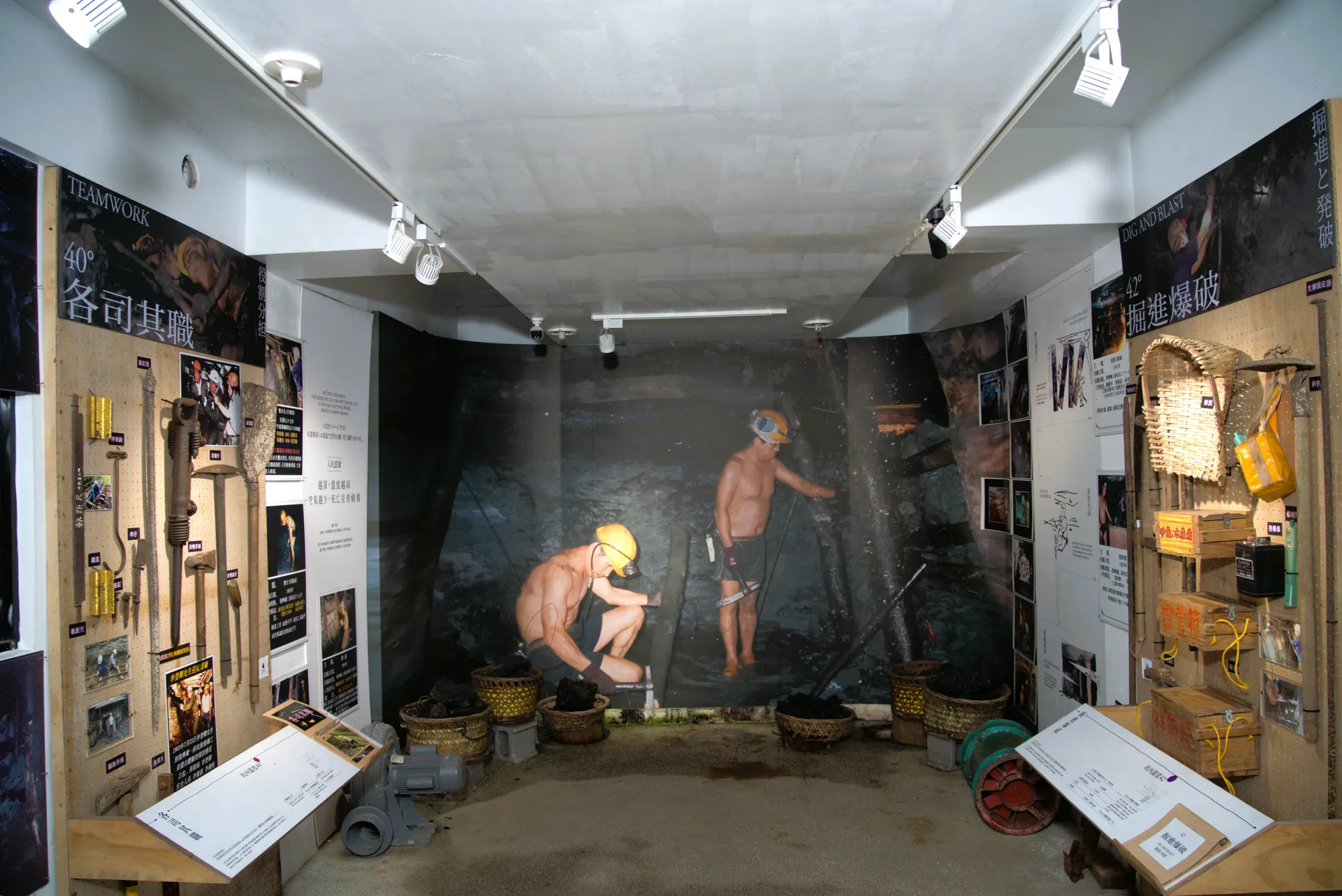
位於新北市猴硐瑞三煤礦主坑外的礦工文物館,是一座由老礦工親手建立的記憶場所。館內收藏看似簡樸,卻蘊含一段段與台灣工業史緊密相連的生命故事;而最讓人印象深刻的,是礦工口中的「芝麻便當」。
館長周朝南笑說,所謂「芝麻」並非食材,而是從頭盔掉落的煤屑。坑道裡高溫悶熱、煤粉四散,礦工只能趁著礦車拉出礦坑的短暫空檔抓緊時間吃飯,頭一低,煤渣落在白飯上,吹一吹便要吞下。看似輕描淡寫卻道出礦工的堅毅與苦中作樂的生存信念。猴硐礦工文史協會理事長林正福也回憶,早期家庭多半拮据,便當常是滿滿白飯配自家醃漬鹹菜,只有年節才可能帶上一塊豬肉,「我爸爸常捨不得吃,回家洗一洗,隔天再帶進去。」
館內導覽由老礦工親自講述
1970年代,煤炭是台灣重要的能源,甚至列為國防物資。兩度全球能源危機期間,全台發電高度仰賴本地煤礦,礦工們需要日夜加班增產;然而隨著產業停採、能源轉型,礦工的身影逐漸淡出社會記憶。擔心故事被時間埋沒,老礦工於 2019 年自掏腰包成立猴硐礦工文物館。「文物都是從自家拿出來的,沒花什麼錢。」周朝南笑說。館內導覽不靠華麗展示,而靠老礦工親自講述,卻因更真實動人而受到海內外遊客肯定。
除了參觀文物館,不少遊客也會循著礦工記憶的脈絡品味猴硐在地小吃。車站附近的「礦工便當」以滷肉、鹹菜、荷包蛋重現昔日家常滋味,而老街上的「貓村咖啡館」提供以黑糖、地瓜等區域食材製作的甜點;若往瑞三礦場方向步行,還能遇見販售熱呼呼「柴燒地瓜」與手作饅頭的小攤。這些日常食物,與礦工的餐桌記憶彼此呼應,讓遊客在味覺中更貼近過往的生活景象。