
'%20fill='%23a9976d'/%3e%3cpath%20id='Path_251'%20data-name='Path%20251'%20d='M8,35a1,1,0,0,1,1-1H23a1,1,0,0,1,0,2H9A1,1,0,0,1,8,35Z'%20transform='translate(-8%20-22)'%20fill='%23a9976d'/%3e%3cpath%20id='Path_252'%20data-name='Path%20252'%20d='M9,22a1,1,0,0,0,0,2h8a1,1,0,0,0,0-2Z'%20transform='translate(-8%20-16)'%20fill='%23a9976d'/%3e%3c/svg%3e)
'%20fill='%23a9976d'/%3e%3c/g%3e%3c/svg%3e)
地瓜─「番薯仔」一詞象徵台灣韌性
主題探索
文化美食
分享
'%3e%3cg%20id='Ellipse_27'%20data-name='Ellipse%2027'%20transform='translate(813%20250)'%20fill='none'%20stroke='%23ccac89'%20stroke-width='1'%3e%3ccircle%20cx='16'%20cy='16'%20r='16'%20stroke='none'/%3e%3ccircle%20cx='16'%20cy='16'%20r='15.5'%20fill='none'/%3e%3c/g%3e%3cg%20id='facebook'%20transform='translate(824.105%20258.296)'%3e%3cpath%20id='Path_243'%20data-name='Path%20243'%20d='M8.894.111V2.556H7.441a1.361,1.361,0,0,0-1.074.333,1.534,1.534,0,0,0-.278,1v1.75H8.8L8.441,8.38H6.089v7.028H3.255V8.38H.894V5.639H3.255V3.62A3.582,3.582,0,0,1,4.218.949,3.5,3.5,0,0,1,6.783,0,15.317,15.317,0,0,1,8.894.111Z'%20transform='translate(0%200)'%20fill='%23ccac89'/%3e%3c/g%3e%3c/g%3e%3c/svg%3e)

'%3e%3cg%20id='Ellipse_29'%20data-name='Ellipse%2029'%20transform='translate(901%20250)'%20fill='none'%20stroke='%23ccac89'%20stroke-width='1'%3e%3ccircle%20cx='16'%20cy='16'%20r='16'%20stroke='none'/%3e%3ccircle%20cx='16'%20cy='16'%20r='15.5'%20fill='none'/%3e%3c/g%3e%3cg%20id='link-45deg'%20transform='translate(902.607%20253.105)'%3e%3cg%20id='Group_479'%20data-name='Group%20479'%20transform='translate(7.393%205.896)'%3e%3cpath%20id='Path_241'%20data-name='Path%20241'%20d='M10.246,17.821,8.507,19.56a3.8,3.8,0,0,0,5.378,5.378L16.2,22.62a3.8,3.8,0,0,0-1.05-6.12l-.743.743a1.27,1.27,0,0,0-.2.252,2.535,2.535,0,0,1,1.091,4.23L12.99,24.042A2.536,2.536,0,0,1,9.4,20.455l1.005-1a5.093,5.093,0,0,1-.162-1.631Z'%20transform='translate(-7.393%20-12.02)'%20fill='%23ccac89'/%3e%3cpath%20id='Path_242'%20data-name='Path%20242'%20d='M18.236,9.327a3.8,3.8,0,0,0,1.05,6.12l.982-.984a2.535,2.535,0,0,1-1.136-4.241L21.448,7.9a2.536,2.536,0,1,1,3.587,3.587l-1.005,1a5.1,5.1,0,0,1,.162,1.631l1.739-1.739A3.8,3.8,0,1,0,20.553,7.01Z'%20transform='translate(-13.011%20-5.896)'%20fill='%23ccac89'/%3e%3c/g%3e%3c/g%3e%3c/g%3e%3c/svg%3e)
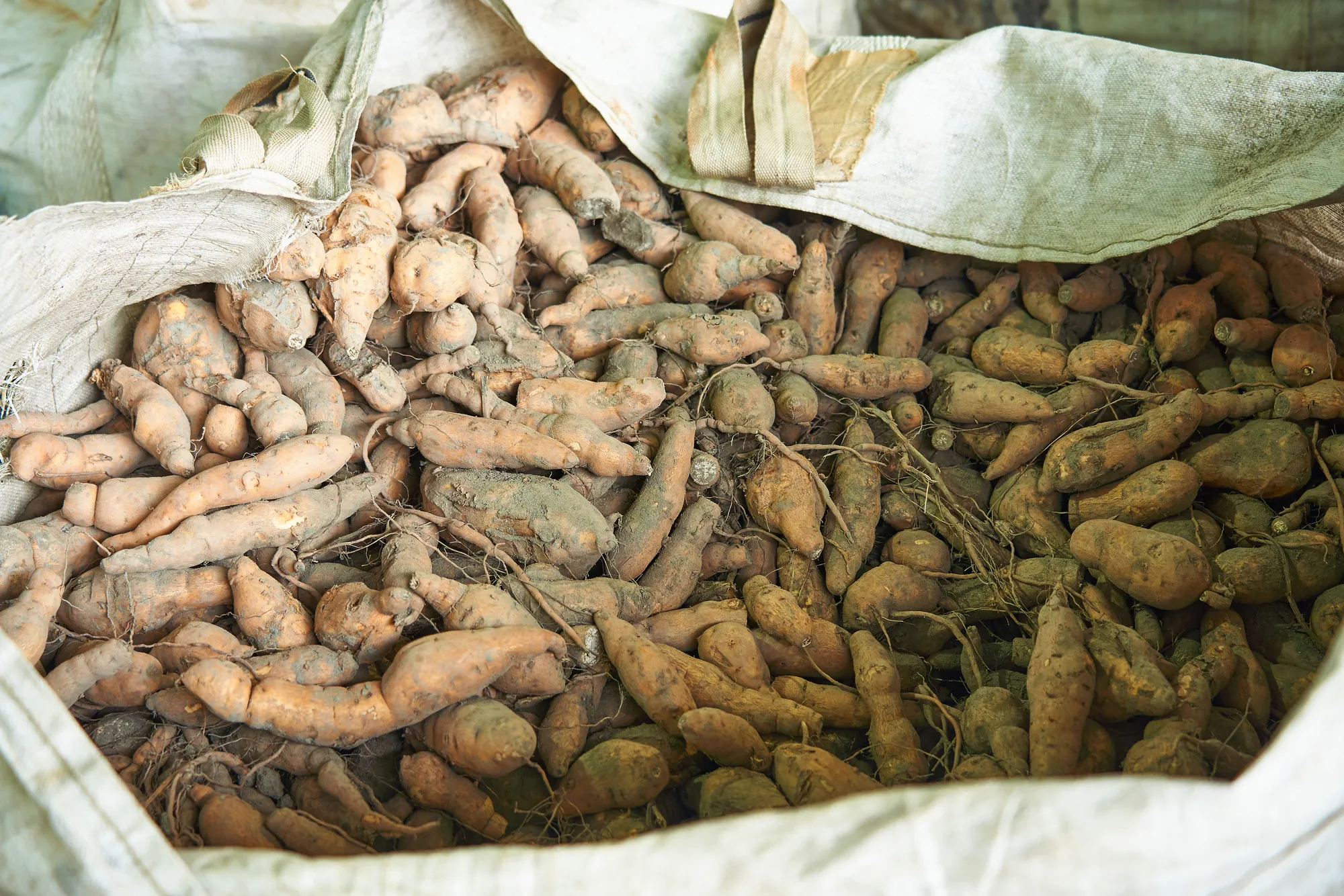
俗語說:「番薯不怕落地爛,只求枝葉代代傳。」講的正是番薯的韌性。番薯,又稱甘藷、地瓜,台灣民眾多以地瓜稱之。它在台灣的地位遠高於一般的雜糧作物,番薯將根藤深深攀爬蔓延進台灣常民的生活、情感、文化,甚至政治意識型態之中。
◤文.圖/看見台灣基金會編輯群
台
灣甚至連鳥瞰形狀都像番薯,這種5000年前於中南美洲被馴化的作物,進入台灣400年以來影響深遠。
地瓜為旋花科甘藷屬多年蔓生植物,生性強健,性喜高溫,容易栽種且生長快速,其塊根、莖葉皆可食用;在物質不豐足的時代,成了溫飽救命的食物。
據傳,鄭成功大軍開進台南鹿耳門以後,荷蘭軍隊退守熱蘭遮城,撤守時燒光庫存稻米,戰事不斷拉長,最後靠種植地瓜供應大軍糧食。
▋「番薯仔」vs.「芋仔」
民國初期,米糧缺乏的年代,老一輩的台灣人大量食用地瓜,菜葉廢莖藤拿去餵豬,當時地瓜葉又稱「豬仔菜」,刨絲曬乾的地瓜籤成家中備用乾糧,利用得相當徹底。
根據維基百科說明,台灣人自稱「番薯仔」始於日治時期,以番薯在貧瘠之地頑強生存的韌性象徵台灣精神;大規模自稱「番薯仔」則要到國民黨大軍撤退到台灣,因故與本省人發生口角時,外省人就以「番薯仔」稱呼本省人,本省人也以類似的作物「芋仔」回敬。
回到吃食的部分,1907年起,台灣總督府的農事試驗場就從中國、日本、美國、爪哇、婆羅洲等地引進各種品種,進行馴化試驗,並推廣優良品種;台灣接續發展出愈來愈多的品種,市場供應可說是琳瑯滿目。
過去拿來養豬的地瓜葉現在已成家庭餐桌常見食材;而且,地瓜還成為流行的健康食品,養生也適宜。
探索更多
香蕉─MIT香蕉,進駐東京奧運選手村
2021年7月的東京奧運,選手村食材中出現了「台灣香蕉」,這是第一次「MIT香蕉」成功進軍奧運殿堂。當時,農委會還召開了「跟世界蕉個朋友,為奧運選手加油」視訊記者會,是全台蕉農的一劑強心針。
鵝─早期,養鵝是農家副業
台灣從17、18世紀起已有養鵝紀錄,飼養「華鵝」,主要是傳統農家副業。1974年自丹麥引進「白羅曼鵝」後,白羅曼鵝才成為飼養主流,至今占比逾97%。
棗子─台灣研發品種顏值高、名字美
台灣慣稱的棗子,原名印度棗(Indian jujube),由此可知棗子原產於印度,傳入台灣的時間不可考,惟日據時期已有栽種紀錄。