
'%20fill='%23a9976d'/%3e%3cpath%20id='Path_251'%20data-name='Path%20251'%20d='M8,35a1,1,0,0,1,1-1H23a1,1,0,0,1,0,2H9A1,1,0,0,1,8,35Z'%20transform='translate(-8%20-22)'%20fill='%23a9976d'/%3e%3cpath%20id='Path_252'%20data-name='Path%20252'%20d='M9,22a1,1,0,0,0,0,2h8a1,1,0,0,0,0-2Z'%20transform='translate(-8%20-16)'%20fill='%23a9976d'/%3e%3c/svg%3e)
'%20fill='%23a9976d'/%3e%3c/g%3e%3c/svg%3e)
'%3e%3cg%20id='Ellipse_27'%20data-name='Ellipse%2027'%20transform='translate(813%20250)'%20fill='none'%20stroke='%23ccac89'%20stroke-width='1'%3e%3ccircle%20cx='16'%20cy='16'%20r='16'%20stroke='none'/%3e%3ccircle%20cx='16'%20cy='16'%20r='15.5'%20fill='none'/%3e%3c/g%3e%3cg%20id='facebook'%20transform='translate(824.105%20258.296)'%3e%3cpath%20id='Path_243'%20data-name='Path%20243'%20d='M8.894.111V2.556H7.441a1.361,1.361,0,0,0-1.074.333,1.534,1.534,0,0,0-.278,1v1.75H8.8L8.441,8.38H6.089v7.028H3.255V8.38H.894V5.639H3.255V3.62A3.582,3.582,0,0,1,4.218.949,3.5,3.5,0,0,1,6.783,0,15.317,15.317,0,0,1,8.894.111Z'%20transform='translate(0%200)'%20fill='%23ccac89'/%3e%3c/g%3e%3c/g%3e%3c/svg%3e)

'%3e%3cg%20id='Ellipse_29'%20data-name='Ellipse%2029'%20transform='translate(901%20250)'%20fill='none'%20stroke='%23ccac89'%20stroke-width='1'%3e%3ccircle%20cx='16'%20cy='16'%20r='16'%20stroke='none'/%3e%3ccircle%20cx='16'%20cy='16'%20r='15.5'%20fill='none'/%3e%3c/g%3e%3cg%20id='link-45deg'%20transform='translate(902.607%20253.105)'%3e%3cg%20id='Group_479'%20data-name='Group%20479'%20transform='translate(7.393%205.896)'%3e%3cpath%20id='Path_241'%20data-name='Path%20241'%20d='M10.246,17.821,8.507,19.56a3.8,3.8,0,0,0,5.378,5.378L16.2,22.62a3.8,3.8,0,0,0-1.05-6.12l-.743.743a1.27,1.27,0,0,0-.2.252,2.535,2.535,0,0,1,1.091,4.23L12.99,24.042A2.536,2.536,0,0,1,9.4,20.455l1.005-1a5.093,5.093,0,0,1-.162-1.631Z'%20transform='translate(-7.393%20-12.02)'%20fill='%23ccac89'/%3e%3cpath%20id='Path_242'%20data-name='Path%20242'%20d='M18.236,9.327a3.8,3.8,0,0,0,1.05,6.12l.982-.984a2.535,2.535,0,0,1-1.136-4.241L21.448,7.9a2.536,2.536,0,1,1,3.587,3.587l-1.005,1a5.1,5.1,0,0,1,.162,1.631l1.739-1.739A3.8,3.8,0,1,0,20.553,7.01Z'%20transform='translate(-13.011%20-5.896)'%20fill='%23ccac89'/%3e%3c/g%3e%3c/g%3e%3c/g%3e%3c/svg%3e)
◤文.圖 / 看見台灣基金會編輯群
坐落於宜蘭市中心的南北館市場,自日本時代起便是當地最大的生鮮與小吃集散地。其中,北館市場由日本設計師規劃,風格較為現代,涵蓋藥材、布行與小吃;南館市場則更貼近庶民日常,以販售生鮮食材與生活雜貨為主。 然而,隨著大型連鎖賣場興起,這座傳統市場曾一度沒落。
就在此時,一位被稱為「少年阿公」的年輕人──方子維,為市場注入了生命力。「少年阿公」這個稱號源自方子維的個人品牌理念,其中「少年」象徵青年帶著創意精神回鄉,「阿公」則代表他對祖父母年代農村田園生活的嚮往,以及想回復逐漸消失的傳統農業文化。
方子維的母親在市場經營服飾攤,是名副其實的「市場囝仔」。在赴澳洲、日本研習農業後,他決定返鄉,運用創意行銷家鄉,因而發起了「來宜蘭迺菜市場」行動。他腳踏橘黃色膠拖、手提茄芷袋,帶領遊客穿梭於市場巷弄間,透過生動的故事導覽與互動體驗,讓眾人重新感受宜蘭的風土人情。他也成立「市場學校」,讓青年學習從農產品到料理的全過程,實踐「從土地到餐桌」的永續理念。2024年,這項以文化再生為核心的創新行動,榮獲義大利「世界農業旅遊獎」,成為地方創生的國際典範。
一嘗記憶中的地方傳統風味
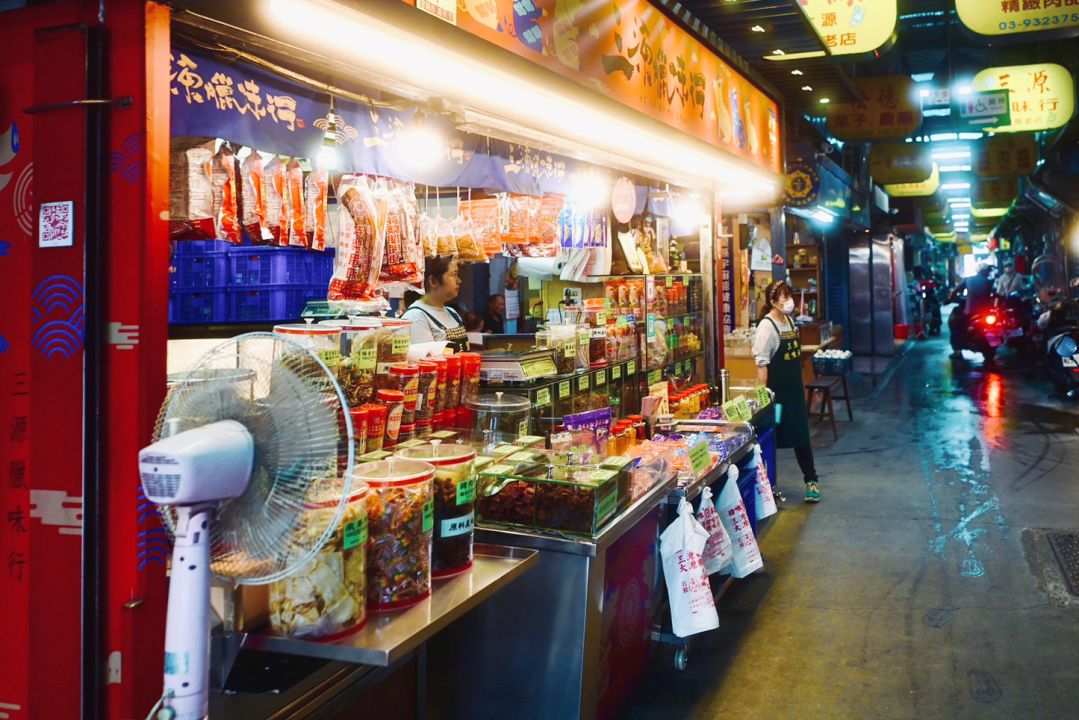
市場內的「一香飲食店」創立於1952年,其招牌的扁食魚丸湯與炸醬麵,可說是宜蘭人的經典早午餐。以溫體豬肉手工現包的扁食,搭配香濃的豆瓣炸醬細麵,構成宜蘭人記憶中難以取代的滋味。一旁的「四海居」,其招牌西魯肉以扁魚、白菜熬煮成羹湯,起鍋前灑上蛋酥,是極具代表性的宜蘭宴客手路菜。 同在市場內的「三源行」,其最具特色的鴨賞與膽肝,分別是將全鴨以甘蔗煙燻、豬肝以醬油醃製後燻曬而成。這份鹹香入味的傳承,風味層次極為豐富。
這些店家販售的不只是食物,更延續了宜蘭人珍視土地、勤儉樸實的生活哲學。 如今,南北館市場不只是採買場所,也是創造宜蘭風土味道的記憶,更是地方記憶的舞台。透過青年返鄉、社區共創與永續農遊的具體實踐,此地已成為連結傳統與未來的文化樞紐。