
'%20fill='%23a9976d'/%3e%3cpath%20id='Path_251'%20data-name='Path%20251'%20d='M8,35a1,1,0,0,1,1-1H23a1,1,0,0,1,0,2H9A1,1,0,0,1,8,35Z'%20transform='translate(-8%20-22)'%20fill='%23a9976d'/%3e%3cpath%20id='Path_252'%20data-name='Path%20252'%20d='M9,22a1,1,0,0,0,0,2h8a1,1,0,0,0,0-2Z'%20transform='translate(-8%20-16)'%20fill='%23a9976d'/%3e%3c/svg%3e)
'%20fill='%23a9976d'/%3e%3c/g%3e%3c/svg%3e)
蔥─1米高的蔥,展現台灣農民實力
地方探索
主題探索
北部
文化美食
分享
'%3e%3cg%20id='Ellipse_27'%20data-name='Ellipse%2027'%20transform='translate(813%20250)'%20fill='none'%20stroke='%23ccac89'%20stroke-width='1'%3e%3ccircle%20cx='16'%20cy='16'%20r='16'%20stroke='none'/%3e%3ccircle%20cx='16'%20cy='16'%20r='15.5'%20fill='none'/%3e%3c/g%3e%3cg%20id='facebook'%20transform='translate(824.105%20258.296)'%3e%3cpath%20id='Path_243'%20data-name='Path%20243'%20d='M8.894.111V2.556H7.441a1.361,1.361,0,0,0-1.074.333,1.534,1.534,0,0,0-.278,1v1.75H8.8L8.441,8.38H6.089v7.028H3.255V8.38H.894V5.639H3.255V3.62A3.582,3.582,0,0,1,4.218.949,3.5,3.5,0,0,1,6.783,0,15.317,15.317,0,0,1,8.894.111Z'%20transform='translate(0%200)'%20fill='%23ccac89'/%3e%3c/g%3e%3c/g%3e%3c/svg%3e)

'%3e%3cg%20id='Ellipse_29'%20data-name='Ellipse%2029'%20transform='translate(901%20250)'%20fill='none'%20stroke='%23ccac89'%20stroke-width='1'%3e%3ccircle%20cx='16'%20cy='16'%20r='16'%20stroke='none'/%3e%3ccircle%20cx='16'%20cy='16'%20r='15.5'%20fill='none'/%3e%3c/g%3e%3cg%20id='link-45deg'%20transform='translate(902.607%20253.105)'%3e%3cg%20id='Group_479'%20data-name='Group%20479'%20transform='translate(7.393%205.896)'%3e%3cpath%20id='Path_241'%20data-name='Path%20241'%20d='M10.246,17.821,8.507,19.56a3.8,3.8,0,0,0,5.378,5.378L16.2,22.62a3.8,3.8,0,0,0-1.05-6.12l-.743.743a1.27,1.27,0,0,0-.2.252,2.535,2.535,0,0,1,1.091,4.23L12.99,24.042A2.536,2.536,0,0,1,9.4,20.455l1.005-1a5.093,5.093,0,0,1-.162-1.631Z'%20transform='translate(-7.393%20-12.02)'%20fill='%23ccac89'/%3e%3cpath%20id='Path_242'%20data-name='Path%20242'%20d='M18.236,9.327a3.8,3.8,0,0,0,1.05,6.12l.982-.984a2.535,2.535,0,0,1-1.136-4.241L21.448,7.9a2.536,2.536,0,1,1,3.587,3.587l-1.005,1a5.1,5.1,0,0,1,.162,1.631l1.739-1.739A3.8,3.8,0,1,0,20.553,7.01Z'%20transform='translate(-13.011%20-5.896)'%20fill='%23ccac89'/%3e%3c/g%3e%3c/g%3e%3c/g%3e%3c/svg%3e)
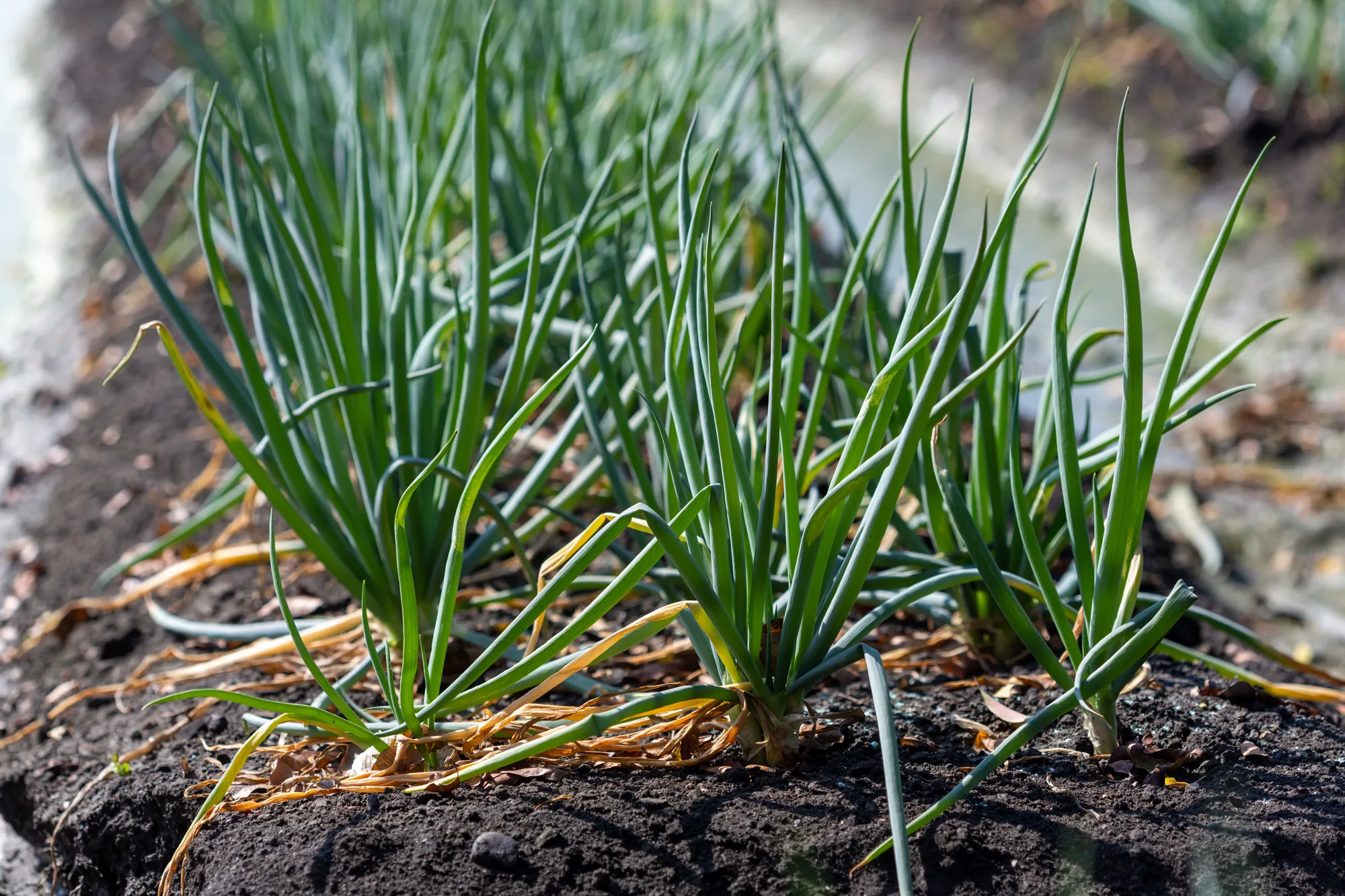
青蔥不僅是料理的最佳配角,更是台灣農業實力的象徵。嘉義農民成功培育超越日本的大蔥,宜蘭三星蔥則以細緻口感與獨特風味聞名。
◤文.圖/看見台灣基金會編輯群
「
你
算哪根蔥?」是一句俚俗酸人的話,但這句話,可能要因為台灣農民的努力,稍微修正一下。因為嘉義農民將很難照顧的高級食材「日本大蔥」,種植成一根一公尺高、重達450公克,贏過日本種植平均300公克。
青蔥為石蒜科蔥屬植物,為多年生草本植物。具香氣,氣味柔和,除用於料理增香外,亦可去腥解膩,常見於亞洲料理。台灣青蔥最早由中國傳入,後又引進日本的品種,現有北蔥、四季蔥和大蔥三大品種。台灣除宜蘭三星外,彰化及雲林亦為主要產地。
▋三星蔥是最出名的品牌蔥
三星蔥為宜蘭三星一帶所產之青蔥,實為「品牌名」。當地水質佳,適宜青蔥生長,且農民有獨到栽種技術,所產青蔥質地細緻、纖維少,風味溫和,廣受市場歡迎。三星所栽種青蔥品種為「四季蔥」,農民以稻草稈遮蔽根部,因此蔥白長得更長,終年皆可生長,但耐熱性差,適合冬季栽種。
蔥白辛辣氣味較鮮明,且具甘味,質感細緻濕潤,一般用以爆香或熬湯;此外,蔥白具有發汗功用,在中醫醫理中可治感冒。蔥綠則纖維較蔥白粗厚,多切絲或切花,在料理最後撒下作為點綴。
蔥除作為料理配角,三星蔥口感細緻、清甜,亦有以其為主角之「炒青蔥」;三星蔥做成的三星蔥油餅,更是每個經過宜蘭的遊客,絕不能錯過的好物。
探索更多
芒果─品種超過20個,打造台灣芒果王國美譽
號稱「水果王國」的台灣,眾多水果中最讓全球觀光客在夏天慕名而來的,就是芒果。
異鄉.家鄉味—西班牙主廚的宜蘭慢食札記
一位西班牙主廚初來台灣,即被豐饒的在地食材深深吸引。旅台17年,他實際走訪市場、農場與漁港,發掘台灣食材的無限潛力,並以西班牙料理革命為例,鼓勵大眾支持在地生產者,共同推動台灣料理的革新。(圖片來源:Daniel Negreira)
漁港/漁市─海洋文化的灘頭堡
台灣四面環海,本島沿海加離島遍設漁港,是台灣海洋文化的灘頭堡。大型的第一類漁港有9個,地區型的第二類漁港有215個,澎湖縣有67個,全台第一。