
'%20fill='%23a9976d'/%3e%3cpath%20id='Path_251'%20data-name='Path%20251'%20d='M8,35a1,1,0,0,1,1-1H23a1,1,0,0,1,0,2H9A1,1,0,0,1,8,35Z'%20transform='translate(-8%20-22)'%20fill='%23a9976d'/%3e%3cpath%20id='Path_252'%20data-name='Path%20252'%20d='M9,22a1,1,0,0,0,0,2h8a1,1,0,0,0,0-2Z'%20transform='translate(-8%20-16)'%20fill='%23a9976d'/%3e%3c/svg%3e)
'%20fill='%23a9976d'/%3e%3c/g%3e%3c/svg%3e)
黃豆──田裡的肉,外銷日本的「綠金」
主題探索
文化美食
分享
'%3e%3cg%20id='Ellipse_27'%20data-name='Ellipse%2027'%20transform='translate(813%20250)'%20fill='none'%20stroke='%23ccac89'%20stroke-width='1'%3e%3ccircle%20cx='16'%20cy='16'%20r='16'%20stroke='none'/%3e%3ccircle%20cx='16'%20cy='16'%20r='15.5'%20fill='none'/%3e%3c/g%3e%3cg%20id='facebook'%20transform='translate(824.105%20258.296)'%3e%3cpath%20id='Path_243'%20data-name='Path%20243'%20d='M8.894.111V2.556H7.441a1.361,1.361,0,0,0-1.074.333,1.534,1.534,0,0,0-.278,1v1.75H8.8L8.441,8.38H6.089v7.028H3.255V8.38H.894V5.639H3.255V3.62A3.582,3.582,0,0,1,4.218.949,3.5,3.5,0,0,1,6.783,0,15.317,15.317,0,0,1,8.894.111Z'%20transform='translate(0%200)'%20fill='%23ccac89'/%3e%3c/g%3e%3c/g%3e%3c/svg%3e)

'%3e%3cg%20id='Ellipse_29'%20data-name='Ellipse%2029'%20transform='translate(901%20250)'%20fill='none'%20stroke='%23ccac89'%20stroke-width='1'%3e%3ccircle%20cx='16'%20cy='16'%20r='16'%20stroke='none'/%3e%3ccircle%20cx='16'%20cy='16'%20r='15.5'%20fill='none'/%3e%3c/g%3e%3cg%20id='link-45deg'%20transform='translate(902.607%20253.105)'%3e%3cg%20id='Group_479'%20data-name='Group%20479'%20transform='translate(7.393%205.896)'%3e%3cpath%20id='Path_241'%20data-name='Path%20241'%20d='M10.246,17.821,8.507,19.56a3.8,3.8,0,0,0,5.378,5.378L16.2,22.62a3.8,3.8,0,0,0-1.05-6.12l-.743.743a1.27,1.27,0,0,0-.2.252,2.535,2.535,0,0,1,1.091,4.23L12.99,24.042A2.536,2.536,0,0,1,9.4,20.455l1.005-1a5.093,5.093,0,0,1-.162-1.631Z'%20transform='translate(-7.393%20-12.02)'%20fill='%23ccac89'/%3e%3cpath%20id='Path_242'%20data-name='Path%20242'%20d='M18.236,9.327a3.8,3.8,0,0,0,1.05,6.12l.982-.984a2.535,2.535,0,0,1-1.136-4.241L21.448,7.9a2.536,2.536,0,1,1,3.587,3.587l-1.005,1a5.1,5.1,0,0,1,.162,1.631l1.739-1.739A3.8,3.8,0,1,0,20.553,7.01Z'%20transform='translate(-13.011%20-5.896)'%20fill='%23ccac89'/%3e%3c/g%3e%3c/g%3e%3c/g%3e%3c/svg%3e)
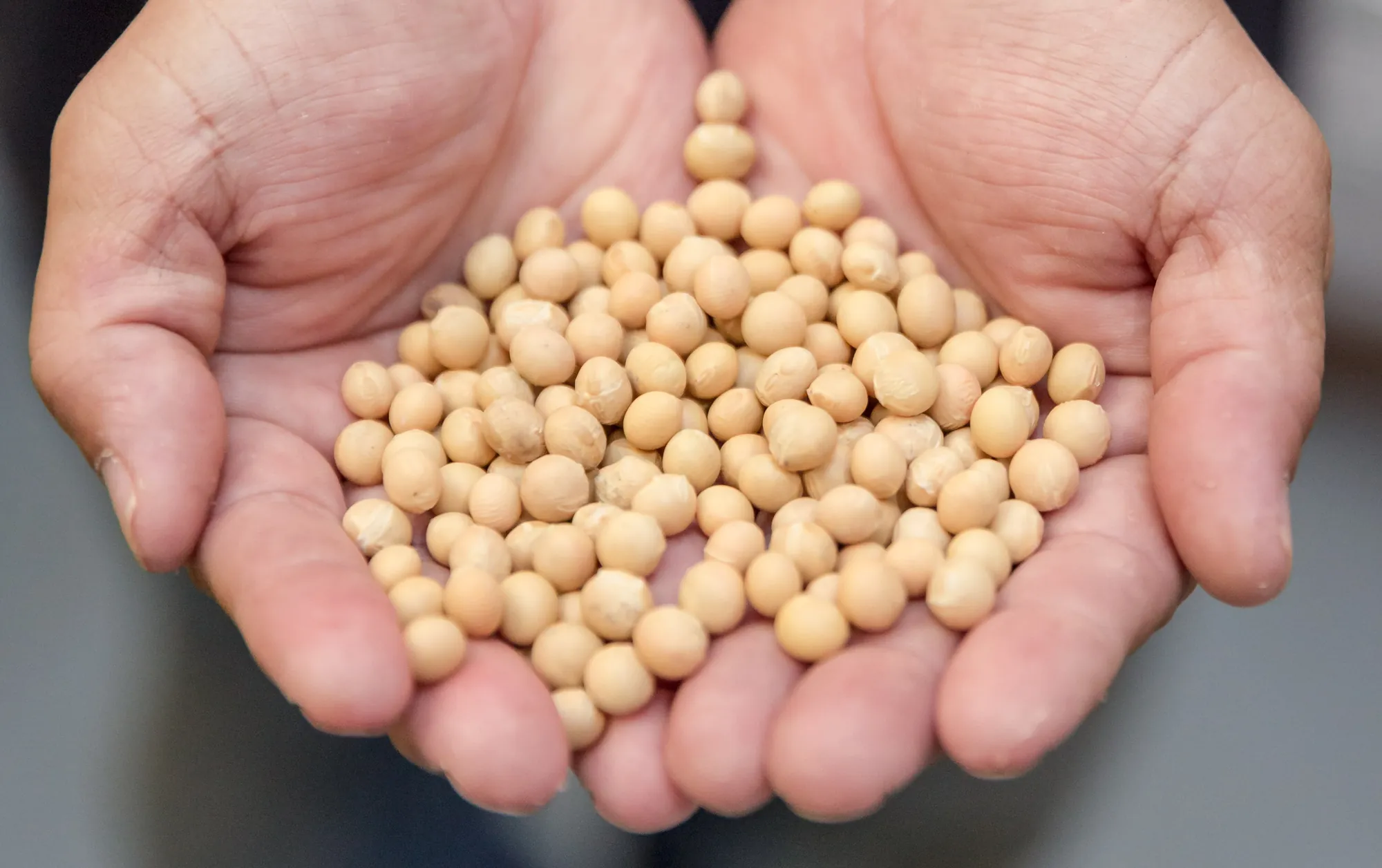
黃豆,一般泛稱大豆,種子顏色有黃、綠、棕、黑等,綠色的稱為青豆、黑色的稱為黑豆,而黃豆因為最常見,因此普遍將黃豆代稱為「大豆」。
◤文.圖/看見台灣基金會編輯群
黃
豆有將近40%的蛋白質,成為素食者最好的蛋白質來源,零膽固醇卻富含纖維與醣類的特性,符合現今健康飲食潮流所需,有「田裡的肉」美稱。
黃豆長久以來在台灣飲食中扮演重要角色:豆漿、豆腐等各式豆類食品,釀製為醬油、豆瓣醬等發酵食品;提煉製成大豆油,甚至近來超夯的「植物肉」,都是黃豆產物。
當黃豆發芽長出綠色帶毛莢果,並於種子尚未完全成熟之際連莢採收,即為「毛豆」。目前,台灣毛豆以屏東為主要產地,因為品質優於東亞其他國家,有「綠金」美稱。台灣毛豆尤其受到日本居民歡迎,出口約有80%銷往日本,在日本市占率將近5成。
▋原生種「台灣黃豆」復育成功
台灣是食用黃豆的大國,但大部分都是從國外進口,自給率不到1%;而農民所栽種的黃豆皆為從國外改良的品種。然而根據史料,1928年日治期間,就有日本人在新竹發現野生的原生種「台灣黃豆」,桃園新屋、大溪、台北淡水、高雄及南投霧社也都有分布紀錄,但一直沒有量產食用。
2004年,台灣大學植物科學所名譽教授黃增泉,再度於南投萬大水庫松林分廠附近發現台灣黃豆種原並進行復育。復育的原生種子小如芝麻,約一般改良黃豆的1/10,雖然尚未具備食用價值,卻是台灣農業技術、研究力的展現,是維持生物多樣性、避免毀滅性病蟲害的重要成果。
探索更多
水梨─寶島甘露梨每顆破台幣千元
水梨被喻為「百果之宗」,台灣更有「水梨王國」的美譽。原產於高加索及中國等地區,根據文獻記載,100多年前一位新竹橫山的茶商將梨子從中國華南引入台灣,培育出「橫山梨」,是台灣水梨開端。
山葵─阿里山上的台灣綠金傳奇
山葵,原生於日本及俄羅斯遠東地區,日語音讀為「わさび(Wasabi)」,台灣常以擬音「哇沙米」稱之。
棗子─台灣研發品種顏值高、名字美
台灣慣稱的棗子,原名印度棗(Indian jujube),由此可知棗子原產於印度,傳入台灣的時間不可考,惟日據時期已有栽種紀錄。