
'%20fill='%23a9976d'/%3e%3cpath%20id='Path_251'%20data-name='Path%20251'%20d='M8,35a1,1,0,0,1,1-1H23a1,1,0,0,1,0,2H9A1,1,0,0,1,8,35Z'%20transform='translate(-8%20-22)'%20fill='%23a9976d'/%3e%3cpath%20id='Path_252'%20data-name='Path%20252'%20d='M9,22a1,1,0,0,0,0,2h8a1,1,0,0,0,0-2Z'%20transform='translate(-8%20-16)'%20fill='%23a9976d'/%3e%3c/svg%3e)
'%20fill='%23a9976d'/%3e%3c/g%3e%3c/svg%3e)
文蛤(台灣文蛤)─台灣「國民海鮮」,療癒系料理
主題探索
文化美食
分享
'%3e%3cg%20id='Ellipse_27'%20data-name='Ellipse%2027'%20transform='translate(813%20250)'%20fill='none'%20stroke='%23ccac89'%20stroke-width='1'%3e%3ccircle%20cx='16'%20cy='16'%20r='16'%20stroke='none'/%3e%3ccircle%20cx='16'%20cy='16'%20r='15.5'%20fill='none'/%3e%3c/g%3e%3cg%20id='facebook'%20transform='translate(824.105%20258.296)'%3e%3cpath%20id='Path_243'%20data-name='Path%20243'%20d='M8.894.111V2.556H7.441a1.361,1.361,0,0,0-1.074.333,1.534,1.534,0,0,0-.278,1v1.75H8.8L8.441,8.38H6.089v7.028H3.255V8.38H.894V5.639H3.255V3.62A3.582,3.582,0,0,1,4.218.949,3.5,3.5,0,0,1,6.783,0,15.317,15.317,0,0,1,8.894.111Z'%20transform='translate(0%200)'%20fill='%23ccac89'/%3e%3c/g%3e%3c/g%3e%3c/svg%3e)

'%3e%3cg%20id='Ellipse_29'%20data-name='Ellipse%2029'%20transform='translate(901%20250)'%20fill='none'%20stroke='%23ccac89'%20stroke-width='1'%3e%3ccircle%20cx='16'%20cy='16'%20r='16'%20stroke='none'/%3e%3ccircle%20cx='16'%20cy='16'%20r='15.5'%20fill='none'/%3e%3c/g%3e%3cg%20id='link-45deg'%20transform='translate(902.607%20253.105)'%3e%3cg%20id='Group_479'%20data-name='Group%20479'%20transform='translate(7.393%205.896)'%3e%3cpath%20id='Path_241'%20data-name='Path%20241'%20d='M10.246,17.821,8.507,19.56a3.8,3.8,0,0,0,5.378,5.378L16.2,22.62a3.8,3.8,0,0,0-1.05-6.12l-.743.743a1.27,1.27,0,0,0-.2.252,2.535,2.535,0,0,1,1.091,4.23L12.99,24.042A2.536,2.536,0,0,1,9.4,20.455l1.005-1a5.093,5.093,0,0,1-.162-1.631Z'%20transform='translate(-7.393%20-12.02)'%20fill='%23ccac89'/%3e%3cpath%20id='Path_242'%20data-name='Path%20242'%20d='M18.236,9.327a3.8,3.8,0,0,0,1.05,6.12l.982-.984a2.535,2.535,0,0,1-1.136-4.241L21.448,7.9a2.536,2.536,0,1,1,3.587,3.587l-1.005,1a5.1,5.1,0,0,1,.162,1.631l1.739-1.739A3.8,3.8,0,1,0,20.553,7.01Z'%20transform='translate(-13.011%20-5.896)'%20fill='%23ccac89'/%3e%3c/g%3e%3c/g%3e%3c/g%3e%3c/svg%3e)
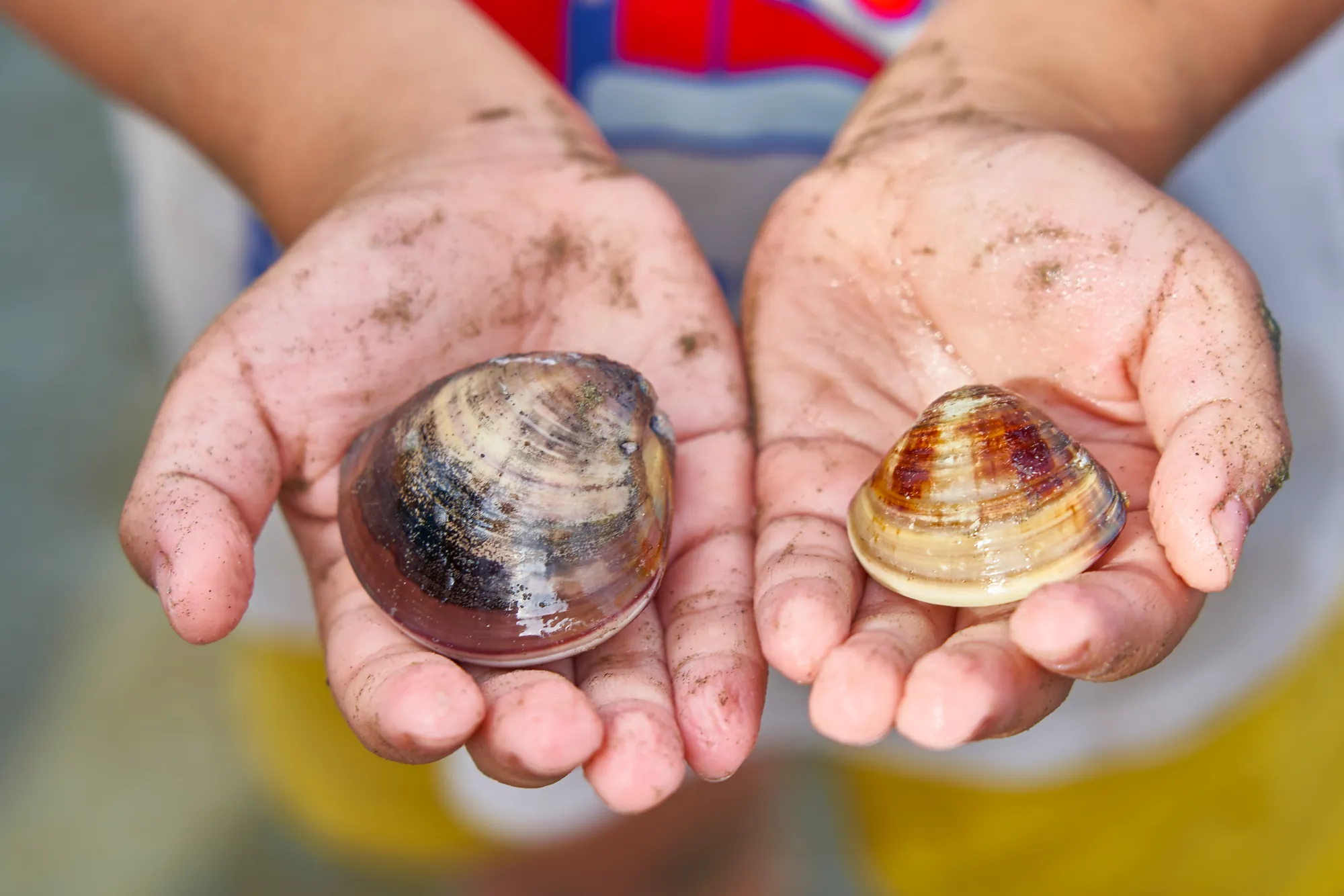
文蛤,在台灣又稱為蛤蜊或蚶仔,分布於南亞、東亞、東北亞、東南亞等區域的海、河岸。文蛤是台灣相當尋常的食用貝類之一;料理方式多樣、烹飪便捷,簡單料理即能品嘗到文蛤的鮮甜和原汁原味。
◤文.圖/看見台灣基金會編輯群
台
灣人如果長期到海外工作或念書,絲瓜文蛤、酒蒸文蛤、文蛤蒸蛋、薑絲文蛤湯、文蛤雞湯等,總能治癒海外遊子的鄉愁。
台菜熱炒店裡,文蛤炒麵、九層塔炒文蛤、烤鮮文蛤……,在下班後酒酣耳熱之際,能帶來鮮美海味的快樂感,屬療癒系料理。
在網路搜尋引擎鍵入「文蛤(蛤蜊)料理」,可以找到超過3000道食譜!文蛤可稱得上是「台灣的國民海鮮」。
▋「台灣文蛤」是台灣原生種,且是世界新品種
文蛤在台灣養殖歷史甚早,1920年代初期即已開始。1934年左右在西海岸及各河口的半鹹水區放養,直到1970年後以魚塭養殖,文蛤才逐漸普遍成為台灣重要的養殖漁業物種。
台灣的文蛤一直被認為是日治時期引進的「麗文蛤」,直到2023年,農業部水產試驗所在國際期刊《軟體動物研究》發表論文,證實台灣的養殖文蛤不但是台灣原生種,還是世界新品種,才將之正名為「台灣文蛤」(Meretrix taiwanica)。全台包括野外棲地、養殖場、傳統市場販售的新鮮文蛤,都是「台灣文蛤」。
根據《漁業年報》資料顯示,文蛤養殖是台灣貝類養殖的大宗,而乾淨的水質、適當的溫度與酸鹼值是養殖文蛤的重要條件之一。台灣主要文蛤養殖區以彰化、雲林、嘉義、台南等地為主。
探索更多
南門市場──「台北人廚房」的遷徙與重生
南門市場不僅是台北人的廚房,更是微縮的江浙味覺史。從1907年「千歲町」到2023年重生,這座玻璃帷幕下的名店聚落,將億長御坊等大師級手藝悉心封存,持續支撐著台北人的日常飲食。(圖片來源:iStock)
大甲檳榔心芋──兩溪沃土孕育出的綿密香氣
一顆芋頭,連著大甲的溪水、沃土與季節風土。從田間到芋頭酥、芋頭米粉,大甲以檳榔心芋種出台灣人熟悉的鬆綿香氣。
黑鮪魚故鄉在屏東─行家看魚形、魚腹、魚鱗
台灣四面環海,一年四季都有多樣的海鮮分布,滋養著人們,處處精采。其中,屏東東港鎮位於高屏溪出口東南方,隔海與小琉球風景區相望,是台灣南端恆春半島最熱鬧與忙碌的漁港。(圖片來源:陳漢元)