


◤Text and Images / iSee Taiwan Foundation Editorial Team
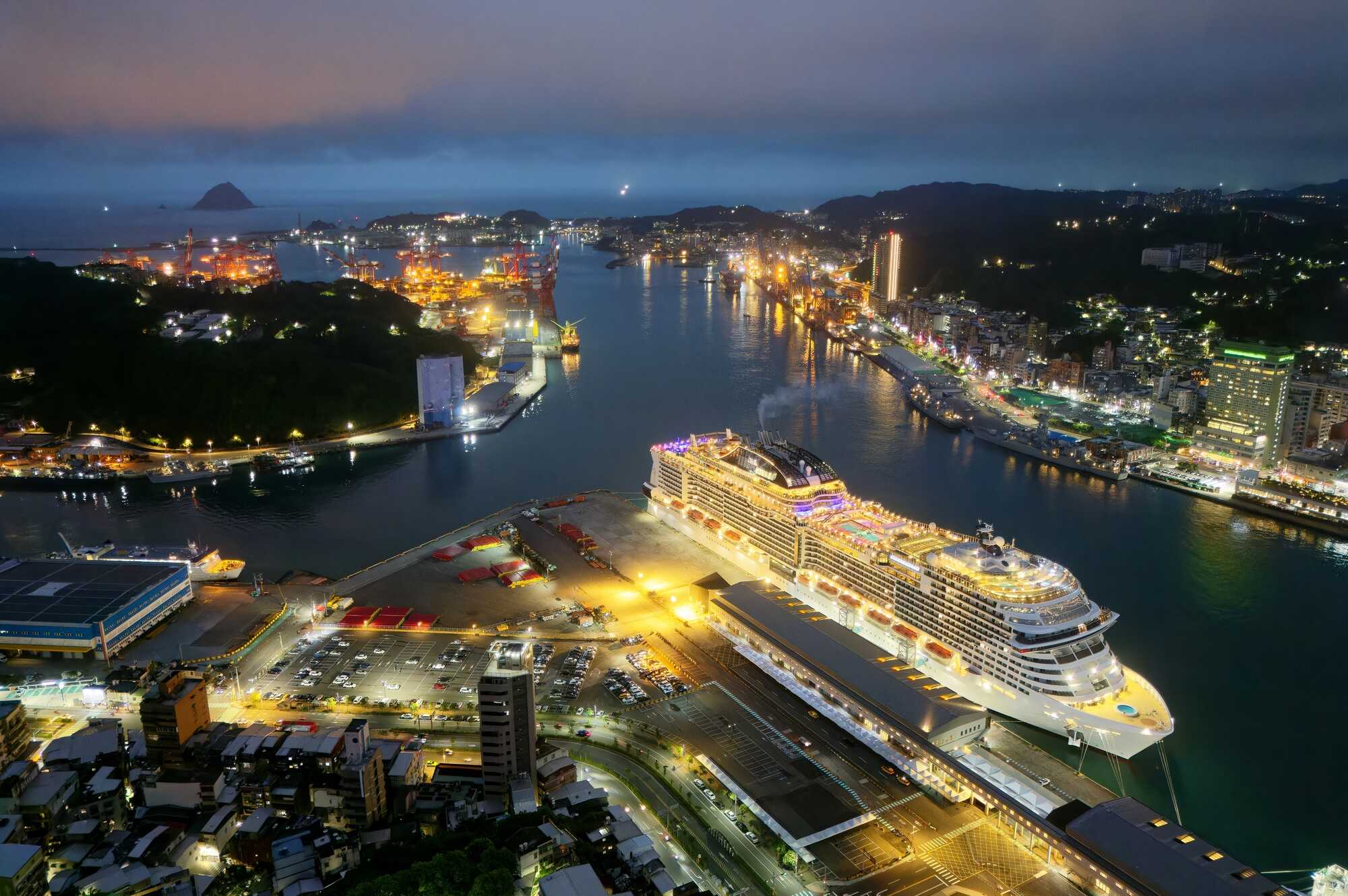
Keelung is the northernmost city on Taiwan’s main island, with a population of about 360,000. Ringed by mountains on three sides and open to the sea on the fourth, it has been a fine harbor since ancient times. Long known as “the Rainy City,” Keelung is especially wet in winter under the northeast monsoon, which has given it its reputation for rain. Its old name was Kelang (雞籠, literally “chicken coop”); the place name appears as early as the mid-16th century in the sailing routes recorded in Zheng Shungong’s Riben yijian (A Mirror of Japan), a Ming-dynasty work.
As an important port city in northern Taiwan, Keelung serves several harbor functions at once—commercial shipping, fishing, and military defense. It has held a key place in the modern history of Taiwan’s shipping, military affairs, and contact with the wider world, something one can glimpse in its historic sites. For instance, on Heping Island lie the remains of the Church of Todos los Santos (All Saints), an auxiliary mission facility built near Fort San Salvador during the Spanish occupation of northern Taiwan from 1626 to 1642. The battery on Shiqiuling witnessed the brutality of the Sino-French War, and Keelung’s Zhongzheng District is also home to the Sino-French War Memorial Park—formerly the French Cemetery—which commemorates the French soldiers who fell in that war.
Miaokou Street Food: A Microcosm of a Port City’s Cuisine
The saying “live off the mountains if you have mountains, off the sea if you have the sea” fits Keelung perfectly. Its seafood is famous, and the many ships passing through have brought flavors from home and abroad that have folded into the local table. The Nutritious Sandwich (營養三明治, a name that reflects its generous filling rather than any health claim), a well-known item at the Miaokou Night Market, is one example: a deep-fried bun filled with braised egg, ham, cucumber, tomato, and mayonnaise—a localized night-market taste that shows how postwar Taiwan took up the Western idea of the sandwich.
Countless foreign ships have called at Keelung over the years, and traces of these encounters between different cultures can be found throughout the city. Food vendors have gathered at Keelung’s Miaokou (literally “temple mouth”—the open area in front of a temple) since the Japanese colonial period, and it is now one of Taiwan’s signature tourist night markets, full of novel things to eat, so much so that when the celebrated chef Anthony Bourdain came to Taiwan to film, he too paid a visit to the Keelung Miaokou Night Market.
In recent years, the Port of Keelung has actively developed its cruise industry and has become a major cruise home port for Taiwan. In 2024 it received 331 cruise-ship calls and 787,000 passenger-visits, of which 266,000 were by foreign travelers, an all-time high for foreign cruise passengers at the port.