
'%20fill='%23a9976d'/%3e%3cpath%20id='Path_251'%20data-name='Path%20251'%20d='M8,35a1,1,0,0,1,1-1H23a1,1,0,0,1,0,2H9A1,1,0,0,1,8,35Z'%20transform='translate(-8%20-22)'%20fill='%23a9976d'/%3e%3cpath%20id='Path_252'%20data-name='Path%20252'%20d='M9,22a1,1,0,0,0,0,2h8a1,1,0,0,0,0-2Z'%20transform='translate(-8%20-16)'%20fill='%23a9976d'/%3e%3c/svg%3e)
'%20fill='%23a9976d'/%3e%3c/g%3e%3c/svg%3e)
早市/傳統市場─城市裡最真切的律動
主題探索
常民生活
分享
'%3e%3cg%20id='Ellipse_27'%20data-name='Ellipse%2027'%20transform='translate(813%20250)'%20fill='none'%20stroke='%23ccac89'%20stroke-width='1'%3e%3ccircle%20cx='16'%20cy='16'%20r='16'%20stroke='none'/%3e%3ccircle%20cx='16'%20cy='16'%20r='15.5'%20fill='none'/%3e%3c/g%3e%3cg%20id='facebook'%20transform='translate(824.105%20258.296)'%3e%3cpath%20id='Path_243'%20data-name='Path%20243'%20d='M8.894.111V2.556H7.441a1.361,1.361,0,0,0-1.074.333,1.534,1.534,0,0,0-.278,1v1.75H8.8L8.441,8.38H6.089v7.028H3.255V8.38H.894V5.639H3.255V3.62A3.582,3.582,0,0,1,4.218.949,3.5,3.5,0,0,1,6.783,0,15.317,15.317,0,0,1,8.894.111Z'%20transform='translate(0%200)'%20fill='%23ccac89'/%3e%3c/g%3e%3c/g%3e%3c/svg%3e)

'%3e%3cg%20id='Ellipse_29'%20data-name='Ellipse%2029'%20transform='translate(901%20250)'%20fill='none'%20stroke='%23ccac89'%20stroke-width='1'%3e%3ccircle%20cx='16'%20cy='16'%20r='16'%20stroke='none'/%3e%3ccircle%20cx='16'%20cy='16'%20r='15.5'%20fill='none'/%3e%3c/g%3e%3cg%20id='link-45deg'%20transform='translate(902.607%20253.105)'%3e%3cg%20id='Group_479'%20data-name='Group%20479'%20transform='translate(7.393%205.896)'%3e%3cpath%20id='Path_241'%20data-name='Path%20241'%20d='M10.246,17.821,8.507,19.56a3.8,3.8,0,0,0,5.378,5.378L16.2,22.62a3.8,3.8,0,0,0-1.05-6.12l-.743.743a1.27,1.27,0,0,0-.2.252,2.535,2.535,0,0,1,1.091,4.23L12.99,24.042A2.536,2.536,0,0,1,9.4,20.455l1.005-1a5.093,5.093,0,0,1-.162-1.631Z'%20transform='translate(-7.393%20-12.02)'%20fill='%23ccac89'/%3e%3cpath%20id='Path_242'%20data-name='Path%20242'%20d='M18.236,9.327a3.8,3.8,0,0,0,1.05,6.12l.982-.984a2.535,2.535,0,0,1-1.136-4.241L21.448,7.9a2.536,2.536,0,1,1,3.587,3.587l-1.005,1a5.1,5.1,0,0,1,.162,1.631l1.739-1.739A3.8,3.8,0,1,0,20.553,7.01Z'%20transform='translate(-13.011%20-5.896)'%20fill='%23ccac89'/%3e%3c/g%3e%3c/g%3e%3c/g%3e%3c/svg%3e)
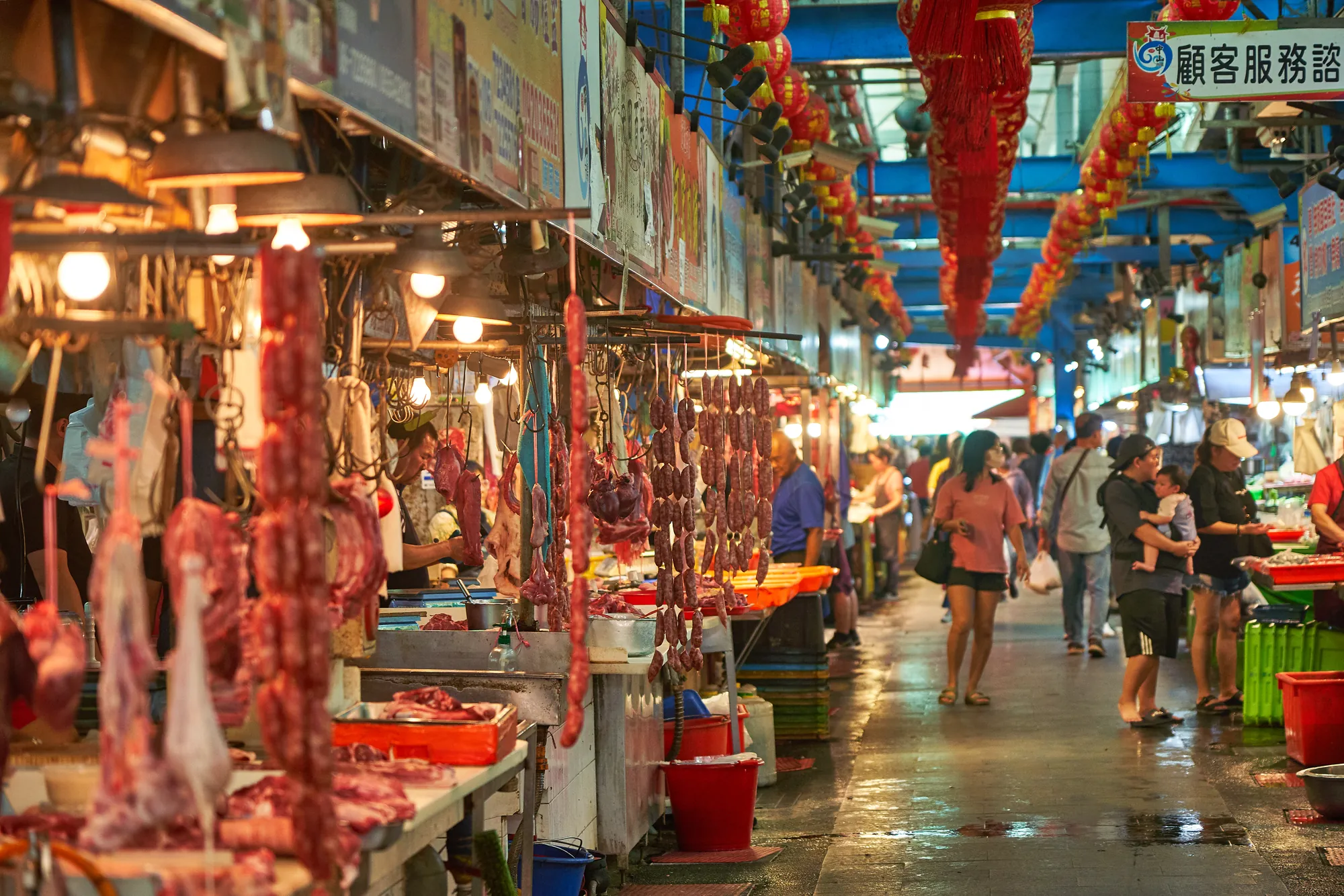
「市場那些匆忙的嘈雜聲,是城市最真切的律動,充滿生活的激情和活力,」作家焦桐在他的書裡,如此詠嘆他熱愛的傳統市場及市場裡的美食小攤。
◤文.圖/看見台灣基金會編輯群
傳
統市場,無論在台灣或海外,都是在地人和觀光客喜歡逛的熱鬧景點。當地琳瑯滿目的生鮮蔬果、肉類、海鮮、奇特農產品及美食攤販,令人目不暇給,興奮異常,食指大動。
根據經濟部統計,全台共有近600 個市場,5萬多個攤位;規模較簡陋的攤集區約300個,3萬多攤位。深入了台灣各個角落,各家的餐桌。
▋各縣市市場各自美麗
其中,台北市的士東市場有第一個五星級市場之稱;南門市場以販售大江南北特色食材聞名;台中第六市場是全台第一家開在百貨公司內的菜市場;台中第二市場則以美食聞名,堪稱台中人的廚房。
被稱為「菜市仔」的傳統市場,因多在街市社區形成,又稱為「街市」或「墟市」,供當地人民採買基本的生鮮食材、雜貨用品、服飾衣物與各式熟食。
最早的露天攤販市集、鄉紳民設市場,常有設施簡陋、環境髒亂造成疫病等問題,日治時期開始著手改善環境衛生、興建公設市場。1905年成立第一座公設市場「台南西市場」擁有當時最先進的排水、採光與通風系統;1950年代重新將傳統市場納入都市計畫中,逐漸興建各地的公有市場。
即便大型量販店分食了不少日常採購,但這些充滿歷史與人情味的傳統市場不僅依然在居民日常生活扮演要角,也見證了台灣經濟與文化的發展,成為現代都市中「激情的所在」。
探索更多
鳳梨─台灣鳳梨品種,世界第一
無論是鮮果、加工食品,或是鳳梨酥,台灣鳳梨正以它的獨特風味,征服全球市場。
八寶芋泥─從前是富貴人家的象徵
「八寶」在過去是有錢人家的象徵,代表了「珍貴」與「多」的意思,至於哪八寶,則無定數。
水蜜桃─嬌貴的極品水果,本地人獨享
台灣種植水蜜桃的歷史悠長,1685年編撰的《台灣府志》,已經有桃子的相關記載,推算明鄭時期台灣便已栽植桃樹。