

◤Text and Images / iSee Taiwan Foundation Editorial Team
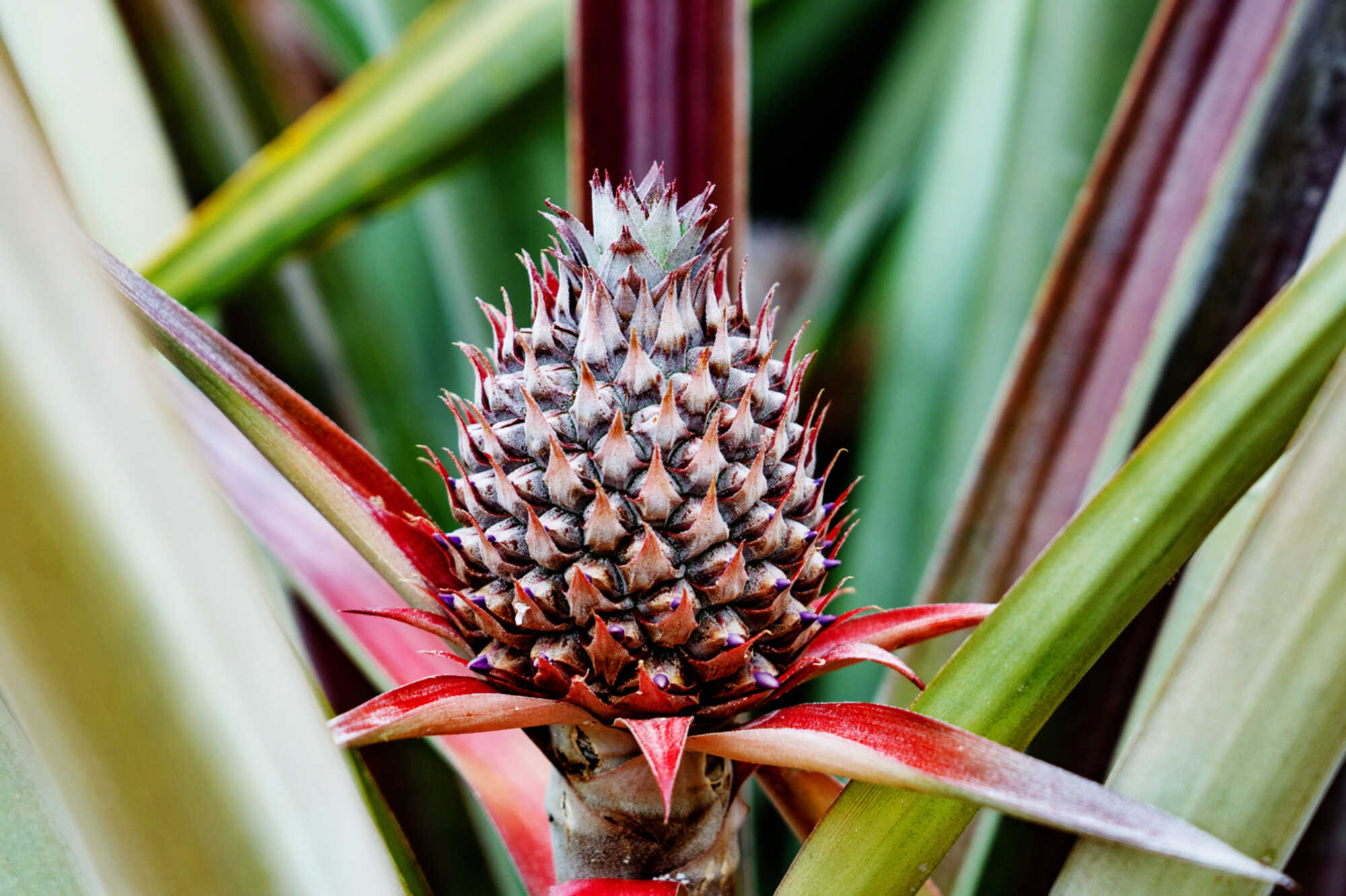
Pineapple (Ananas comosus) is more than a common orchard crop in Minxiong Township, Chiayi County-it is the defining symbol of local agriculture. The eastern villages of Dongxing, Sanxing, Songshan, and Dachi spread across the hillsides and tablelands of Minxiong, where pineapple cultivation has long been a way of life. According to Chiayi County Government records, Minxiong was the original site for promoting the Golden Diamond variety, earning it the title "Hometown of Pineapples."
The gently acidic soils and abundant sunshine of Minxiong's eastern hills create ideal growing conditions. When ripe, Golden Diamond pineapples yield fine-grained, juicy flesh with a tender, edible core; local growers often describe the flavor as finishing with a faint note of brown sugar or caramel.
Taiwan's Third-Largest Pineapple-Producing County and Its Diverse Varieties
Chiayi County cultivates approximately 1,500 hectares of pineapple, ranking third nationwide; Minxiong alone accounts for nearly 700 hectares-roughly half the county total, and at one point fifth among all townships in Taiwan. Beyond Golden Diamond, local farms also grow Yulan mango, watermelon pineapple, and milk pineapple varieties. Yulan pineapples are known for their distinctive floral and fruity aroma; watermelon pineapples stand out for their oversized form. With different varieties ripening in succession, Minxiong's harvest season extends well beyond what any single cultivar could sustain.
Pineapples have also left their mark on Taiwanese literary tradition. The late Qing scholar Lu Dejia captured rural life in his Fengshan Zhuzhi Ci, describing a home nestled below Pineapple Hill where a woman weaves pineapple leaves into thread to trade in town for cotton. The poem records not only a place-name rooted in the fruit, but the household economy of leaf-spinning and barter that defined Qing-era rural life. Xie Jinluan's Taiwan Zhuzhi Ci similarly depicts a market scene in which pineapples appear alongside betel nuts and other local produce. His own note explains that "di boluo" refers to pineapple, while the poem's "phoenix-tail" leaves and "chicken-heart" fruits describe the betel palm.
Pineapple's sweet-tart character makes it a natural partner in the kitchen. Pineapple Shrimp Balls (battered shrimp balls served with pineapple and mayonnaise) has become one of Taiwan's most recognizable restaurant dishes. Pineapple fried rice, pineapple stir-fried with wood ear mushrooms, and pineapple bitter melon chicken soup each put the fruit's acidity to work: brightening flavors, cutting through richness, or tempering bitterness. Pineapple also contains bromelain, a natural enzyme that tenderizes meat-making it a practical addition to marinades.
In earlier generations, farm families would also ferment pineapple with soybean koji and salt to make a savory-sweet pineapple-and-soybean condiment used for steaming fish, stir-frying vegetables, and making soups. From fresh fruit to everyday cooking to fermented pantry staples, Minxiong pineapple carries the fragrance of red-soil orchards into the daily rhythms of Taiwan's table.