
'%20fill='%23a9976d'/%3e%3cpath%20id='Path_251'%20data-name='Path%20251'%20d='M8,35a1,1,0,0,1,1-1H23a1,1,0,0,1,0,2H9A1,1,0,0,1,8,35Z'%20transform='translate(-8%20-22)'%20fill='%23a9976d'/%3e%3cpath%20id='Path_252'%20data-name='Path%20252'%20d='M9,22a1,1,0,0,0,0,2h8a1,1,0,0,0,0-2Z'%20transform='translate(-8%20-16)'%20fill='%23a9976d'/%3e%3c/svg%3e)
'%20fill='%23a9976d'/%3e%3c/g%3e%3c/svg%3e)
牛─堅毅台灣牛vs美味進口牛
地方探索
主題探索
南部
文化美食
分享
'%3e%3cg%20id='Ellipse_27'%20data-name='Ellipse%2027'%20transform='translate(813%20250)'%20fill='none'%20stroke='%23ccac89'%20stroke-width='1'%3e%3ccircle%20cx='16'%20cy='16'%20r='16'%20stroke='none'/%3e%3ccircle%20cx='16'%20cy='16'%20r='15.5'%20fill='none'/%3e%3c/g%3e%3cg%20id='facebook'%20transform='translate(824.105%20258.296)'%3e%3cpath%20id='Path_243'%20data-name='Path%20243'%20d='M8.894.111V2.556H7.441a1.361,1.361,0,0,0-1.074.333,1.534,1.534,0,0,0-.278,1v1.75H8.8L8.441,8.38H6.089v7.028H3.255V8.38H.894V5.639H3.255V3.62A3.582,3.582,0,0,1,4.218.949,3.5,3.5,0,0,1,6.783,0,15.317,15.317,0,0,1,8.894.111Z'%20transform='translate(0%200)'%20fill='%23ccac89'/%3e%3c/g%3e%3c/g%3e%3c/svg%3e)

'%3e%3cg%20id='Ellipse_29'%20data-name='Ellipse%2029'%20transform='translate(901%20250)'%20fill='none'%20stroke='%23ccac89'%20stroke-width='1'%3e%3ccircle%20cx='16'%20cy='16'%20r='16'%20stroke='none'/%3e%3ccircle%20cx='16'%20cy='16'%20r='15.5'%20fill='none'/%3e%3c/g%3e%3cg%20id='link-45deg'%20transform='translate(902.607%20253.105)'%3e%3cg%20id='Group_479'%20data-name='Group%20479'%20transform='translate(7.393%205.896)'%3e%3cpath%20id='Path_241'%20data-name='Path%20241'%20d='M10.246,17.821,8.507,19.56a3.8,3.8,0,0,0,5.378,5.378L16.2,22.62a3.8,3.8,0,0,0-1.05-6.12l-.743.743a1.27,1.27,0,0,0-.2.252,2.535,2.535,0,0,1,1.091,4.23L12.99,24.042A2.536,2.536,0,0,1,9.4,20.455l1.005-1a5.093,5.093,0,0,1-.162-1.631Z'%20transform='translate(-7.393%20-12.02)'%20fill='%23ccac89'/%3e%3cpath%20id='Path_242'%20data-name='Path%20242'%20d='M18.236,9.327a3.8,3.8,0,0,0,1.05,6.12l.982-.984a2.535,2.535,0,0,1-1.136-4.241L21.448,7.9a2.536,2.536,0,1,1,3.587,3.587l-1.005,1a5.1,5.1,0,0,1,.162,1.631l1.739-1.739A3.8,3.8,0,1,0,20.553,7.01Z'%20transform='translate(-13.011%20-5.896)'%20fill='%23ccac89'/%3e%3c/g%3e%3c/g%3e%3c/g%3e%3c/svg%3e)
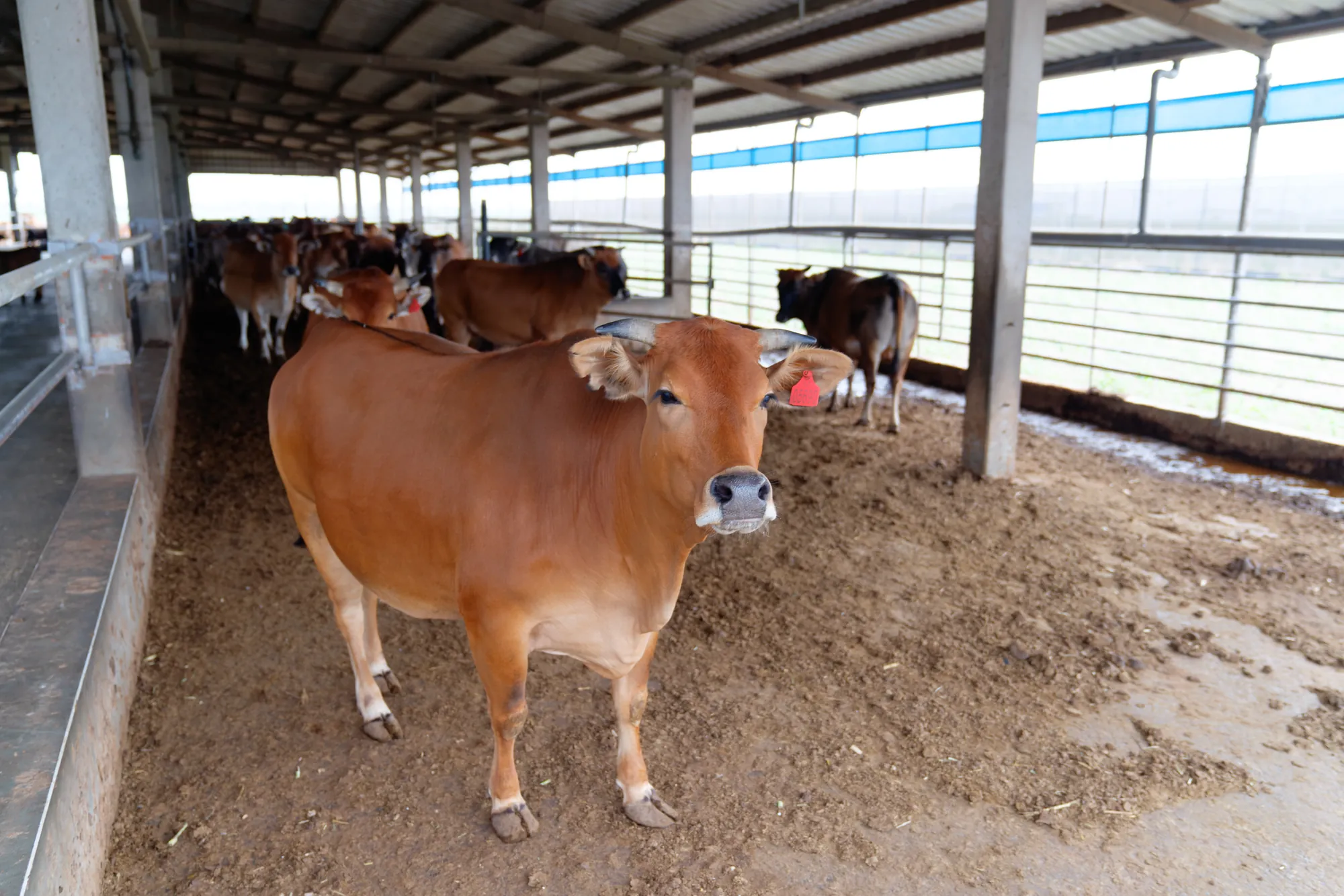
牛,從前與現在,於台灣人生活中扮演重要的角色;然而,於文化中、飲食中、歷史中,牠們對不同世代的意義完全不同。
◤文.圖/看見台灣基金會編輯群
對
老一輩農民來說,牛是共同打拚生活的夥伴;對現代民眾而言,「台灣牛」象徵堅毅苦幹的工作精神;對年輕人,則是休閒農場碧綠草原上可愛動物,以及打牙祭的美食。
先回到歷史,作為台灣農村水稻文化開拓的重要角色,台灣水牛實為印度種沼澤水牛,引進台灣的時間不可考,或由荷蘭人於1624年後引進,或由中國移民自中國攜入台灣。台灣黃牛在台灣出現甚早,於漢人尚未移民登島前,即有平埔族人飼養黃牛之記載。
▋「水牛犁田,黃牛拉車」的農村印象
到了現代,牛肉消費量,台灣超過95%靠進口,美國、澳洲為主,國產牛肉只有8000公噸,常見的牛隻品種,肉牛的部分有台灣黃牛、聖達牛、布拉曼牛,與仍處於雜交實驗的夏洛利牛為主;乳牛則是以荷蘭牛為主。
不少台灣人至今不願意吃牛肉,因為對牛的情感如同家人。「水牛犁田,黃牛拉車」的農村傳統,深深刻在歷史記憶之中,甚至在冬至吃湯圓的時候,會用碗裝幾粒湯圓供在牛舍,以表示一年來的感謝。
台南著名小吃牛肉湯,登上米其林必比登名單,使用道地的台灣牛,而且95%是乳牛。
只在台南吃得到,因為台南有善化及安南兩個屠宰場,每天分三個時段將現宰的溫體牛直送店家;店家以牛骨、牛腩熬煮高湯,切成細薄片的生牛肉進滾燙高湯汆燙一下,再加點薑絲,新鮮滑嫩的口感連進口和牛都沒得比。
台南有多家餐廳供應台灣溫體牛的牛肉湯、牛肉火鍋,知名店家總是排隊人潮滿滿,因為供應量不多。最早供應時段是早晨六點,五點多就有人排隊,而且有不少是國際觀光客,也熟門熟路地加入搶牛的行列。
探索更多
金門貢糖──逆境中淬鍊出的濃郁花生香
從金門旱地花生到糖塊在製作過程中反覆揉打成形,金門貢糖不只是地方名產,也串起農作、加工與地方工藝的飲食脈絡。這份甜味,承載著閩南移民帶來的製糖技藝,也見證金門從農村生活走向觀光產業的文化轉型。
嘉義東市場──百年草市匯聚雞肉飯與老攤滋味
從早期農產交易的市集,到木造市場裡交織的熟食香氣,嘉義東市場承接著城市的日常生活,眾多老攤滋味在此匯聚,市場周邊的火雞肉飯則延伸出嘉義特有的飲食風景,共同構成一張城市餐桌。
龍膽石斑──突破養殖技術,高檔魚鮮走進常民料理
體型龐大的龍膽石斑,是台灣宴席上的高價魚鮮。1996年,台灣率先達成龍膽石斑魚苗量產,並持續突破人工催產、疾病防治與非產季繁殖等技術,提高種苗供應的穩定性,也讓這尾「石斑之王」發展出更多元的料理與消費方式。