On the day of the interview, Tchen Yu-Chiou, honorary chair of Egret Cultural & Educational Foundation Taiwan, appeared with a graceful smile, elegant and stylish in bearing. Nurtured by her father's grounding in the fine arts and her mother's musical cultivation, Tchen displayed extraordinary artistic talent from an early age. In 1965, she was recommended for overseas study as a musical prodigy and entered the Conservatoire National Supérieur de Musique et de Danse de Paris(Paris National Superior Conservatory of Music and Dance); in 1975, she received the institution's highest prize for performance, marking a brilliant achievement. In addition to being an internationally renowned performer, Tchen has also served as professor in the Department of Music at National Taiwan Normal University, director of its graduate institute, dean of its College of Arts, chair of the Council for Cultural Affairs, national policy advisor to the Office of the President, ambassador-at-large for the Ministry of Foreign Affairs, chair of the National Theater and Concert Hall, secretary-general of the General Association of Chinese Culture, chair of Taiwan Broadcasting System, artistic director, and professional curator.

Beyond all this, Tchen has also been a pioneering figure who has worked tirelessly and decisively to promote the culture of Taiwanese cuisine.

Drawing Inspiration From Diasporic Food Memories and French Cuisine

When asked about the most unforgettable food from her years of study abroad, Tchen named a dish familiar to every Taiwanese person: "On a cold winter night in France, the moment a memory of delicious food is stirred, I seem to see my mother on a winter evening, her fingers chapped from the cold, cooking sesame oil chicken late into the night. I can almost smell that rich sesame aroma in the air. And if you add to that the sound of her playing Schubert's Notturno with her hardworking hands (editor's note: Tchen's mother was a music teacher), the bold, deeply flavorful sesame oil chicken, with its uniquely Taiwanese fragrance lifted by "rice wine (mijiu) and ginger, becomes the taste of home that lingers in the soul."

Through the rhythms of daily life, Tchen came to deeply appreciate how present and meticulously considered food is in French life. "As early as more than three hundred years ago, Louis XIV (1638–1715) already knew how to bring every detail of food into everyday life. He was not only a pioneer in recording, preserving, and continuously studying recipes, but also in bringing every aspect of eating and drinking, from table settings to the smallest details. You could say he was the forefather of France's culinary culture and creative industry."

Tchen notes that, no matter what they eat, the French follow a clear logic and sequence, a complete system of dining conventions: which aperitif accompanies the amuse-bouche, which soup is served, which glass for which drink, which wine for which dish, everything follows a precise system of pairing and etiquette. And it is not only the meal itself. The table linens, napkins, napkin rings, and even the overall atmosphere of sound, color, and setting must all be in place. Dining is no longer simply a matter of eating to satisfy hunger, but has been elevated into a lesson in aesthetics, an all-encompassing feast for the senses and the spirit. This food philosophy, with its emphasis on system and narrative, led her to understand that true gastronomy is not merely delicious food, but the presentation of a cultural aesthetics that can be read and remembered.

Through the refined rituals of French cuisine, Tchen came to realize that eating could embody such precision, purity, and elegance. She carried that sense of abundance after returning to Taiwan, steadily channeling it into the promotion of Taiwanese culture.

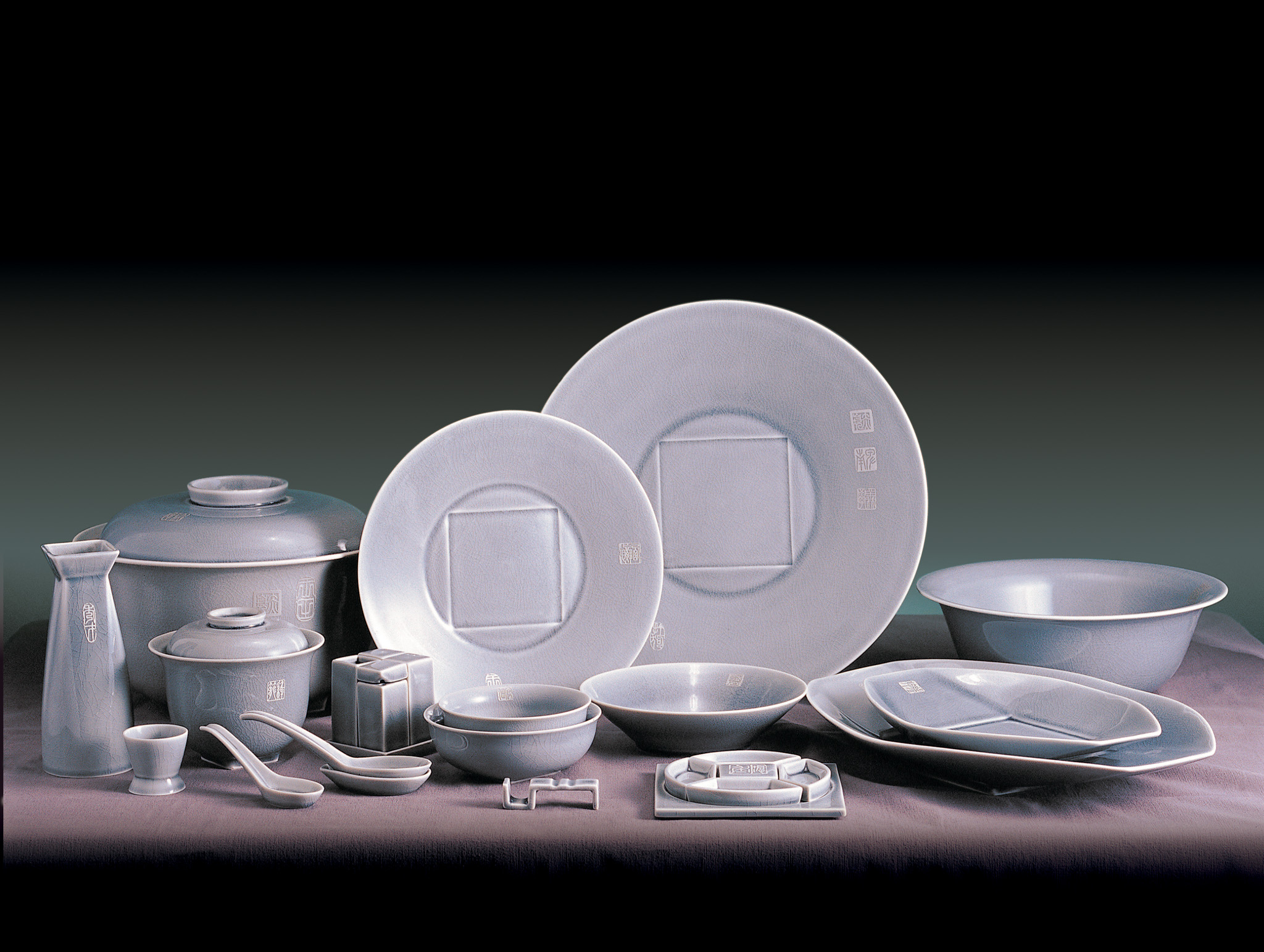
Tchen believes that while cuisine should be carefully documented, tableware is just as essential. These vessels not only serve food but also reflect the gastronomic ideal of uniting aesthetics and culture. The image shows the “Round Heaven and Square Earth” state banquet tableware set designed by Chen Jun-Liang. (Image courtesy of the Egret Cultural and Educational Foundation Taiwan)
Tchen believes that while cuisine should be carefully documented, tableware is just as essential. These vessels not only serve food but also reflect the gastronomic ideal of uniting aesthetics and culture. The image shows the "Round Heaven and Square Earth" state banquet tableware set designed by Chen Jun-Liang. (Image courtesy of the Egret Cultural and Educational Foundation Taiwan)

Taiwanese Sancai Aesthetic and the Zodiac Banquet: Practicing Culinary Culture

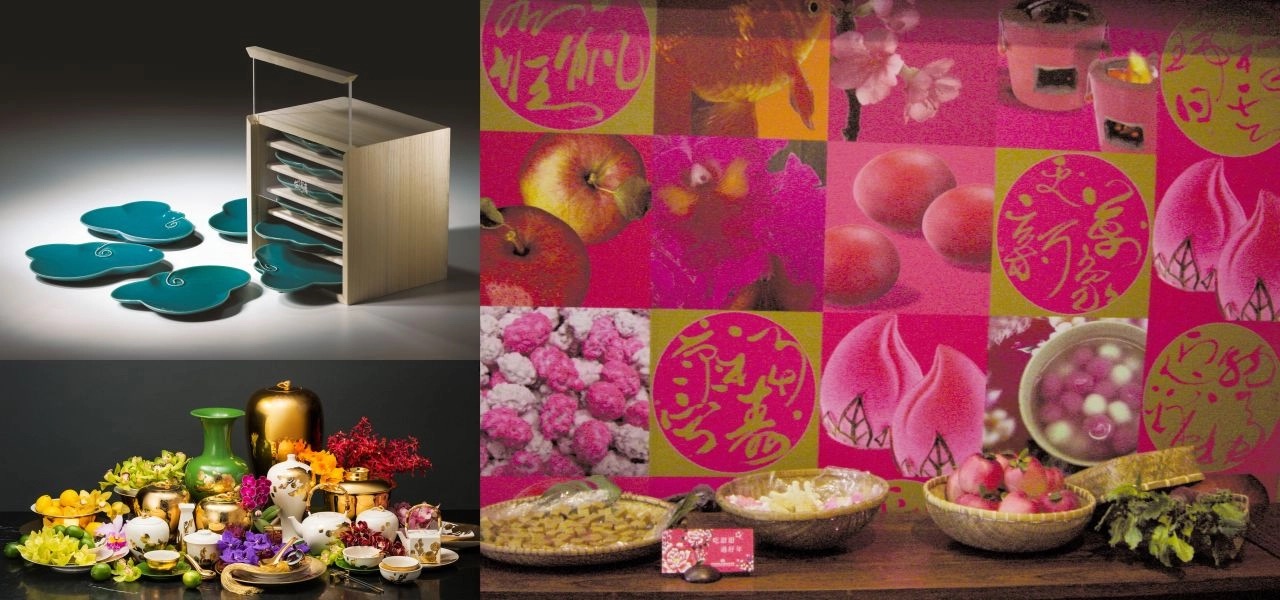
In 2003, then Minister of the Council for Cultural Affairs, Tchen put her ideas into practice by introducing a distinctly Taiwan's Three-Color Aesthetic: Taiwan Red, Taiwan Blue-Green, and Taiwan Gold. Taiwan Red evokes the vivid red cloths of grandmothers, as well as peonies, ang ku kway (red tortoise cakes), and dyed eggs. Taiwan Blue-Green reflects the island's oceans and lush landscapes, embodying the abundance of its natural ecology. Taiwan Gold symbolizes Taiwan's abundant produce: mangoes, pineapples, bananas, and persimmons, whose colors and flavors complement the cuisine. Through these three vibrant, foundational hues, each deeply representative of Taiwan, Tchen proposed a refined synthesis that could elevate the cultural standing of Taiwanese cuisine.

"In 2004, during my tenure at the Council for Cultural Affairs, I organized the Zodiac Banquet and planned the publication of The Complete Collection of Taiwan's Zodiac Banquet: Exploring Zodiac Culture and the Rituals of Life." Drawing on her formidable and distinctive aesthetic cultivation, discerning taste in food, and deep cultural grounding, Tchen organized and systematized the Zodiac Banquet tradition, which had previously existed only in scattered form, passed down orally among master chefs, apprentices, and rural lore. Each zodiac sign corresponds to its own banquet dishes, forming a precious classic of food culture.

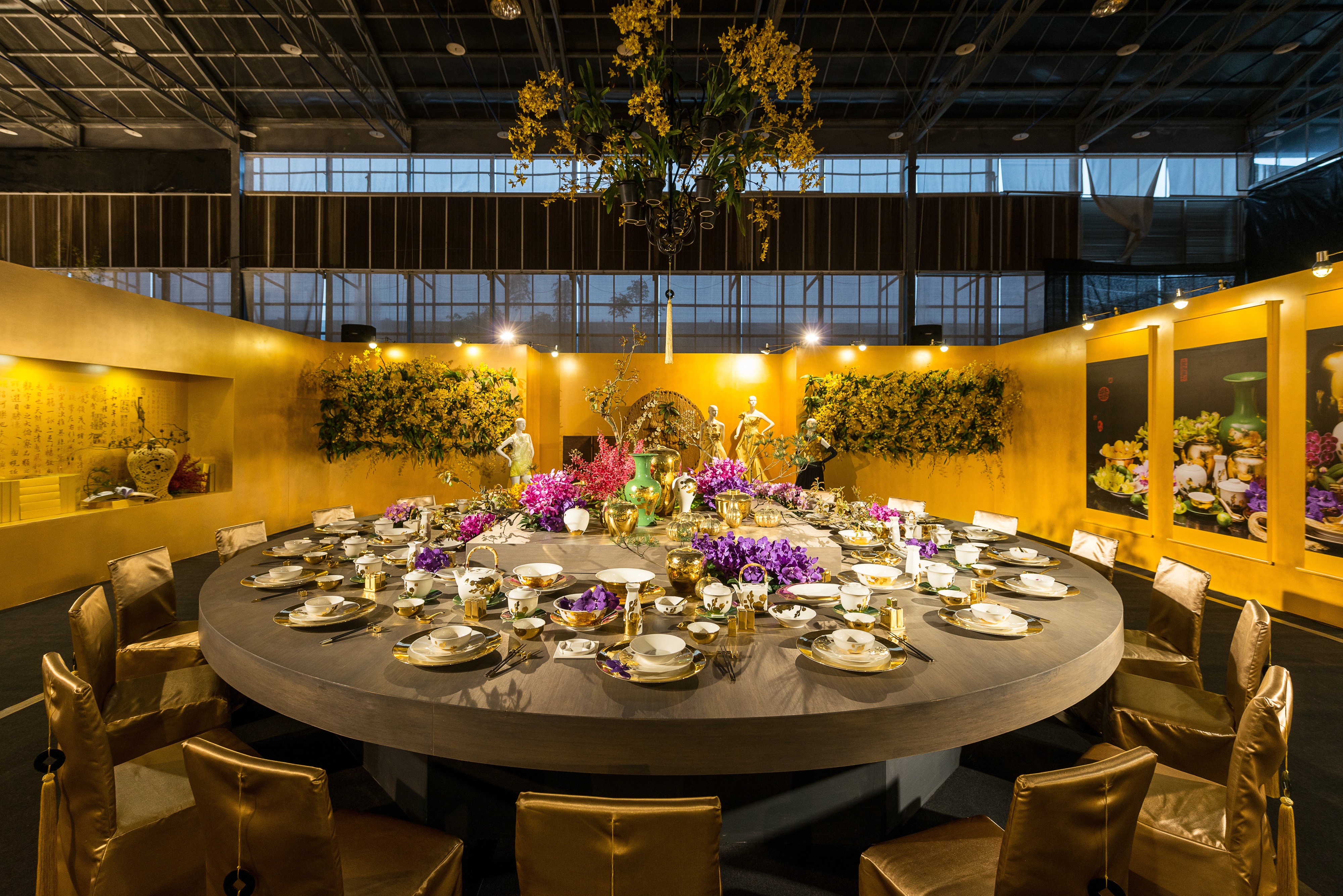
In 2014, Tchen also exhibited the banquet tableware set used for former President Chen Shui-Bian's 2004 inaugural state banquet. She not only created a dazzling "Golden Orchid" feast, but also invited the renowned southern Taiwanese banquet chef Chiang Yi-Yung to lead the kitchen, presenting an orchid banquet through local ingredients, orchid imagery, poetry, and plating.

Caption: During her tenure as Chair of the Council for Cultural Affairs, Tchen originated “Taiwan's Three-Color Aesthetic” (Taiwan Red, Taiwan Blue-Green, Taiwan Gold). She proposed that by artfully combining these three vivid, primary hues, each deeply representative of Taiwan, the cultural stature of Taiwanese cuisine could be further elevated. (Image courtesy of the Egret Cultural and Educational Foundation Taiwan)
Caption: During her tenure as Chair of the Council for Cultural Affairs, Tchen originated "Taiwan's Three-Color Aesthetic" (Taiwan Red, Taiwan Blue-Green, Taiwan Gold). She proposed that by artfully combining these three vivid, primary hues, each deeply representative of Taiwan, the cultural stature of Taiwanese cuisine could be further elevated. (Image courtesy of the Egret Cultural and Educational Foundation Taiwan)

Addressing a Key Challenge in Taiwanese Cuisine: The Absence of a Coherent Aesthetic System

Despite her extensive experience in planning state banquets and curating exhibitions on food culture, Tchen candidly admits that discussions of Taiwanese cuisine often lead to two difficult questions. The first, frequently posed by the media, is which single dish is the most memorable and worth recommending. The second comes from international friends, who ask her to present a comprehensive framework of Taiwanese cuisine. Taiwan simply has too many delicious dishes; each dish reveals its own distinct character and culinary nuance, shaped by the moment, atmosphere, and setting. Choosing just one dish would not only be unfair, but almost impossible. At the same time, Tchen has come to feel keenly that Taiwanese cuisine lacks an overarching aesthetic framework. Too often, the goal is merely to eat quickly and be full, without thinking about how the foodscape so familiar to everyone might be systematically organized, recorded, and preserved, an omission she sees as a major loss.

Taiwan is an island rich with culinary abundance. But how can its thousands upon thousands of dishes be gathered and organized so that "cultural food" may become "food culture"? Tchen's answer is to build databases, carry out systematic organization, and ensure full preservation and promotion. Only then can Taiwanese cuisine move toward artistry and internationalization. This, she says, is precisely why iSee Taiwan Foundation has long promoted cultural gastronomy and built a systematic database through its "Formosan Delights" project.

Toward a "Seven-Sensory Experience" and a Standardized Framework for Taiwan

For Tchen, tasting food should go beyond the five senses of sight, hearing, smell, taste, and touch; it should be a "seven-sense experience." Beyond the five senses, what matters even more is whether the experience stirs the heart and brings a sense of awe and astonishment. For whenever you taste truly exceptional, soul-stirring food, it brings an indescribable, immersive sensation: a subtle, tingling thrill that tugs at the heart.

Tchen says: "As long as one can identify a complete set of matching tableware, choose locally produced ingredients, and use traditional Taiwanese methods of cooking, then with every element working together, what emerges is a culinary culture with ritual, one that can be explained and standardized." In this way, Taiwanese cuisine can not only be systematized, but each dish can also be "spoken," its history and origins can be told. Through systematic organization and classification in a database, Taiwan's many foods, from roadside stalls in streets and alleys to humble side dishes found on ordinary family tables, can break free of their limitations and step beautifully onto the international stage, gaining visibility and recognition.

Tchen believes that Taiwanese cuisine absolutely has the potential to join French gastronomy in the Michelin canon. What matters most is the organic integration, standardization, and systematization of knowledge. By bringing together cuisines from across regions and weaving them into an interconnected whole, cultural food may be elevated to food culture. Only then will Taiwanese cuisine have the chance to be properly preserved and documented, and to make its name on the international stage.