◤文.圖/看見台灣基金會編輯群
攤開台灣這座移民之島的歷史,飲食始終是最貼近日常的文化印記。1949年後,隨國民政府遷台的一百多萬外省移民中,許多人來自山東、山西、河南、河北等大陸北方省分,以麵食為主食。當這些人分散落腳於台灣各地,原本屬於北方的麵食文化,也逐漸融入島嶼的飲食節奏。而在許多外省家庭裡,除夕夜桌上一定要出現的,正是一鍋熱騰騰的水餃。

'%20fill='%23a9976d'/%3e%3cpath%20id='Path_251'%20data-name='Path%20251'%20d='M8,35a1,1,0,0,1,1-1H23a1,1,0,0,1,0,2H9A1,1,0,0,1,8,35Z'%20transform='translate(-8%20-22)'%20fill='%23a9976d'/%3e%3cpath%20id='Path_252'%20data-name='Path%20252'%20d='M9,22a1,1,0,0,0,0,2h8a1,1,0,0,0,0-2Z'%20transform='translate(-8%20-16)'%20fill='%23a9976d'/%3e%3c/svg%3e)
'%20fill='%23a9976d'/%3e%3c/g%3e%3c/svg%3e)
'%3e%3cg%20id='Ellipse_27'%20data-name='Ellipse%2027'%20transform='translate(813%20250)'%20fill='none'%20stroke='%23ccac89'%20stroke-width='1'%3e%3ccircle%20cx='16'%20cy='16'%20r='16'%20stroke='none'/%3e%3ccircle%20cx='16'%20cy='16'%20r='15.5'%20fill='none'/%3e%3c/g%3e%3cg%20id='facebook'%20transform='translate(824.105%20258.296)'%3e%3cpath%20id='Path_243'%20data-name='Path%20243'%20d='M8.894.111V2.556H7.441a1.361,1.361,0,0,0-1.074.333,1.534,1.534,0,0,0-.278,1v1.75H8.8L8.441,8.38H6.089v7.028H3.255V8.38H.894V5.639H3.255V3.62A3.582,3.582,0,0,1,4.218.949,3.5,3.5,0,0,1,6.783,0,15.317,15.317,0,0,1,8.894.111Z'%20transform='translate(0%200)'%20fill='%23ccac89'/%3e%3c/g%3e%3c/g%3e%3c/svg%3e)

'%3e%3cg%20id='Ellipse_29'%20data-name='Ellipse%2029'%20transform='translate(901%20250)'%20fill='none'%20stroke='%23ccac89'%20stroke-width='1'%3e%3ccircle%20cx='16'%20cy='16'%20r='16'%20stroke='none'/%3e%3ccircle%20cx='16'%20cy='16'%20r='15.5'%20fill='none'/%3e%3c/g%3e%3cg%20id='link-45deg'%20transform='translate(902.607%20253.105)'%3e%3cg%20id='Group_479'%20data-name='Group%20479'%20transform='translate(7.393%205.896)'%3e%3cpath%20id='Path_241'%20data-name='Path%20241'%20d='M10.246,17.821,8.507,19.56a3.8,3.8,0,0,0,5.378,5.378L16.2,22.62a3.8,3.8,0,0,0-1.05-6.12l-.743.743a1.27,1.27,0,0,0-.2.252,2.535,2.535,0,0,1,1.091,4.23L12.99,24.042A2.536,2.536,0,0,1,9.4,20.455l1.005-1a5.093,5.093,0,0,1-.162-1.631Z'%20transform='translate(-7.393%20-12.02)'%20fill='%23ccac89'/%3e%3cpath%20id='Path_242'%20data-name='Path%20242'%20d='M18.236,9.327a3.8,3.8,0,0,0,1.05,6.12l.982-.984a2.535,2.535,0,0,1-1.136-4.241L21.448,7.9a2.536,2.536,0,1,1,3.587,3.587l-1.005,1a5.1,5.1,0,0,1,.162,1.631l1.739-1.739A3.8,3.8,0,1,0,20.553,7.01Z'%20transform='translate(-13.011%20-5.896)'%20fill='%23ccac89'/%3e%3c/g%3e%3c/g%3e%3c/g%3e%3c/svg%3e)
◤文.圖/看見台灣基金會編輯群
攤開台灣這座移民之島的歷史,飲食始終是最貼近日常的文化印記。1949年後,隨國民政府遷台的一百多萬外省移民中,許多人來自山東、山西、河南、河北等大陸北方省分,以麵食為主食。當這些人分散落腳於台灣各地,原本屬於北方的麵食文化,也逐漸融入島嶼的飲食節奏。而在許多外省家庭裡,除夕夜桌上一定要出現的,正是一鍋熱騰騰的水餃。
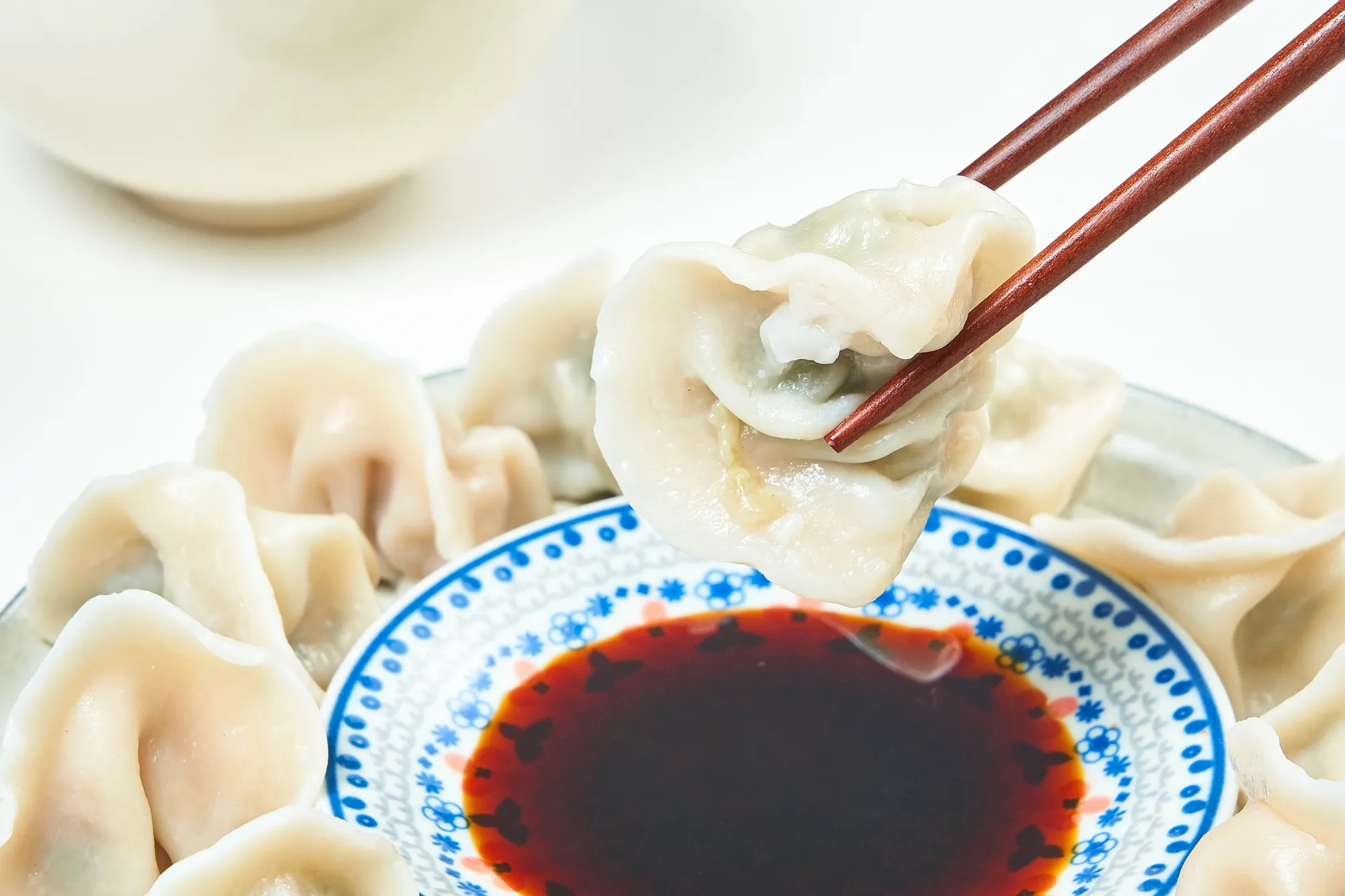
除夕夜吃水餃的習俗源自北方年俗,「餃」與「交」諧音,象徵「歲更交子」──指農曆除夕子時(午夜11點至1點),新舊歲交替的時刻,寓意辭舊迎新、福氣交接。水餃外型如元寶,也被視為招財進寶的吉祥象徵。有些家庭至今仍保留傳統,會在包餃子時隨機放入一枚清洗乾淨的硬幣,除夕夜誰吃到,便象徵新的一年好運臨門。
北方有句諺語說:「舒服不過倒(躺)著,好吃不過餃子。」水餃的魅力也在於餡料的高度包容性。從最常見的高麗菜豬肉、韭菜豬肉,到薺菜(一種野菜)牛肉、魚蝦餡,只要一張麵皮、一鍋滾水,便能成就一頓溫暖踏實的飯食。來到台灣後,水餃也逐漸在地化,成為冷凍庫裡的日常備糧,陪伴不同世代度過忙碌或團圓的時刻。
放眼世界,各地也都有屬於自己的餃子文化:波蘭的 Pierogi 可以是甜口,土耳其的 Manti 則以細小精緻著稱。近年,台灣冷凍水餃憑藉皮薄餡多、口味多元,進軍海外市場,在國外超市貨架上占有一席之地。從移民餐桌上的年節象徵,到輸出世界的家常美味,水餃已悄悄成為台灣飲食文化中,一種跨族群共享的年味記憶。