
'%20fill='%23a9976d'/%3e%3cpath%20id='Path_251'%20data-name='Path%20251'%20d='M8,35a1,1,0,0,1,1-1H23a1,1,0,0,1,0,2H9A1,1,0,0,1,8,35Z'%20transform='translate(-8%20-22)'%20fill='%23a9976d'/%3e%3cpath%20id='Path_252'%20data-name='Path%20252'%20d='M9,22a1,1,0,0,0,0,2h8a1,1,0,0,0,0-2Z'%20transform='translate(-8%20-16)'%20fill='%23a9976d'/%3e%3c/svg%3e)
'%20fill='%23a9976d'/%3e%3c/g%3e%3c/svg%3e)
絲瓜─《本草綱目》:「其瓤有絡」
主題探索
文化美食
分享
'%3e%3cg%20id='Ellipse_27'%20data-name='Ellipse%2027'%20transform='translate(813%20250)'%20fill='none'%20stroke='%23ccac89'%20stroke-width='1'%3e%3ccircle%20cx='16'%20cy='16'%20r='16'%20stroke='none'/%3e%3ccircle%20cx='16'%20cy='16'%20r='15.5'%20fill='none'/%3e%3c/g%3e%3cg%20id='facebook'%20transform='translate(824.105%20258.296)'%3e%3cpath%20id='Path_243'%20data-name='Path%20243'%20d='M8.894.111V2.556H7.441a1.361,1.361,0,0,0-1.074.333,1.534,1.534,0,0,0-.278,1v1.75H8.8L8.441,8.38H6.089v7.028H3.255V8.38H.894V5.639H3.255V3.62A3.582,3.582,0,0,1,4.218.949,3.5,3.5,0,0,1,6.783,0,15.317,15.317,0,0,1,8.894.111Z'%20transform='translate(0%200)'%20fill='%23ccac89'/%3e%3c/g%3e%3c/g%3e%3c/svg%3e)

'%3e%3cg%20id='Ellipse_29'%20data-name='Ellipse%2029'%20transform='translate(901%20250)'%20fill='none'%20stroke='%23ccac89'%20stroke-width='1'%3e%3ccircle%20cx='16'%20cy='16'%20r='16'%20stroke='none'/%3e%3ccircle%20cx='16'%20cy='16'%20r='15.5'%20fill='none'/%3e%3c/g%3e%3cg%20id='link-45deg'%20transform='translate(902.607%20253.105)'%3e%3cg%20id='Group_479'%20data-name='Group%20479'%20transform='translate(7.393%205.896)'%3e%3cpath%20id='Path_241'%20data-name='Path%20241'%20d='M10.246,17.821,8.507,19.56a3.8,3.8,0,0,0,5.378,5.378L16.2,22.62a3.8,3.8,0,0,0-1.05-6.12l-.743.743a1.27,1.27,0,0,0-.2.252,2.535,2.535,0,0,1,1.091,4.23L12.99,24.042A2.536,2.536,0,0,1,9.4,20.455l1.005-1a5.093,5.093,0,0,1-.162-1.631Z'%20transform='translate(-7.393%20-12.02)'%20fill='%23ccac89'/%3e%3cpath%20id='Path_242'%20data-name='Path%20242'%20d='M18.236,9.327a3.8,3.8,0,0,0,1.05,6.12l.982-.984a2.535,2.535,0,0,1-1.136-4.241L21.448,7.9a2.536,2.536,0,1,1,3.587,3.587l-1.005,1a5.1,5.1,0,0,1,.162,1.631l1.739-1.739A3.8,3.8,0,1,0,20.553,7.01Z'%20transform='translate(-13.011%20-5.896)'%20fill='%23ccac89'/%3e%3c/g%3e%3c/g%3e%3c/g%3e%3c/svg%3e)
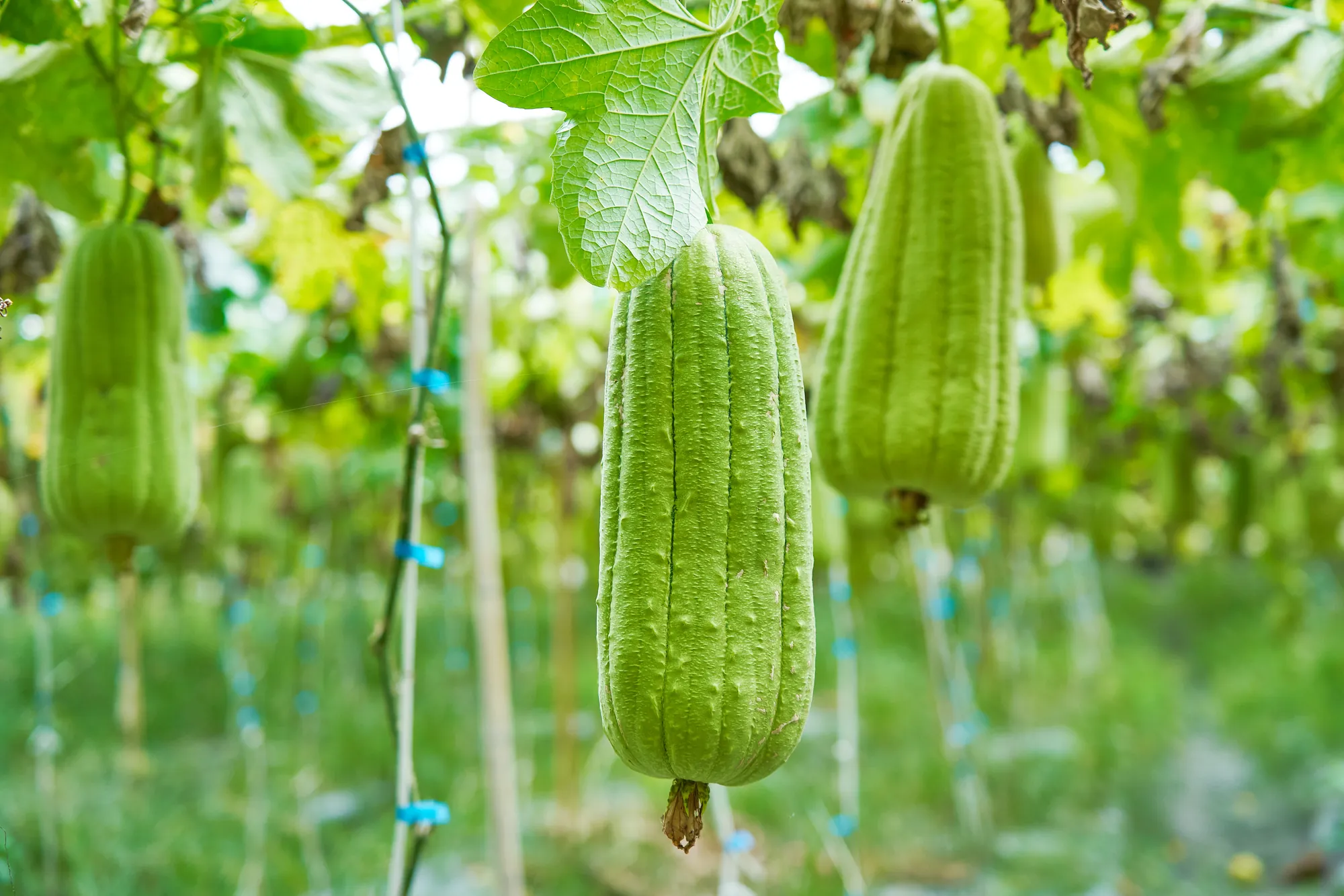
絲瓜又稱菜瓜,《本草綱目》就提到「其瓤有絡」,指瓜體布滿絲絡。
◤文.圖/看見台灣基金會編輯群
絲
瓜是台灣夏秋季節最佳蔬菜之一,南投、嘉義、台南與屏東為主要產區。台灣絲瓜主要分成果實平滑的「圓筒絲瓜」與有明顯稜線的「稜角絲瓜」。台灣本島以種植圓筒絲瓜為主,果肉較為綿密、絲瓜香味明顯;稜角絲瓜主要種植在澎湖,果實稜線明顯、顏色鮮綠,口感比較爽脆。
近年出現新品種水果絲瓜,也叫蘋果絲瓜,屬於圓筒絲瓜的一個品種,果肉比較細緻綿密,口感紮實更香甜。由於皮薄、果肉飽滿,削皮後即可涼拌,以「唯一可生食之絲瓜」作為推廣特點。
▋台灣常民生活必備 菜瓜布、絲瓜水 還有好多俚語
至於絲瓜的「絲」在哪裡?原來絲瓜果實老化後,比其他瓜果更容易出現纖維而得名,老化的絲瓜曬乾後成了洗滌用的絲瓜絡(俗稱菜瓜布),可用於洗澡清潔或洗滌碗盤,至今仍是許多台灣人家中必備物品。而脫落的絲瓜子,還可作為中藥材使用,以清熱解暑、通絡活血見長。
絲瓜體內有95%都是水,絲瓜水無色無味,卻含少量醣類、維生素與礦物質,塗抹在皮膚可以減緩失水,是台灣阿嬤的保濕除皺秘方。
可以從頭用到尾的絲瓜,在台灣常民生活佔有重要地位,甚至許多民間俚語都和絲瓜有關:「澎湖絲瓜」形容人話多,因為澎湖產稜角絲瓜,瓜身有十稜,台語音近雜唸(tsa̍p-liām);「人若衰,種匏仔生菜瓜」是說人若倒楣,種匏瓜也會長出絲瓜,形容人的運氣不佳,總是事與願違。
探索更多
米粉─古早時,喜慶宴客才吃得到
台灣的米粉源於中國福建惠安,應為渡台先民傳入,後於台灣中部發跡,其後逐漸區分為兩種形式:向東發展為南投埔里米粉,向北發展為新竹米粉,為台灣兩大著名產區。
木瓜─米其林必嘗台灣美味:木瓜牛奶
從清朝的「番木瓜」到外銷日本的台農品種,台灣木瓜透過改良與精緻栽培,成功打造口感香甜的風味,也為機能食品開創更多可能。
八寶芋泥─從前是富貴人家的象徵
「八寶」在過去是有錢人家的象徵,代表了「珍貴」與「多」的意思,至於哪八寶,則無定數。