
'%20fill='%23a9976d'/%3e%3cpath%20id='Path_251'%20data-name='Path%20251'%20d='M8,35a1,1,0,0,1,1-1H23a1,1,0,0,1,0,2H9A1,1,0,0,1,8,35Z'%20transform='translate(-8%20-22)'%20fill='%23a9976d'/%3e%3cpath%20id='Path_252'%20data-name='Path%20252'%20d='M9,22a1,1,0,0,0,0,2h8a1,1,0,0,0,0-2Z'%20transform='translate(-8%20-16)'%20fill='%23a9976d'/%3e%3c/svg%3e)
'%20fill='%23a9976d'/%3e%3c/g%3e%3c/svg%3e)
小籠湯包─源自江南勝江南
主題探索
文化美食
分享
'%3e%3cg%20id='Ellipse_27'%20data-name='Ellipse%2027'%20transform='translate(813%20250)'%20fill='none'%20stroke='%23ccac89'%20stroke-width='1'%3e%3ccircle%20cx='16'%20cy='16'%20r='16'%20stroke='none'/%3e%3ccircle%20cx='16'%20cy='16'%20r='15.5'%20fill='none'/%3e%3c/g%3e%3cg%20id='facebook'%20transform='translate(824.105%20258.296)'%3e%3cpath%20id='Path_243'%20data-name='Path%20243'%20d='M8.894.111V2.556H7.441a1.361,1.361,0,0,0-1.074.333,1.534,1.534,0,0,0-.278,1v1.75H8.8L8.441,8.38H6.089v7.028H3.255V8.38H.894V5.639H3.255V3.62A3.582,3.582,0,0,1,4.218.949,3.5,3.5,0,0,1,6.783,0,15.317,15.317,0,0,1,8.894.111Z'%20transform='translate(0%200)'%20fill='%23ccac89'/%3e%3c/g%3e%3c/g%3e%3c/svg%3e)

'%3e%3cg%20id='Ellipse_29'%20data-name='Ellipse%2029'%20transform='translate(901%20250)'%20fill='none'%20stroke='%23ccac89'%20stroke-width='1'%3e%3ccircle%20cx='16'%20cy='16'%20r='16'%20stroke='none'/%3e%3ccircle%20cx='16'%20cy='16'%20r='15.5'%20fill='none'/%3e%3c/g%3e%3cg%20id='link-45deg'%20transform='translate(902.607%20253.105)'%3e%3cg%20id='Group_479'%20data-name='Group%20479'%20transform='translate(7.393%205.896)'%3e%3cpath%20id='Path_241'%20data-name='Path%20241'%20d='M10.246,17.821,8.507,19.56a3.8,3.8,0,0,0,5.378,5.378L16.2,22.62a3.8,3.8,0,0,0-1.05-6.12l-.743.743a1.27,1.27,0,0,0-.2.252,2.535,2.535,0,0,1,1.091,4.23L12.99,24.042A2.536,2.536,0,0,1,9.4,20.455l1.005-1a5.093,5.093,0,0,1-.162-1.631Z'%20transform='translate(-7.393%20-12.02)'%20fill='%23ccac89'/%3e%3cpath%20id='Path_242'%20data-name='Path%20242'%20d='M18.236,9.327a3.8,3.8,0,0,0,1.05,6.12l.982-.984a2.535,2.535,0,0,1-1.136-4.241L21.448,7.9a2.536,2.536,0,1,1,3.587,3.587l-1.005,1a5.1,5.1,0,0,1,.162,1.631l1.739-1.739A3.8,3.8,0,1,0,20.553,7.01Z'%20transform='translate(-13.011%20-5.896)'%20fill='%23ccac89'/%3e%3c/g%3e%3c/g%3e%3c/g%3e%3c/svg%3e)
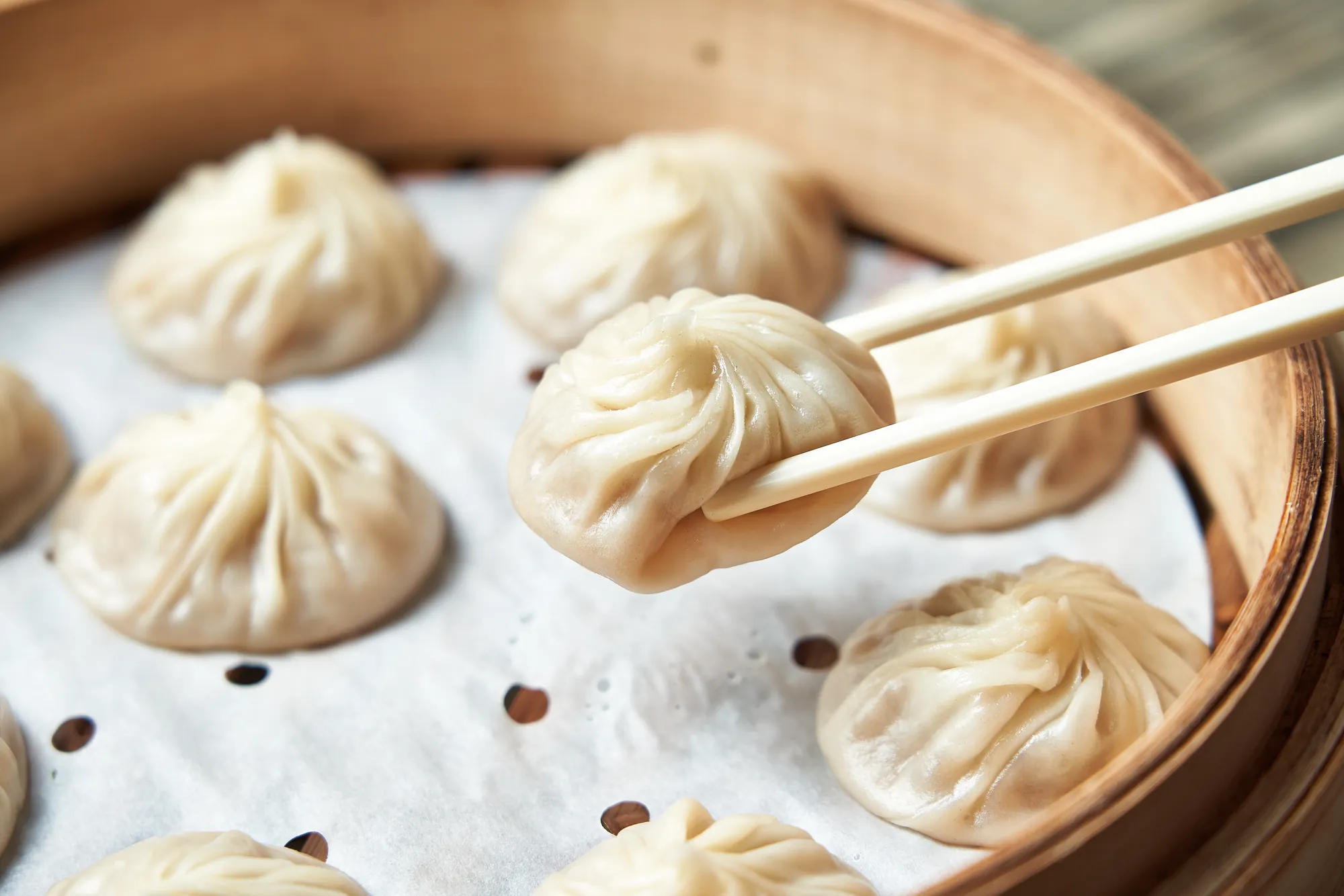
麵食原流行於中國北方,然而往南方發展後,樣子便秀氣起來。江南吃食首重細巧,包子饅頭一旦過了長江,身形頓時顯得玲瓏。
◤文.圖/看見台灣基金會編輯群
皮
變超薄、加入肉凍的小籠湯包,開始於中國江南地區搏得歡心,其小巧可愛的模樣,符合江南地區點心的細緻姿態。
1949年國民政府遷台時,因當時政府要員多為江浙出身,故江浙菜風靡一時,精緻的小籠湯包也隨之來台,成為達官顯貴喜愛的點心之一。
後來在台灣街頭,小籠湯包漸漸成為平民美食。然而,1993年一則刊登於《紐約時報》旅遊版的「世界十家美食餐廳」報導,以「樸食無華卻蘊含許多誘人美食」形容入榜的鼎泰豐,吸引全球的眼光,目前海外已有超過160家店,完勝江南地區最有名的上海南翔小籠包。
▋鵝肝、黑松露、起司、蟹粉口味
為了進軍海外,鼎泰豐將製作流程全面標準化,例如一顆湯包5克重、每顆麵皮18摺,其風味與嚴謹使日本人為之瘋狂。
不過,根據2012年蕃薯藤輕旅行舉辦的「全台人氣小籠包評比大PK」活動,有65萬人投票參與,再由美食評論家、美食記者及美食部落客等秘密客試吃評分,選出全台10大人氣小籠包,拿下第一名的,是點水樓,小籠包有19摺。第二名是鼎泰豐。
台灣的小籠湯包蒸熟以後,一口咬下便湯汁四溢,配上細薑絲及醋、醬油,精緻的享受有富貴人家吃食的氣氛。
有高檔一點的餐廳,推出8種顏色、8種口味,包括鵝肝、黑松露、起司、蟹粉、川味。街邊則到處可見以「鼎泰豐的品質,路邊攤的價格」為口號的小店,平價實惠。小籠湯包從江南過了台灣海峽,躍上世界舞台成枝頭鳳凰。
探索更多
咖啡─阿里山豆,1公斤破3萬元
自星巴克從1998年登台起,有「西方世界品味fu的」咖啡,在台灣從消費、種植、咖啡競賽都引發了熱潮。根據農業部統計,近年台灣每年進口的咖啡生豆約超過5萬公噸,換算下來台灣每人平均一年喝下184杯咖啡。
芒果─品種超過20個,打造台灣芒果王國美譽
號稱「水果王國」的台灣,眾多水果中最讓全球觀光客在夏天慕名而來的,就是芒果。
葡萄─巨峰葡萄創造紫金傳奇
葡萄在6000多年前的非洲東北部和亞洲西南部已有栽種紀錄,台灣的葡萄栽培紀錄最早可追溯到1684年自中國引進的純歐洲品種。1895年,台灣人半田敏男從日本引進多種西洋、日本葡萄品種,奠定台灣種植釀酒用葡萄的基礎,但仍因台灣氣候條件限制,難以栽種。