
'%20fill='%23a9976d'/%3e%3cpath%20id='Path_251'%20data-name='Path%20251'%20d='M8,35a1,1,0,0,1,1-1H23a1,1,0,0,1,0,2H9A1,1,0,0,1,8,35Z'%20transform='translate(-8%20-22)'%20fill='%23a9976d'/%3e%3cpath%20id='Path_252'%20data-name='Path%20252'%20d='M9,22a1,1,0,0,0,0,2h8a1,1,0,0,0,0-2Z'%20transform='translate(-8%20-16)'%20fill='%23a9976d'/%3e%3c/svg%3e)
'%20fill='%23a9976d'/%3e%3c/g%3e%3c/svg%3e)
柑橘─全世界、台灣都是產量最大水果
主題探索
文化美食
分享
'%3e%3cg%20id='Ellipse_27'%20data-name='Ellipse%2027'%20transform='translate(813%20250)'%20fill='none'%20stroke='%23ccac89'%20stroke-width='1'%3e%3ccircle%20cx='16'%20cy='16'%20r='16'%20stroke='none'/%3e%3ccircle%20cx='16'%20cy='16'%20r='15.5'%20fill='none'/%3e%3c/g%3e%3cg%20id='facebook'%20transform='translate(824.105%20258.296)'%3e%3cpath%20id='Path_243'%20data-name='Path%20243'%20d='M8.894.111V2.556H7.441a1.361,1.361,0,0,0-1.074.333,1.534,1.534,0,0,0-.278,1v1.75H8.8L8.441,8.38H6.089v7.028H3.255V8.38H.894V5.639H3.255V3.62A3.582,3.582,0,0,1,4.218.949,3.5,3.5,0,0,1,6.783,0,15.317,15.317,0,0,1,8.894.111Z'%20transform='translate(0%200)'%20fill='%23ccac89'/%3e%3c/g%3e%3c/g%3e%3c/svg%3e)

'%3e%3cg%20id='Ellipse_29'%20data-name='Ellipse%2029'%20transform='translate(901%20250)'%20fill='none'%20stroke='%23ccac89'%20stroke-width='1'%3e%3ccircle%20cx='16'%20cy='16'%20r='16'%20stroke='none'/%3e%3ccircle%20cx='16'%20cy='16'%20r='15.5'%20fill='none'/%3e%3c/g%3e%3cg%20id='link-45deg'%20transform='translate(902.607%20253.105)'%3e%3cg%20id='Group_479'%20data-name='Group%20479'%20transform='translate(7.393%205.896)'%3e%3cpath%20id='Path_241'%20data-name='Path%20241'%20d='M10.246,17.821,8.507,19.56a3.8,3.8,0,0,0,5.378,5.378L16.2,22.62a3.8,3.8,0,0,0-1.05-6.12l-.743.743a1.27,1.27,0,0,0-.2.252,2.535,2.535,0,0,1,1.091,4.23L12.99,24.042A2.536,2.536,0,0,1,9.4,20.455l1.005-1a5.093,5.093,0,0,1-.162-1.631Z'%20transform='translate(-7.393%20-12.02)'%20fill='%23ccac89'/%3e%3cpath%20id='Path_242'%20data-name='Path%20242'%20d='M18.236,9.327a3.8,3.8,0,0,0,1.05,6.12l.982-.984a2.535,2.535,0,0,1-1.136-4.241L21.448,7.9a2.536,2.536,0,1,1,3.587,3.587l-1.005,1a5.1,5.1,0,0,1,.162,1.631l1.739-1.739A3.8,3.8,0,1,0,20.553,7.01Z'%20transform='translate(-13.011%20-5.896)'%20fill='%23ccac89'/%3e%3c/g%3e%3c/g%3e%3c/g%3e%3c/svg%3e)
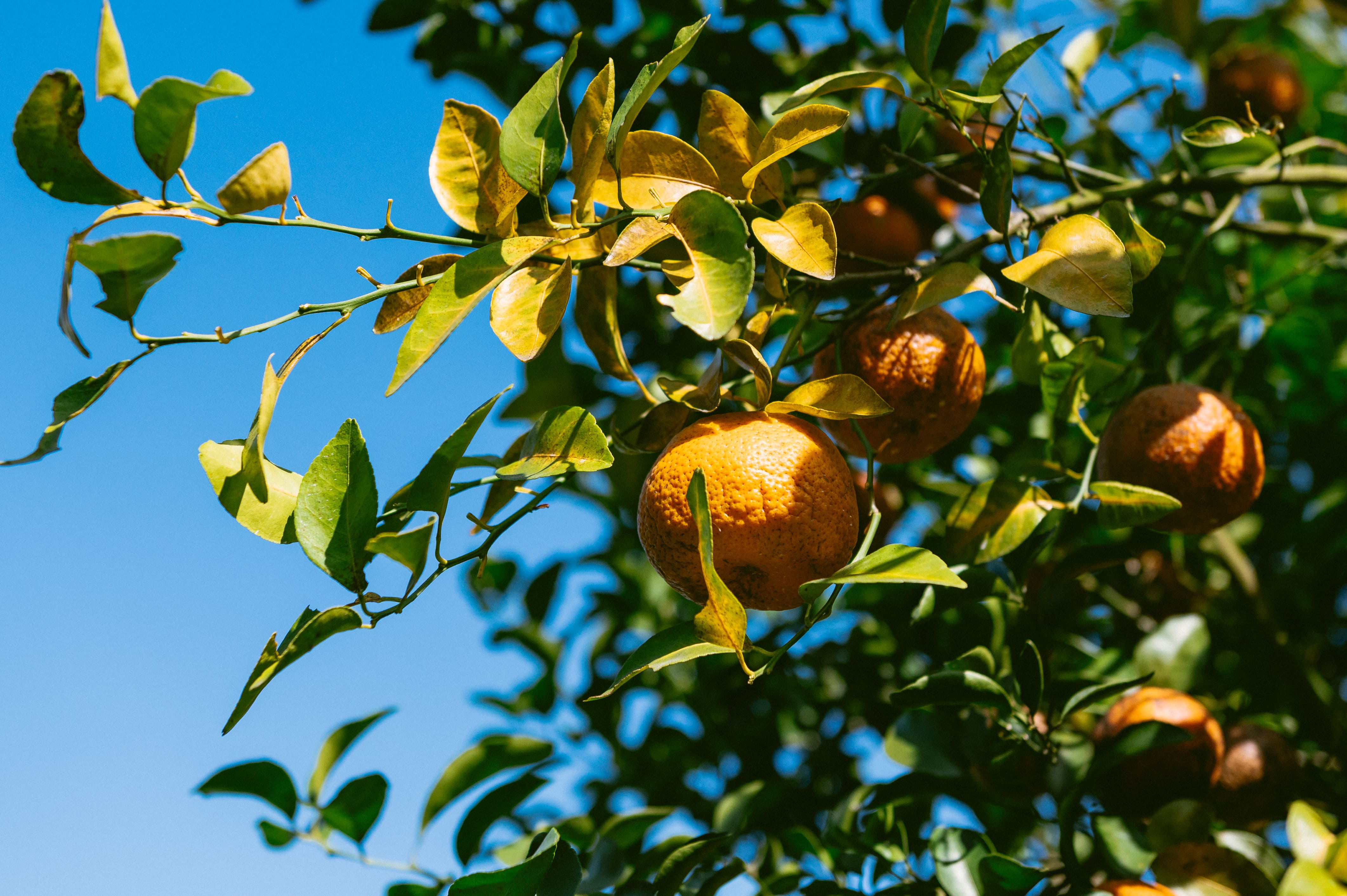
柑橘,泛指各種芸香科柑橘屬水果,包括橘、柚、檸檬、葡萄柚等,彼此雜交出的品種約200種,台灣民眾俗稱的柑橘,其實只涉及「橘」這一類。
◤文.圖/看見台灣基金會編輯群
根
據維基百科的資料,柑橘是世界產量最大的水果種類。起源甚早,依據日治時期之柑橘專家田中長三郎考察,印度東北、中國雲南及太平洋東南部分島嶼應為柑橘發源地,並以此區域為中心逐步向外傳播。台灣本身則有四種原生柑橘,分別為「台灣香檬」、「南庄橙」、「番柑」以及「蘭嶼酸橙」。
▋柑橘原本只能看不能吃
台灣栽種柑橘約始於清代,隨中國閩粵移民自華南引入,至今已有百年以上的栽種歷史。柑橘原屬庭院式的觀賞植物,僅少量種植,後來逐漸演變為果園式的經濟栽種方式。
柑橘類果實含維生素、礦物質及多種類黃酮等抗氧化、老化成分,是營養豐富的水果。亦為台灣分布最廣、產量及產值最高的水果,產地遍布於全台,一年之中皆有柑橘類的水果可供食用。
台灣於日治時期和戰後皆引進不少新品種,可說是為「台灣柑橘世界甜」預先打下良好基礎。
台灣的柑橘鮮果亦為外銷水果之主力,農民與政府、學界攜手研發,於2023年柑橘類水果外銷達1萬2970公噸。在台灣,冬季有柑橘、秋季有文旦,春夏則有柳橙與檸檬,可說是柑橘寶島。造訪台灣時,不妨剝開柑橘子皮,感受一下台灣柑橘的甜香滋味。
探索更多
咖啡─阿里山豆,1公斤破3萬元
自星巴克從1998年登台起,有「西方世界品味fu的」咖啡,在台灣從消費、種植、咖啡競賽都引發了熱潮。根據農業部統計,近年台灣每年進口的咖啡生豆約超過5萬公噸,換算下來台灣每人平均一年喝下184杯咖啡。
荔枝─妃子笑與玉荷包
吃起荔枝,經常會跟唐明皇寵愛的楊貴妃聯想,杜甫還為它做了詩:「奔騰獻荔枝,百馬死山谷」。荔枝源於兩千多年前的中國,18世紀後,才陸續引進台灣栽種。
棗子─台灣研發品種顏值高、名字美
台灣慣稱的棗子,原名印度棗(Indian jujube),由此可知棗子原產於印度,傳入台灣的時間不可考,惟日據時期已有栽種紀錄。