
'%20fill='%23a9976d'/%3e%3cpath%20id='Path_251'%20data-name='Path%20251'%20d='M8,35a1,1,0,0,1,1-1H23a1,1,0,0,1,0,2H9A1,1,0,0,1,8,35Z'%20transform='translate(-8%20-22)'%20fill='%23a9976d'/%3e%3cpath%20id='Path_252'%20data-name='Path%20252'%20d='M9,22a1,1,0,0,0,0,2h8a1,1,0,0,0,0-2Z'%20transform='translate(-8%20-16)'%20fill='%23a9976d'/%3e%3c/svg%3e)
'%20fill='%23a9976d'/%3e%3c/g%3e%3c/svg%3e)
水蜜桃─嬌貴的極品水果,本地人獨享
地方探索
主題探索
北部
文化美食
分享
'%3e%3cg%20id='Ellipse_27'%20data-name='Ellipse%2027'%20transform='translate(813%20250)'%20fill='none'%20stroke='%23ccac89'%20stroke-width='1'%3e%3ccircle%20cx='16'%20cy='16'%20r='16'%20stroke='none'/%3e%3ccircle%20cx='16'%20cy='16'%20r='15.5'%20fill='none'/%3e%3c/g%3e%3cg%20id='facebook'%20transform='translate(824.105%20258.296)'%3e%3cpath%20id='Path_243'%20data-name='Path%20243'%20d='M8.894.111V2.556H7.441a1.361,1.361,0,0,0-1.074.333,1.534,1.534,0,0,0-.278,1v1.75H8.8L8.441,8.38H6.089v7.028H3.255V8.38H.894V5.639H3.255V3.62A3.582,3.582,0,0,1,4.218.949,3.5,3.5,0,0,1,6.783,0,15.317,15.317,0,0,1,8.894.111Z'%20transform='translate(0%200)'%20fill='%23ccac89'/%3e%3c/g%3e%3c/g%3e%3c/svg%3e)

'%3e%3cg%20id='Ellipse_29'%20data-name='Ellipse%2029'%20transform='translate(901%20250)'%20fill='none'%20stroke='%23ccac89'%20stroke-width='1'%3e%3ccircle%20cx='16'%20cy='16'%20r='16'%20stroke='none'/%3e%3ccircle%20cx='16'%20cy='16'%20r='15.5'%20fill='none'/%3e%3c/g%3e%3cg%20id='link-45deg'%20transform='translate(902.607%20253.105)'%3e%3cg%20id='Group_479'%20data-name='Group%20479'%20transform='translate(7.393%205.896)'%3e%3cpath%20id='Path_241'%20data-name='Path%20241'%20d='M10.246,17.821,8.507,19.56a3.8,3.8,0,0,0,5.378,5.378L16.2,22.62a3.8,3.8,0,0,0-1.05-6.12l-.743.743a1.27,1.27,0,0,0-.2.252,2.535,2.535,0,0,1,1.091,4.23L12.99,24.042A2.536,2.536,0,0,1,9.4,20.455l1.005-1a5.093,5.093,0,0,1-.162-1.631Z'%20transform='translate(-7.393%20-12.02)'%20fill='%23ccac89'/%3e%3cpath%20id='Path_242'%20data-name='Path%20242'%20d='M18.236,9.327a3.8,3.8,0,0,0,1.05,6.12l.982-.984a2.535,2.535,0,0,1-1.136-4.241L21.448,7.9a2.536,2.536,0,1,1,3.587,3.587l-1.005,1a5.1,5.1,0,0,1,.162,1.631l1.739-1.739A3.8,3.8,0,1,0,20.553,7.01Z'%20transform='translate(-13.011%20-5.896)'%20fill='%23ccac89'/%3e%3c/g%3e%3c/g%3e%3c/g%3e%3c/svg%3e)
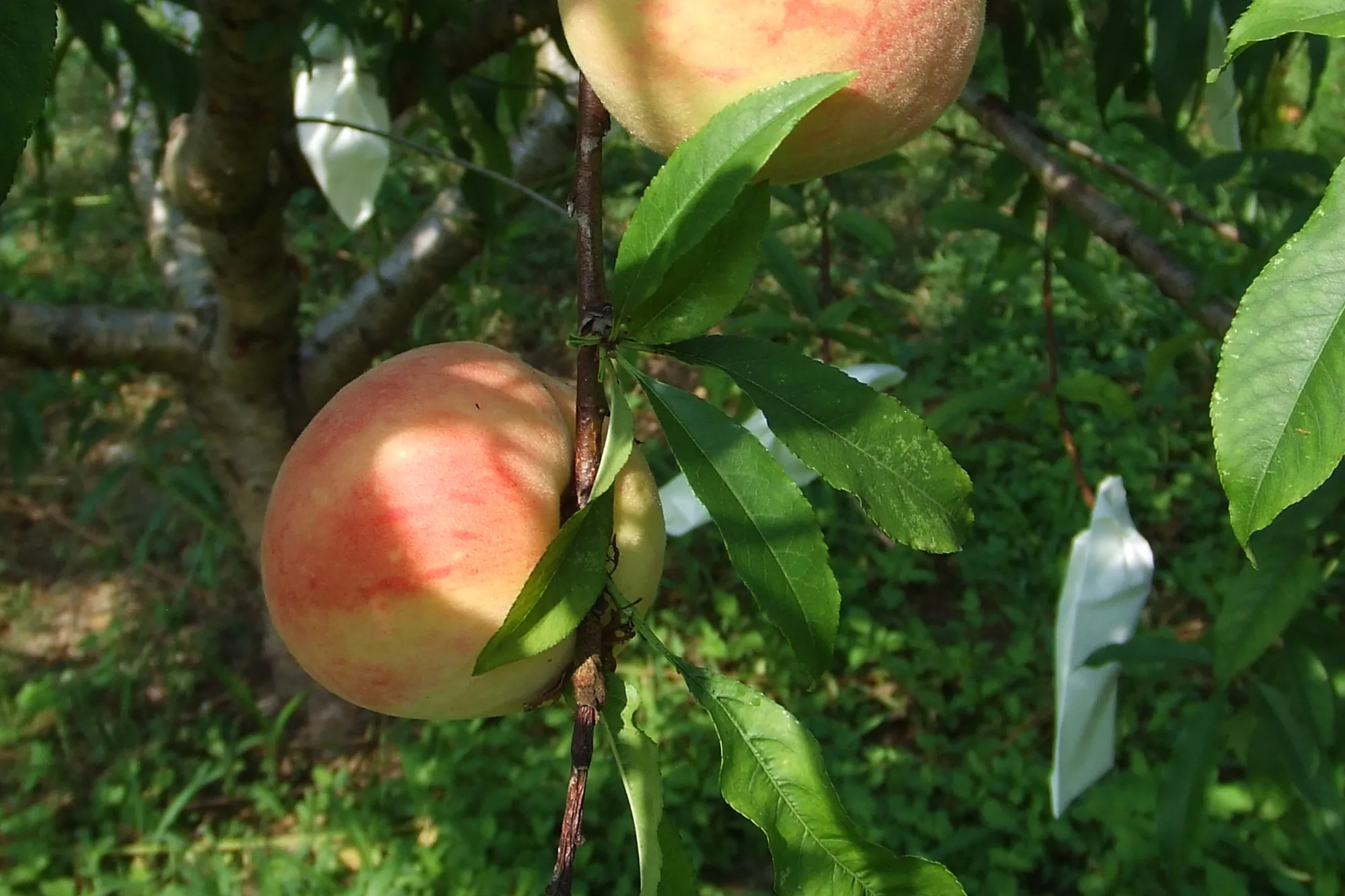
台灣種植水蜜桃的歷史悠長,1685年編撰的《台灣府志》,已經有桃子的相關記載,推算明鄭時期台灣便已栽植桃樹。
◤文.圖/看見台灣基金會編輯群
水
蜜桃為薔薇科落葉小喬木作物,台灣所產水蜜桃有高需冷性(高山水蜜桃)及低需冷性(平地水蜜桃)兩類。
高山水蜜桃可溯源於1958年自日本與美國所引進近50多種之高海拔水蜜桃品種,經多年試驗、培育所成,品質優良、早有口碑,口感香甜嫩滑又多汁,凡嘗過必難忘懷。
但這嬌嫩異常的高山水蜜桃,因為不耐長途運送,難以外銷,反而成為台灣在地人才能獨享的美味。也因此,儘管進口水蜜桃是本地高山水蜜桃產量的兩倍,這些嬌滴滴的水果還是有一批緊緊跟隨的忠實粉絲,尤其是桃園縣復興鄉的拉拉山水蜜桃,被列入台灣「極品水果」名單中。
▋克服地形環境障礙 果農栽種平地水蜜桃有成
然而,高山地勢陡峭、過度墾殖易造成環境危機。果農轉向引種低需冷性桃(Low-chill Peach),又稱為「平地水蜜桃」或「熱帶水蜜桃」,如:白玉、紅金、珍翠及杏桃等品種,皆屬近年平地栽種之水蜜桃,口感軟嫩、香氣佳,品質不輸高山水蜜桃。台中東勢、新社、太平地區,以及南投、苗栗的低海拔山區,甚至是高雄的桃源與那瑪夏地區都有平地水蜜桃。
水蜜桃不僅鮮果可食,還能製成果乾、果醬,更在青農努力下成為釀酒原料。如今在台灣可以喝到水蜜桃精釀啤酒,享受在地水蜜桃打造充滿甜蜜風味的水蜜桃酒,是感受台灣風土時不能錯過的美好滋味。
探索更多
苗栗──吃客家料理、賞桐花一次搞定
苗栗,是個適合慢活的城市,賞桐花、品嘗桶柑茶、騎行浪漫台三線,還有豐富的傳統客家料理,一年四季皆有適宜旅人的行程。
蜜餞─「鹹酸甜」道盡風味
蜜餞為將水果等農作物以糖或蜂蜜醃漬所成之加工食品,在台灣,蜜餞又稱「鹹酸甜」,此三字即道盡蜜餞的風味:既帶有醃料所賦予之鹹,卻又保有水果本身的酸甜,一口咬下去,豐富的滋味隨即充滿口腔。
西瓜─康熙皇帝生日時的祝壽禮
西瓜約於明鄭時期由中國沿海移民引進台灣。西瓜為葫蘆科西瓜屬作物,地處亞熱帶的台灣,氣候特別適合西瓜生長。