
'%20fill='%23a9976d'/%3e%3cpath%20id='Path_251'%20data-name='Path%20251'%20d='M8,35a1,1,0,0,1,1-1H23a1,1,0,0,1,0,2H9A1,1,0,0,1,8,35Z'%20transform='translate(-8%20-22)'%20fill='%23a9976d'/%3e%3cpath%20id='Path_252'%20data-name='Path%20252'%20d='M9,22a1,1,0,0,0,0,2h8a1,1,0,0,0,0-2Z'%20transform='translate(-8%20-16)'%20fill='%23a9976d'/%3e%3c/svg%3e)
'%20fill='%23a9976d'/%3e%3c/g%3e%3c/svg%3e)
'%3e%3cg%20id='Ellipse_27'%20data-name='Ellipse%2027'%20transform='translate(813%20250)'%20fill='none'%20stroke='%23ccac89'%20stroke-width='1'%3e%3ccircle%20cx='16'%20cy='16'%20r='16'%20stroke='none'/%3e%3ccircle%20cx='16'%20cy='16'%20r='15.5'%20fill='none'/%3e%3c/g%3e%3cg%20id='facebook'%20transform='translate(824.105%20258.296)'%3e%3cpath%20id='Path_243'%20data-name='Path%20243'%20d='M8.894.111V2.556H7.441a1.361,1.361,0,0,0-1.074.333,1.534,1.534,0,0,0-.278,1v1.75H8.8L8.441,8.38H6.089v7.028H3.255V8.38H.894V5.639H3.255V3.62A3.582,3.582,0,0,1,4.218.949,3.5,3.5,0,0,1,6.783,0,15.317,15.317,0,0,1,8.894.111Z'%20transform='translate(0%200)'%20fill='%23ccac89'/%3e%3c/g%3e%3c/g%3e%3c/svg%3e)

'%3e%3cg%20id='Ellipse_29'%20data-name='Ellipse%2029'%20transform='translate(901%20250)'%20fill='none'%20stroke='%23ccac89'%20stroke-width='1'%3e%3ccircle%20cx='16'%20cy='16'%20r='16'%20stroke='none'/%3e%3ccircle%20cx='16'%20cy='16'%20r='15.5'%20fill='none'/%3e%3c/g%3e%3cg%20id='link-45deg'%20transform='translate(902.607%20253.105)'%3e%3cg%20id='Group_479'%20data-name='Group%20479'%20transform='translate(7.393%205.896)'%3e%3cpath%20id='Path_241'%20data-name='Path%20241'%20d='M10.246,17.821,8.507,19.56a3.8,3.8,0,0,0,5.378,5.378L16.2,22.62a3.8,3.8,0,0,0-1.05-6.12l-.743.743a1.27,1.27,0,0,0-.2.252,2.535,2.535,0,0,1,1.091,4.23L12.99,24.042A2.536,2.536,0,0,1,9.4,20.455l1.005-1a5.093,5.093,0,0,1-.162-1.631Z'%20transform='translate(-7.393%20-12.02)'%20fill='%23ccac89'/%3e%3cpath%20id='Path_242'%20data-name='Path%20242'%20d='M18.236,9.327a3.8,3.8,0,0,0,1.05,6.12l.982-.984a2.535,2.535,0,0,1-1.136-4.241L21.448,7.9a2.536,2.536,0,1,1,3.587,3.587l-1.005,1a5.1,5.1,0,0,1,.162,1.631l1.739-1.739A3.8,3.8,0,1,0,20.553,7.01Z'%20transform='translate(-13.011%20-5.896)'%20fill='%23ccac89'/%3e%3c/g%3e%3c/g%3e%3c/g%3e%3c/svg%3e)
◤文.圖/看見台灣基金會編輯群
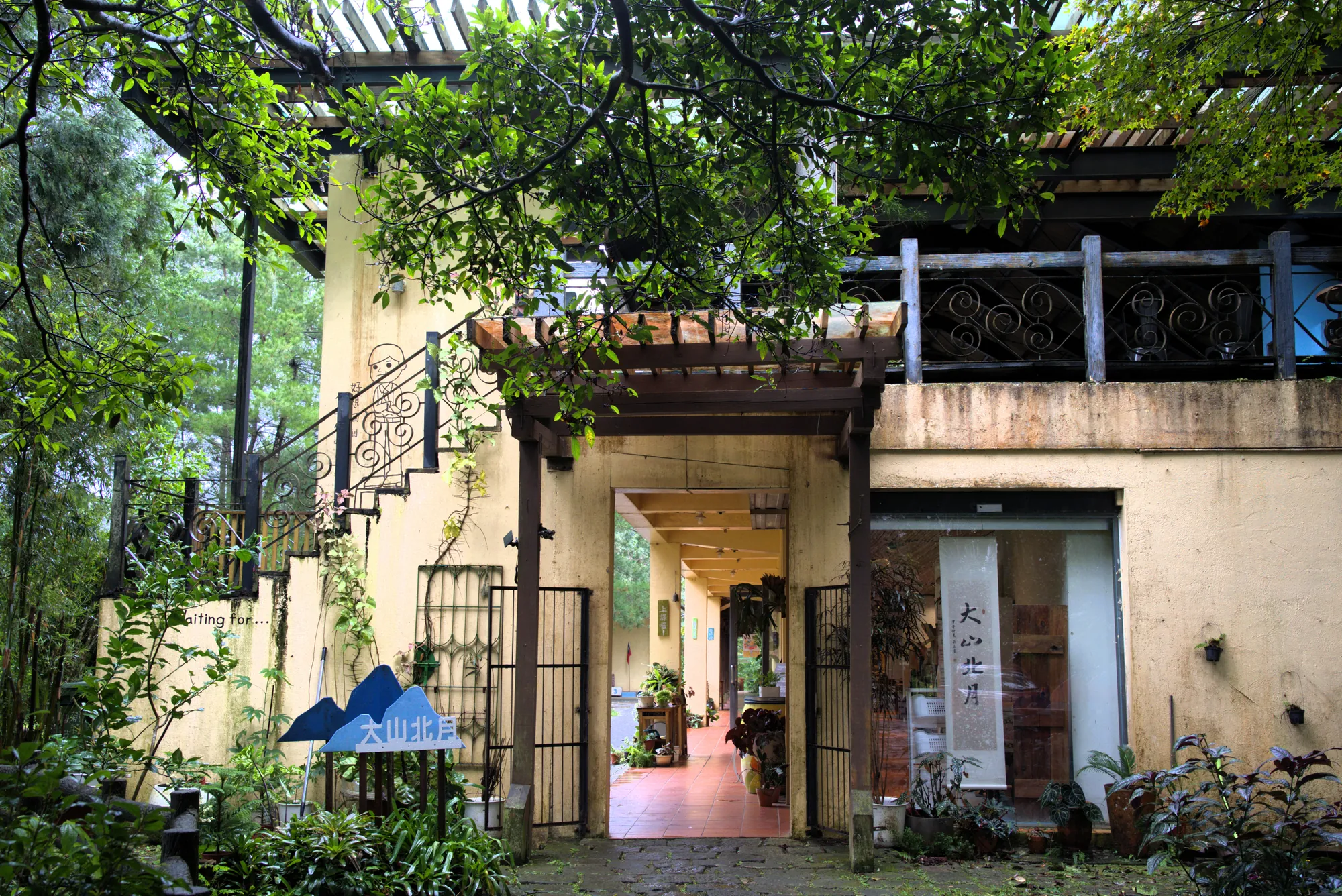
沿著蜿蜒山路進入新竹橫山,大山背靜靜佇立在山脊之上。這裡原是客家聚落,坡地間遍植柑橘,也保存著一間百年老校舍──1923年設立的「橫山公學校大山背分教場」(後改制為豐鄉國小),因學生人數減少於1983年廢校。2014年,這片荒煙蔓草的校園,迎來了一次關鍵的轉身。
「改造廢校成為食農教育基地,不只是熱情,更是夢想的實踐。」大山北月創辦人莊凱詠,當時仍是清華大學服務科學研究所的研究生,為實踐「資源整合、價值提升」的服務科學理念,在師長支持下,承接下這座廢校。原本只是田野課程的嘗試,卻在他的手中,延續為十多年深耕地方的實踐行動。
將服務科學理念落實於營運
走進今日的大山北月,教室裡找回來的黑板、抽屜與課簿被整理為展區;走廊與校園空間,則轉化為食農教育、旅行體驗與地方市集交織的文化基地。此外,大山背得天獨厚的坡地與水脈,孕育出二、三十種在地橘子品系,每一棵橘樹都連結著一戶人家的生活故事。即便是外觀不討喜的火燒柑,透過友善農法契作,也能被完整利用,從果皮、果肉、籽到葉,皆成為食材來源。團隊以校園餐廳作為研發基地,推出橘子果乾、果醬、啤酒、咖啡與季節甜點,其中最具代表性的橘子香腸與橘子貢丸,以清爽果香提升豬肉風味。進一步研發的橘子氣泡水,更成功進入全國便利商店通路,讓「全橘利用」走向更遠的舞台。
不同於山林中常見的景觀餐廳,大山北月將服務科學的理念落實於實際營運中,結合鄰近鄉鎮的特色物產,讓一份餐點成為地方風土的縮影。在這裡,可以品飲峨眉的東方美人茶,嘗到橫山鄉的特製窯烤麵包,搭配關西仙草冷麵、竹東手工麻糬與北埔傳統養生擂茶。「我們想讓大家在一個套餐裡,就能吃到附近鄉鎮的代表滋味。」莊凱詠笑著說。
從廢校到文化基地,從無人問津的醜橘子到跨界重生的食農實踐,大山北月以食物連結土地,以文化書寫常民生活,也持續創造新的連結。