
'%20fill='%23a9976d'/%3e%3cpath%20id='Path_251'%20data-name='Path%20251'%20d='M8,35a1,1,0,0,1,1-1H23a1,1,0,0,1,0,2H9A1,1,0,0,1,8,35Z'%20transform='translate(-8%20-22)'%20fill='%23a9976d'/%3e%3cpath%20id='Path_252'%20data-name='Path%20252'%20d='M9,22a1,1,0,0,0,0,2h8a1,1,0,0,0,0-2Z'%20transform='translate(-8%20-16)'%20fill='%23a9976d'/%3e%3c/svg%3e)
'%20fill='%23a9976d'/%3e%3c/g%3e%3c/svg%3e)
鵝─早期,養鵝是農家副業
主題探索
文化美食
分享
'%3e%3cg%20id='Ellipse_27'%20data-name='Ellipse%2027'%20transform='translate(813%20250)'%20fill='none'%20stroke='%23ccac89'%20stroke-width='1'%3e%3ccircle%20cx='16'%20cy='16'%20r='16'%20stroke='none'/%3e%3ccircle%20cx='16'%20cy='16'%20r='15.5'%20fill='none'/%3e%3c/g%3e%3cg%20id='facebook'%20transform='translate(824.105%20258.296)'%3e%3cpath%20id='Path_243'%20data-name='Path%20243'%20d='M8.894.111V2.556H7.441a1.361,1.361,0,0,0-1.074.333,1.534,1.534,0,0,0-.278,1v1.75H8.8L8.441,8.38H6.089v7.028H3.255V8.38H.894V5.639H3.255V3.62A3.582,3.582,0,0,1,4.218.949,3.5,3.5,0,0,1,6.783,0,15.317,15.317,0,0,1,8.894.111Z'%20transform='translate(0%200)'%20fill='%23ccac89'/%3e%3c/g%3e%3c/g%3e%3c/svg%3e)

'%3e%3cg%20id='Ellipse_29'%20data-name='Ellipse%2029'%20transform='translate(901%20250)'%20fill='none'%20stroke='%23ccac89'%20stroke-width='1'%3e%3ccircle%20cx='16'%20cy='16'%20r='16'%20stroke='none'/%3e%3ccircle%20cx='16'%20cy='16'%20r='15.5'%20fill='none'/%3e%3c/g%3e%3cg%20id='link-45deg'%20transform='translate(902.607%20253.105)'%3e%3cg%20id='Group_479'%20data-name='Group%20479'%20transform='translate(7.393%205.896)'%3e%3cpath%20id='Path_241'%20data-name='Path%20241'%20d='M10.246,17.821,8.507,19.56a3.8,3.8,0,0,0,5.378,5.378L16.2,22.62a3.8,3.8,0,0,0-1.05-6.12l-.743.743a1.27,1.27,0,0,0-.2.252,2.535,2.535,0,0,1,1.091,4.23L12.99,24.042A2.536,2.536,0,0,1,9.4,20.455l1.005-1a5.093,5.093,0,0,1-.162-1.631Z'%20transform='translate(-7.393%20-12.02)'%20fill='%23ccac89'/%3e%3cpath%20id='Path_242'%20data-name='Path%20242'%20d='M18.236,9.327a3.8,3.8,0,0,0,1.05,6.12l.982-.984a2.535,2.535,0,0,1-1.136-4.241L21.448,7.9a2.536,2.536,0,1,1,3.587,3.587l-1.005,1a5.1,5.1,0,0,1,.162,1.631l1.739-1.739A3.8,3.8,0,1,0,20.553,7.01Z'%20transform='translate(-13.011%20-5.896)'%20fill='%23ccac89'/%3e%3c/g%3e%3c/g%3e%3c/g%3e%3c/svg%3e)
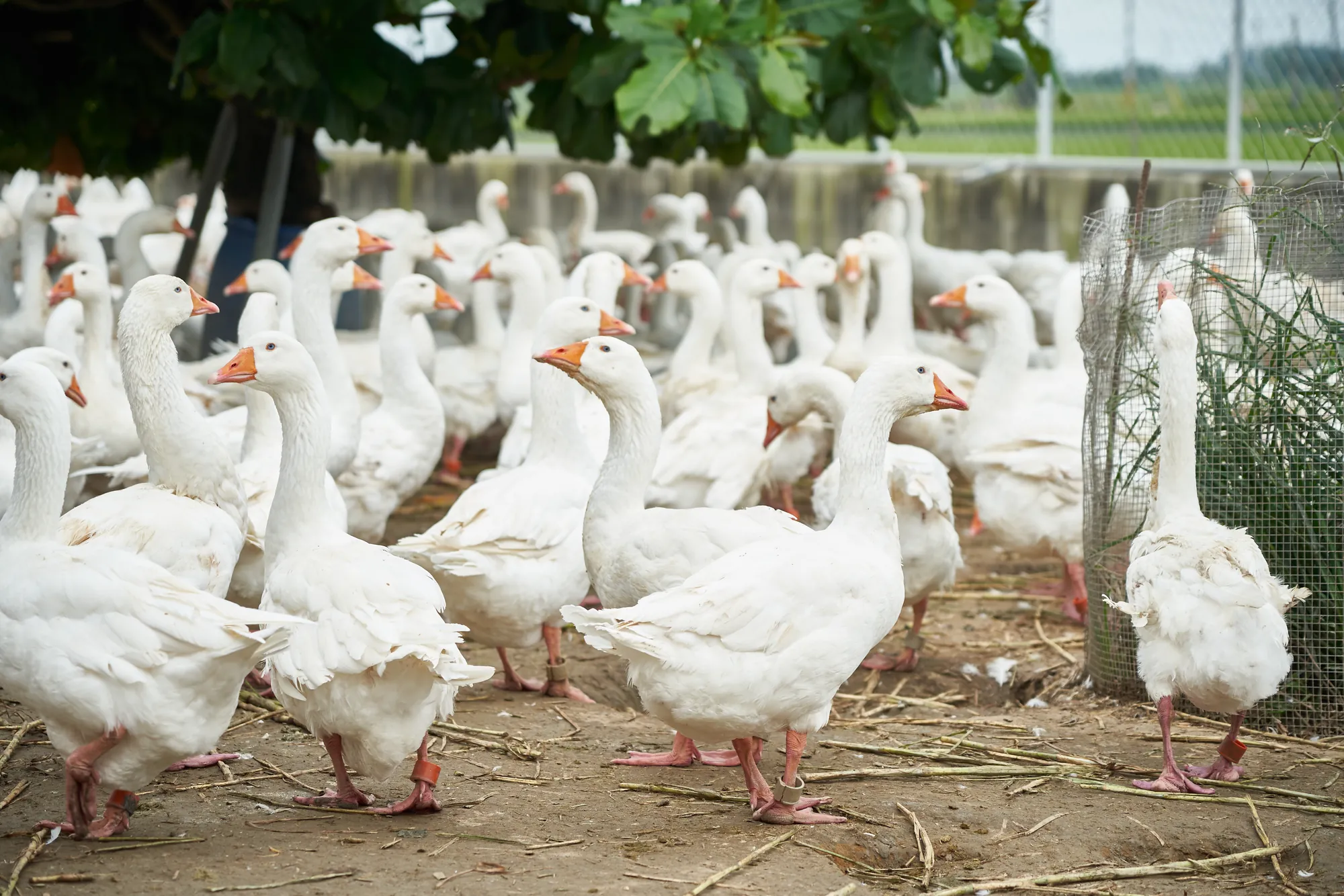
台灣從17、18世紀起已有養鵝紀錄,飼養「華鵝」,主要是傳統農家副業。1974年自丹麥引進「白羅曼鵝」後,白羅曼鵝才成為飼養主流,至今占比逾97%。
◤文.圖/看見台灣基金會編輯群
俗
稱「土鵝」的「台灣華鵝」,依毛色可分褐色、白色兩種,由三、四百年前先民自中國遷台所引進,隔離日久逐漸與典型華鵝有別;至今飼養占比不到3%,但因其皮下脂肪薄、肉質鮮美,為客家族群喜愛,多在桃竹苗等地區持續飼養。
▋鵝肉有一定的顧客群
早期農家常在庭院養雞鴨鵝,供自家食用,是「家」禽,此起彼落的鳴叫聲,帶來豐饒美味又熱鬧的幸福感。
1962年出品的《金鳳銀鵝》愛情片,代表那個年代鵝在人民生活中的存在感。現在工業化飼養後,家裡已經沒有「禽」了,安靜許多,但也失去了那種熱鬧的幸福感。留下來的,只有「呆頭鵝」一詞,指不解風情的男生。
2014年台灣養鵝產業在養隻數曾達120萬隻,截至2022年底在養107萬餘隻,年屠宰量441萬隻,產值約24.8億元。雲林國產鵝數量約40萬隻,占全台4成。
鵝肉有一定的顧客群,鵝的內臟部位:鵝胗、鵝腸、鵝脖、鵝掌、鵝心,常做滷味攤的下水湯等料理,仍有市場價值。鵝肉攤是較少見但有固定客戶的小吃,也有知名鵝肉店進入必比登排名。
探索更多
咖啡─阿里山豆,1公斤破3萬元
自星巴克從1998年登台起,有「西方世界品味fu的」咖啡,在台灣從消費、種植、咖啡競賽都引發了熱潮。根據農業部統計,近年台灣每年進口的咖啡生豆約超過5萬公噸,換算下來台灣每人平均一年喝下184杯咖啡。
紅棗─苗栗為主產地,鮮食、曬乾皆可
紅棗別名大棗、華棗,品種與產區多樣,環境適應力強且耐貧瘠土地。台灣業者行銷海外時,以「台灣紅寶石」稱呼做賣點,大陸民眾則以「活的維生素丸」形容紅棗的功效。
肉圓─南蒸北炸,互別苗頭
台灣諸多小吃源起不可考,但肉圓由彰化人范萬居所創的說法廣被接受,所以彰化肉圓有一定的地位。有名的彰化肉圓排隊店比比皆是,網評破萬的不在少數。