
'%20fill='%23a9976d'/%3e%3cpath%20id='Path_251'%20data-name='Path%20251'%20d='M8,35a1,1,0,0,1,1-1H23a1,1,0,0,1,0,2H9A1,1,0,0,1,8,35Z'%20transform='translate(-8%20-22)'%20fill='%23a9976d'/%3e%3cpath%20id='Path_252'%20data-name='Path%20252'%20d='M9,22a1,1,0,0,0,0,2h8a1,1,0,0,0,0-2Z'%20transform='translate(-8%20-16)'%20fill='%23a9976d'/%3e%3c/svg%3e)
'%20fill='%23a9976d'/%3e%3c/g%3e%3c/svg%3e)
番茄─2014年起外銷多國市場
地方探索
主題探索
南部
文化美食
分享
'%3e%3cg%20id='Ellipse_27'%20data-name='Ellipse%2027'%20transform='translate(813%20250)'%20fill='none'%20stroke='%23ccac89'%20stroke-width='1'%3e%3ccircle%20cx='16'%20cy='16'%20r='16'%20stroke='none'/%3e%3ccircle%20cx='16'%20cy='16'%20r='15.5'%20fill='none'/%3e%3c/g%3e%3cg%20id='facebook'%20transform='translate(824.105%20258.296)'%3e%3cpath%20id='Path_243'%20data-name='Path%20243'%20d='M8.894.111V2.556H7.441a1.361,1.361,0,0,0-1.074.333,1.534,1.534,0,0,0-.278,1v1.75H8.8L8.441,8.38H6.089v7.028H3.255V8.38H.894V5.639H3.255V3.62A3.582,3.582,0,0,1,4.218.949,3.5,3.5,0,0,1,6.783,0,15.317,15.317,0,0,1,8.894.111Z'%20transform='translate(0%200)'%20fill='%23ccac89'/%3e%3c/g%3e%3c/g%3e%3c/svg%3e)

'%3e%3cg%20id='Ellipse_29'%20data-name='Ellipse%2029'%20transform='translate(901%20250)'%20fill='none'%20stroke='%23ccac89'%20stroke-width='1'%3e%3ccircle%20cx='16'%20cy='16'%20r='16'%20stroke='none'/%3e%3ccircle%20cx='16'%20cy='16'%20r='15.5'%20fill='none'/%3e%3c/g%3e%3cg%20id='link-45deg'%20transform='translate(902.607%20253.105)'%3e%3cg%20id='Group_479'%20data-name='Group%20479'%20transform='translate(7.393%205.896)'%3e%3cpath%20id='Path_241'%20data-name='Path%20241'%20d='M10.246,17.821,8.507,19.56a3.8,3.8,0,0,0,5.378,5.378L16.2,22.62a3.8,3.8,0,0,0-1.05-6.12l-.743.743a1.27,1.27,0,0,0-.2.252,2.535,2.535,0,0,1,1.091,4.23L12.99,24.042A2.536,2.536,0,0,1,9.4,20.455l1.005-1a5.093,5.093,0,0,1-.162-1.631Z'%20transform='translate(-7.393%20-12.02)'%20fill='%23ccac89'/%3e%3cpath%20id='Path_242'%20data-name='Path%20242'%20d='M18.236,9.327a3.8,3.8,0,0,0,1.05,6.12l.982-.984a2.535,2.535,0,0,1-1.136-4.241L21.448,7.9a2.536,2.536,0,1,1,3.587,3.587l-1.005,1a5.1,5.1,0,0,1,.162,1.631l1.739-1.739A3.8,3.8,0,1,0,20.553,7.01Z'%20transform='translate(-13.011%20-5.896)'%20fill='%23ccac89'/%3e%3c/g%3e%3c/g%3e%3c/g%3e%3c/svg%3e)
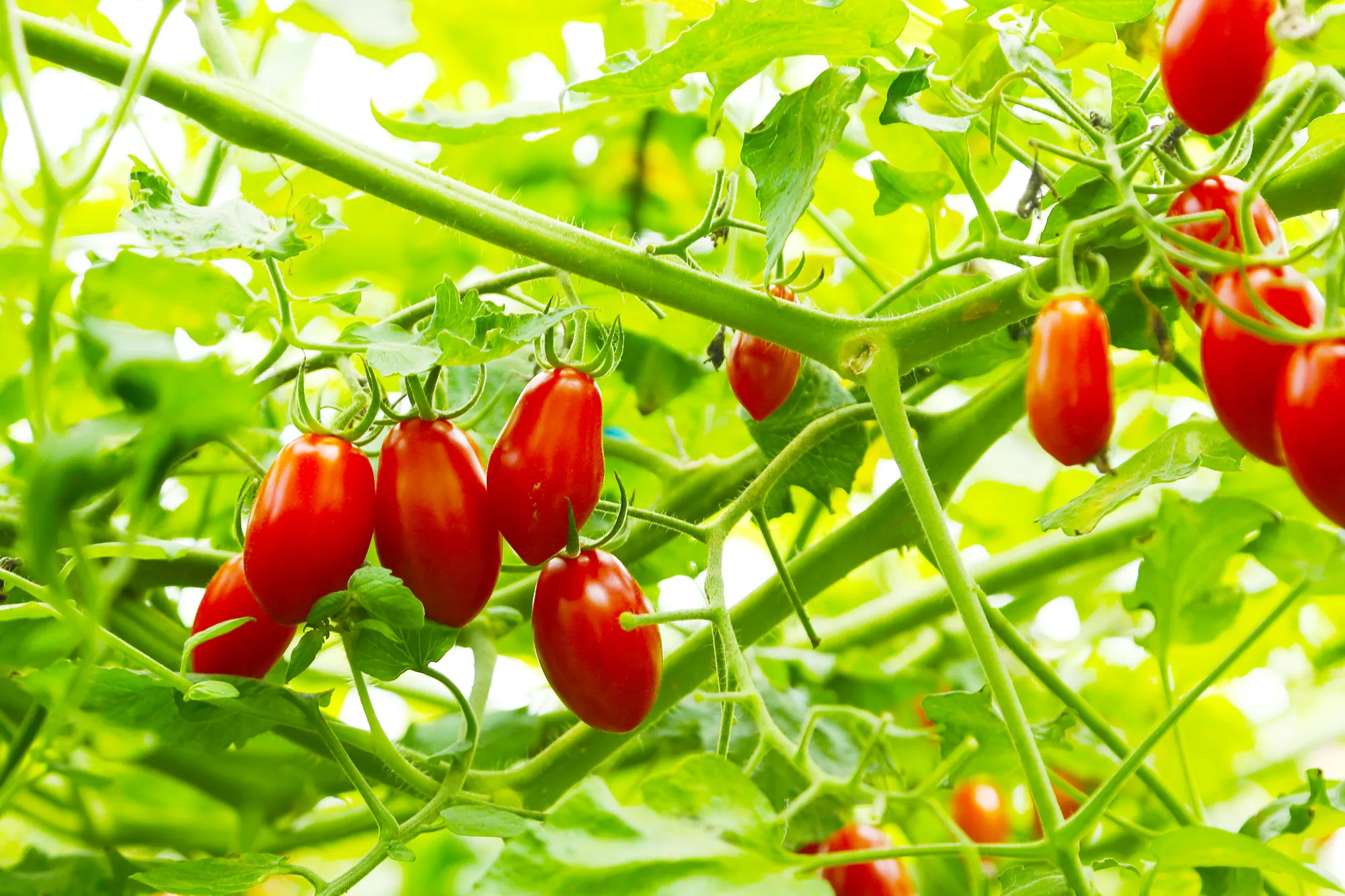
清康熙年間的《臺灣府志》有一段對於番茄的描述:「甘仔蜜,形似柿,細如橘,初生青,熟紅,味濃,肉多細子,亦不堪充果品,可或糖煮成茶品。」「甘仔蜜」即為番茄的台語,描述當時的番茄並不好吃,還得加糖熬煮。
◤文.圖/看見台灣基金會編輯群
番
茄原產於中南美洲,在地理大發現後傳入歐洲,17世紀隨荷蘭人來到台灣。台灣番茄栽培歷史數百年來,主要以作為蔬菜烹飪使用的大果番茄為主,如:全紅番茄、黑柿番茄。
後來農民持續研發新品種,1990年代推出外型長圓、顏色亮紅、甜度平均7到8度、果重15公克左右的「聖女」小果番茄,顛覆民眾對番茄的刻板印象,接著各品種的小果番茄如雨後春筍,成為充滿誘惑的水果選擇,至此,番茄終於華麗轉身。
▋小果番茄高顏值又多汁,用農業實力讓全世界看見台灣
大果番茄切片成「番茄切盤」,醬油膏、薑末、砂糖、甘草粉混合而成沾醬,流行於台南、高雄、屏東一帶,是南台灣最經典的古早味特色小吃之一。
而聖女、玉女等果色多樣的小果番茄家族,一口一顆,皮薄心紅,酸中帶甜,不僅台灣民眾喜歡,更從2014年開始行銷全球市場,包括亞洲的香港、新加坡、日本等國,都很受歡迎。2019年,嘉義的玉女小番茄進軍美國,在德州超市上架,註明「台灣鮮採小番茄」,用小番茄的農業實力讓全世界看見台灣。
探索更多
芒果─品種超過20個,打造台灣芒果王國美譽
號稱「水果王國」的台灣,眾多水果中最讓全球觀光客在夏天慕名而來的,就是芒果。
台灣苦茶油──山林間孕育出的珍貴食用油
苦茶油曾一度被遺忘,近年來重新得到大眾關注。這種由台灣原生油茶樹榨取的珍貴油品,不僅發煙點高、高於橄欖油,營養價值更是豐富。
棗子─台灣研發品種顏值高、名字美
台灣慣稱的棗子,原名印度棗(Indian jujube),由此可知棗子原產於印度,傳入台灣的時間不可考,惟日據時期已有栽種紀錄。