
'%20fill='%23a9976d'/%3e%3cpath%20id='Path_251'%20data-name='Path%20251'%20d='M8,35a1,1,0,0,1,1-1H23a1,1,0,0,1,0,2H9A1,1,0,0,1,8,35Z'%20transform='translate(-8%20-22)'%20fill='%23a9976d'/%3e%3cpath%20id='Path_252'%20data-name='Path%20252'%20d='M9,22a1,1,0,0,0,0,2h8a1,1,0,0,0,0-2Z'%20transform='translate(-8%20-16)'%20fill='%23a9976d'/%3e%3c/svg%3e)
'%20fill='%23a9976d'/%3e%3c/g%3e%3c/svg%3e)
漁港/漁市─海洋文化的灘頭堡
主題探索
常民生活
分享
'%3e%3cg%20id='Ellipse_27'%20data-name='Ellipse%2027'%20transform='translate(813%20250)'%20fill='none'%20stroke='%23ccac89'%20stroke-width='1'%3e%3ccircle%20cx='16'%20cy='16'%20r='16'%20stroke='none'/%3e%3ccircle%20cx='16'%20cy='16'%20r='15.5'%20fill='none'/%3e%3c/g%3e%3cg%20id='facebook'%20transform='translate(824.105%20258.296)'%3e%3cpath%20id='Path_243'%20data-name='Path%20243'%20d='M8.894.111V2.556H7.441a1.361,1.361,0,0,0-1.074.333,1.534,1.534,0,0,0-.278,1v1.75H8.8L8.441,8.38H6.089v7.028H3.255V8.38H.894V5.639H3.255V3.62A3.582,3.582,0,0,1,4.218.949,3.5,3.5,0,0,1,6.783,0,15.317,15.317,0,0,1,8.894.111Z'%20transform='translate(0%200)'%20fill='%23ccac89'/%3e%3c/g%3e%3c/g%3e%3c/svg%3e)

'%3e%3cg%20id='Ellipse_29'%20data-name='Ellipse%2029'%20transform='translate(901%20250)'%20fill='none'%20stroke='%23ccac89'%20stroke-width='1'%3e%3ccircle%20cx='16'%20cy='16'%20r='16'%20stroke='none'/%3e%3ccircle%20cx='16'%20cy='16'%20r='15.5'%20fill='none'/%3e%3c/g%3e%3cg%20id='link-45deg'%20transform='translate(902.607%20253.105)'%3e%3cg%20id='Group_479'%20data-name='Group%20479'%20transform='translate(7.393%205.896)'%3e%3cpath%20id='Path_241'%20data-name='Path%20241'%20d='M10.246,17.821,8.507,19.56a3.8,3.8,0,0,0,5.378,5.378L16.2,22.62a3.8,3.8,0,0,0-1.05-6.12l-.743.743a1.27,1.27,0,0,0-.2.252,2.535,2.535,0,0,1,1.091,4.23L12.99,24.042A2.536,2.536,0,0,1,9.4,20.455l1.005-1a5.093,5.093,0,0,1-.162-1.631Z'%20transform='translate(-7.393%20-12.02)'%20fill='%23ccac89'/%3e%3cpath%20id='Path_242'%20data-name='Path%20242'%20d='M18.236,9.327a3.8,3.8,0,0,0,1.05,6.12l.982-.984a2.535,2.535,0,0,1-1.136-4.241L21.448,7.9a2.536,2.536,0,1,1,3.587,3.587l-1.005,1a5.1,5.1,0,0,1,.162,1.631l1.739-1.739A3.8,3.8,0,1,0,20.553,7.01Z'%20transform='translate(-13.011%20-5.896)'%20fill='%23ccac89'/%3e%3c/g%3e%3c/g%3e%3c/g%3e%3c/svg%3e)
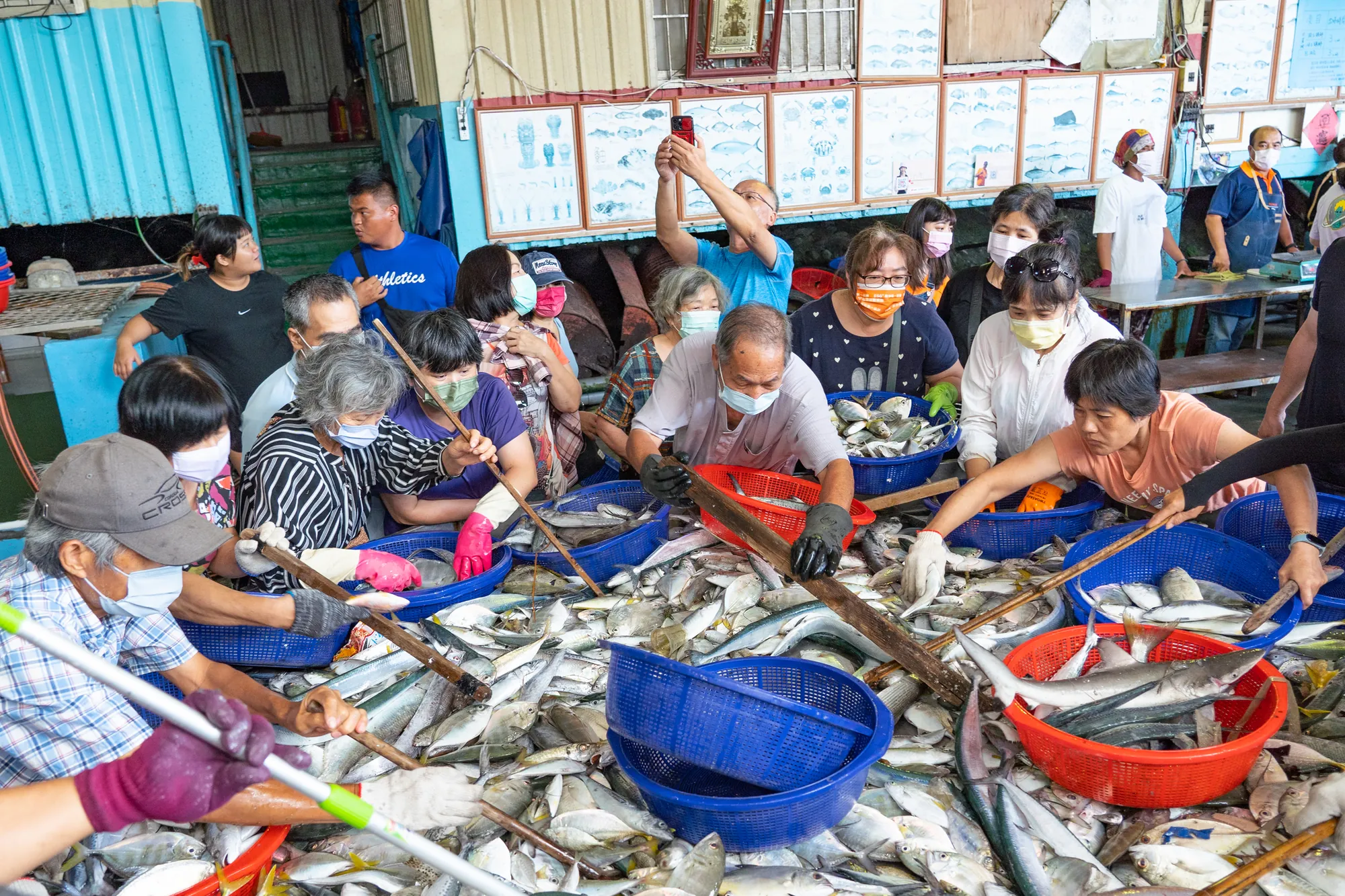
台灣四面環海,本島沿海加離島遍設漁港,是台灣海洋文化的灘頭堡。大型的第一類漁港有9個,地區型的第二類漁港有215個,澎湖縣有67個,全台第一。
◤文.圖/看見台灣基金會編輯群
漁
港是漁民出海定點,大型漁港順勢設立海鮮魚貨直售中心,除了販售每日漁船歸港送回與養殖業者提供的新鮮魚貨、各國船運送來的進口冷凍海鮮外,也有各式加工水產食品。
第一類漁港包括基隆市正濱漁港、八斗子漁港、宜蘭縣烏石漁港、南方澳漁港、新竹市新竹漁港、台中市梧棲漁港、台南市安平漁港、高雄市前鎮漁港及屏東縣東港鹽埔漁港,許多已朝觀光漁港發展。
批發市場負責將魚獲販售給全台灣各地的魚市場、超市與餐廳,多半在深夜以議價方式進行交易;而觀光市場與傳統市場則提供零售魚貨給一般民眾。
▋批發拍賣過程也成觀光重點
早期台灣魚市場尚未形成之前,漁民與消費者是透過批售魚貨的私人魚行做間接交易,魚行居中抽佣。日治時期,制定《水產統制令》,實施「水產配給統制會社」,並由政府統一制定配售價格。
日治時期建立專售魚蝦海產的「魚菜市場」,在「拍賣制度」的規範下由產業合作社或公共團體經營。之後更成立「台灣水產株式會社」統一管理魚市場與魚獲等水產業務。
目前北台灣最大的批發魚市場當屬基隆崁仔頂魚市場,透過攤子上的糶手(拍賣員)喊價販售漁貨。南部則以屏東東港魚貨拍賣場聞名,擁有全台數一數二的鮪旗魚產量,更是黑鮪魚原產地產量冠軍。
探索更多
葡萄酒─兩個酒莊連奪世界首獎
葡萄酒,原本是法國的天下;然而,誰料得到,在亞洲,相較之下只是彈丸之地的台灣,以橫空出世的氣勢,在三年內連續冒出兩個世界冠軍等級的葡萄酒。(圖片來源:Unsplash)
果乾─台三線客家莊是主力產區
果乾為以日曬、烘乾等方法去除水份之水果。台灣素有「水果王國」之美名,以地利與氣候之便,出產之水果種類繁多,風味亦佳,若遇豐年,果品收穫量豐碩、無法盡售,出於惜物愛物之精神,將水果烘乾後,不僅能延長水果的食用期限,果乾更因加熱造成糖份濃縮,風味更顯鮮甜可口。
芭樂─國民水果,國宴、米其林都現蹤
芭樂,台灣國民水果代表之一,原產於熱帶美洲,地理大發現時期引入台灣。台灣四季皆產芭樂,夜市、街邊到處有賣,主要產區為高雄大社、燕巢及彰化社頭。