
'%20fill='%23a9976d'/%3e%3cpath%20id='Path_251'%20data-name='Path%20251'%20d='M8,35a1,1,0,0,1,1-1H23a1,1,0,0,1,0,2H9A1,1,0,0,1,8,35Z'%20transform='translate(-8%20-22)'%20fill='%23a9976d'/%3e%3cpath%20id='Path_252'%20data-name='Path%20252'%20d='M9,22a1,1,0,0,0,0,2h8a1,1,0,0,0,0-2Z'%20transform='translate(-8%20-16)'%20fill='%23a9976d'/%3e%3c/svg%3e)
'%20fill='%23a9976d'/%3e%3c/g%3e%3c/svg%3e)
西瓜─康熙皇帝生日時的祝壽禮
時令探索
主題探索
夏
文化美食
分享
'%3e%3cg%20id='Ellipse_27'%20data-name='Ellipse%2027'%20transform='translate(813%20250)'%20fill='none'%20stroke='%23ccac89'%20stroke-width='1'%3e%3ccircle%20cx='16'%20cy='16'%20r='16'%20stroke='none'/%3e%3ccircle%20cx='16'%20cy='16'%20r='15.5'%20fill='none'/%3e%3c/g%3e%3cg%20id='facebook'%20transform='translate(824.105%20258.296)'%3e%3cpath%20id='Path_243'%20data-name='Path%20243'%20d='M8.894.111V2.556H7.441a1.361,1.361,0,0,0-1.074.333,1.534,1.534,0,0,0-.278,1v1.75H8.8L8.441,8.38H6.089v7.028H3.255V8.38H.894V5.639H3.255V3.62A3.582,3.582,0,0,1,4.218.949,3.5,3.5,0,0,1,6.783,0,15.317,15.317,0,0,1,8.894.111Z'%20transform='translate(0%200)'%20fill='%23ccac89'/%3e%3c/g%3e%3c/g%3e%3c/svg%3e)

'%3e%3cg%20id='Ellipse_29'%20data-name='Ellipse%2029'%20transform='translate(901%20250)'%20fill='none'%20stroke='%23ccac89'%20stroke-width='1'%3e%3ccircle%20cx='16'%20cy='16'%20r='16'%20stroke='none'/%3e%3ccircle%20cx='16'%20cy='16'%20r='15.5'%20fill='none'/%3e%3c/g%3e%3cg%20id='link-45deg'%20transform='translate(902.607%20253.105)'%3e%3cg%20id='Group_479'%20data-name='Group%20479'%20transform='translate(7.393%205.896)'%3e%3cpath%20id='Path_241'%20data-name='Path%20241'%20d='M10.246,17.821,8.507,19.56a3.8,3.8,0,0,0,5.378,5.378L16.2,22.62a3.8,3.8,0,0,0-1.05-6.12l-.743.743a1.27,1.27,0,0,0-.2.252,2.535,2.535,0,0,1,1.091,4.23L12.99,24.042A2.536,2.536,0,0,1,9.4,20.455l1.005-1a5.093,5.093,0,0,1-.162-1.631Z'%20transform='translate(-7.393%20-12.02)'%20fill='%23ccac89'/%3e%3cpath%20id='Path_242'%20data-name='Path%20242'%20d='M18.236,9.327a3.8,3.8,0,0,0,1.05,6.12l.982-.984a2.535,2.535,0,0,1-1.136-4.241L21.448,7.9a2.536,2.536,0,1,1,3.587,3.587l-1.005,1a5.1,5.1,0,0,1,.162,1.631l1.739-1.739A3.8,3.8,0,1,0,20.553,7.01Z'%20transform='translate(-13.011%20-5.896)'%20fill='%23ccac89'/%3e%3c/g%3e%3c/g%3e%3c/g%3e%3c/svg%3e)
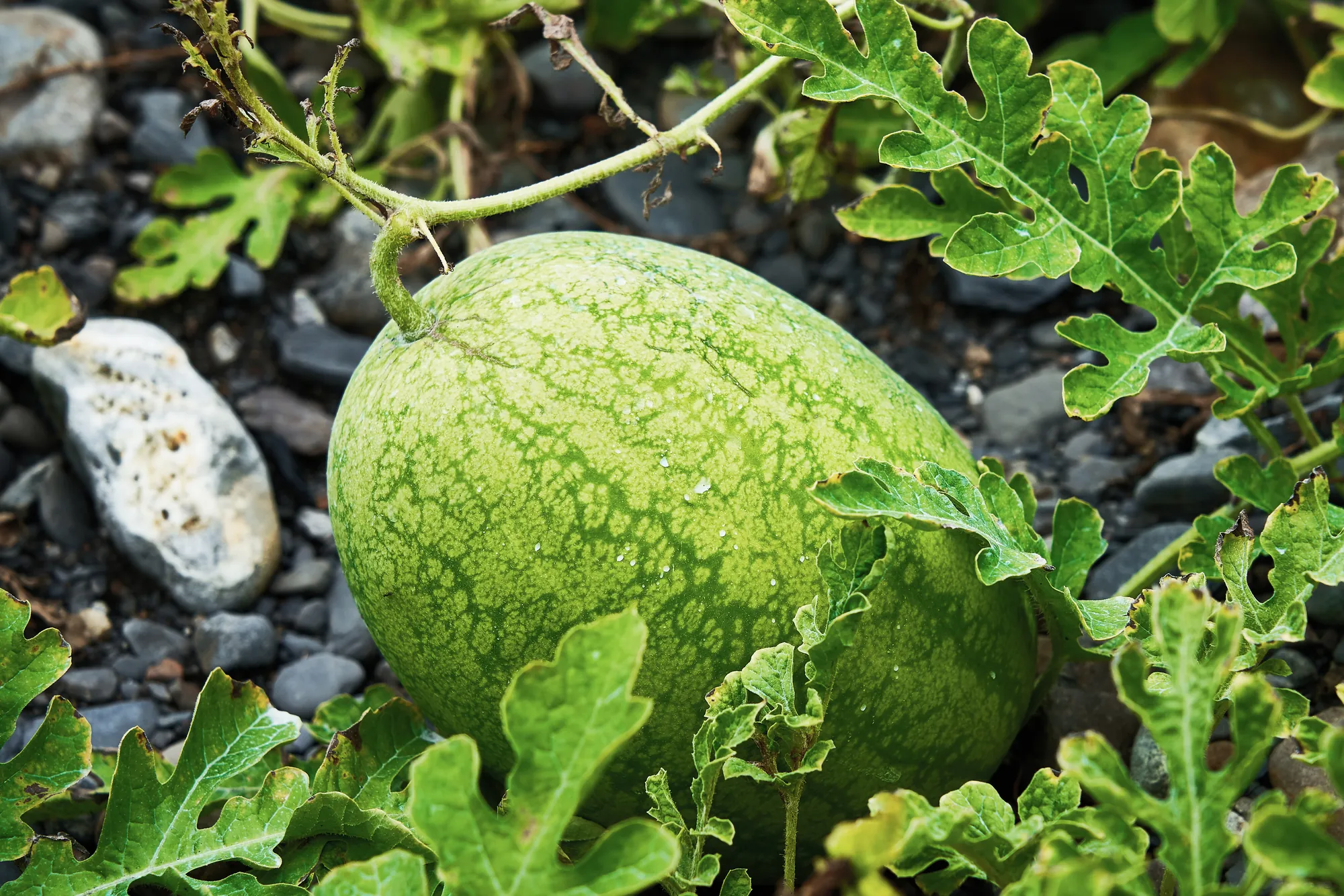
西瓜約於明鄭時期由中國沿海移民引進台灣。西瓜為葫蘆科西瓜屬作物,地處亞熱帶的台灣,氣候特別適合西瓜生長。
◤文.圖/看見台灣基金會編輯群
台
南詩人蔡碧吟在《夏日村居雜感》中寫著:「西瓜涼沁齒牙餘,爭說嘗漿蜜不如。」一行詩句,優美地描摹台灣民眾在熱夏中手捧西瓜、咬下當刻感受到的甜蜜、清涼,暑意全消的心情。
台灣西瓜在清朝康熙時期就十分火紅。周鍾瑄《諸羅縣志》有一段敘述,大意是說:當時被派駐在台灣的官員,認為西瓜翠綠色的外皮、深紅色的果肉,大紅配大綠喜氣洋洋,便在康熙生日時將台灣西瓜送到紫禁城當作壽禮。所以西瓜又被稱為「萬壽果」。
▋台灣西瓜家族再添成員——走頂級路線的Happy瓜來啦!
清涼的西瓜是非常受歡迎的台灣夏季水果,主要產區分布於西部沿海區域以及東部花蓮等地區。台灣西瓜可分為二大類:紅肉及黃肉兩種。1971年左右,以培育西瓜種子起家的農友種苗,培育出全球第一顆無籽西瓜,當時一顆顆鮮紅色的無籽西瓜成為外銷寵兒,猶如瓜果界「台灣之光」。
2024年底,農友種苗再度推出新品種「黑皮西瓜」,以黑色外皮取諧音「Happy(快樂)瓜」,其中明星品種「馬卡龍」以圓潤飽滿的墨綠色外觀與細緻的紅色果肉,被包裝成「猶如法式甜點馬卡龍般誘人」,每顆重量約1~2公斤,售價高達250~300元台幣,吸引市場目光。
西瓜92%是水份,為含水比例最高的水果,除鮮食外,也可榨成果汁食用;而果皮瓜囊白肉處更能製成好菜「西瓜綿」。此外,西瓜還能做成藥品。
探索更多
破布子──以鹽漬工法保存夏季果香
初夏轉黃的破布子,鮮果澀口、保存期短,卻能透過熬煮與鹽漬,成為台灣廚房裡常見的佐料。它能提鮮、配粥、入菜,也保存了早年農家善用野果與延長食物保存的生活智慧。
肉鬆─成吉思汗的秘密軍糧?
肉鬆在包含東南亞的大華人世界是日常食品,《世界食物博覽》(World Atlas of Food)表示,應是源於中國。源於中國大致可信,2011年,大陸江蘇省的太倉肉鬆甚至通過非物質文化遺產的申請。
小籠湯包─源自江南勝江南
麵食原流行於中國北方,然而往南方發展後,樣子便秀氣起來。江南吃食首重細巧,包子饅頭一旦過了長江,身形頓時顯得玲瓏。