
'%20fill='%23a9976d'/%3e%3cpath%20id='Path_251'%20data-name='Path%20251'%20d='M8,35a1,1,0,0,1,1-1H23a1,1,0,0,1,0,2H9A1,1,0,0,1,8,35Z'%20transform='translate(-8%20-22)'%20fill='%23a9976d'/%3e%3cpath%20id='Path_252'%20data-name='Path%20252'%20d='M9,22a1,1,0,0,0,0,2h8a1,1,0,0,0,0-2Z'%20transform='translate(-8%20-16)'%20fill='%23a9976d'/%3e%3c/svg%3e)
'%20fill='%23a9976d'/%3e%3c/g%3e%3c/svg%3e)
蜜餞─「鹹酸甜」道盡風味
地方探索
主題探索
南部
文化美食
分享
'%3e%3cg%20id='Ellipse_27'%20data-name='Ellipse%2027'%20transform='translate(813%20250)'%20fill='none'%20stroke='%23ccac89'%20stroke-width='1'%3e%3ccircle%20cx='16'%20cy='16'%20r='16'%20stroke='none'/%3e%3ccircle%20cx='16'%20cy='16'%20r='15.5'%20fill='none'/%3e%3c/g%3e%3cg%20id='facebook'%20transform='translate(824.105%20258.296)'%3e%3cpath%20id='Path_243'%20data-name='Path%20243'%20d='M8.894.111V2.556H7.441a1.361,1.361,0,0,0-1.074.333,1.534,1.534,0,0,0-.278,1v1.75H8.8L8.441,8.38H6.089v7.028H3.255V8.38H.894V5.639H3.255V3.62A3.582,3.582,0,0,1,4.218.949,3.5,3.5,0,0,1,6.783,0,15.317,15.317,0,0,1,8.894.111Z'%20transform='translate(0%200)'%20fill='%23ccac89'/%3e%3c/g%3e%3c/g%3e%3c/svg%3e)

'%3e%3cg%20id='Ellipse_29'%20data-name='Ellipse%2029'%20transform='translate(901%20250)'%20fill='none'%20stroke='%23ccac89'%20stroke-width='1'%3e%3ccircle%20cx='16'%20cy='16'%20r='16'%20stroke='none'/%3e%3ccircle%20cx='16'%20cy='16'%20r='15.5'%20fill='none'/%3e%3c/g%3e%3cg%20id='link-45deg'%20transform='translate(902.607%20253.105)'%3e%3cg%20id='Group_479'%20data-name='Group%20479'%20transform='translate(7.393%205.896)'%3e%3cpath%20id='Path_241'%20data-name='Path%20241'%20d='M10.246,17.821,8.507,19.56a3.8,3.8,0,0,0,5.378,5.378L16.2,22.62a3.8,3.8,0,0,0-1.05-6.12l-.743.743a1.27,1.27,0,0,0-.2.252,2.535,2.535,0,0,1,1.091,4.23L12.99,24.042A2.536,2.536,0,0,1,9.4,20.455l1.005-1a5.093,5.093,0,0,1-.162-1.631Z'%20transform='translate(-7.393%20-12.02)'%20fill='%23ccac89'/%3e%3cpath%20id='Path_242'%20data-name='Path%20242'%20d='M18.236,9.327a3.8,3.8,0,0,0,1.05,6.12l.982-.984a2.535,2.535,0,0,1-1.136-4.241L21.448,7.9a2.536,2.536,0,1,1,3.587,3.587l-1.005,1a5.1,5.1,0,0,1,.162,1.631l1.739-1.739A3.8,3.8,0,1,0,20.553,7.01Z'%20transform='translate(-13.011%20-5.896)'%20fill='%23ccac89'/%3e%3c/g%3e%3c/g%3e%3c/g%3e%3c/svg%3e)
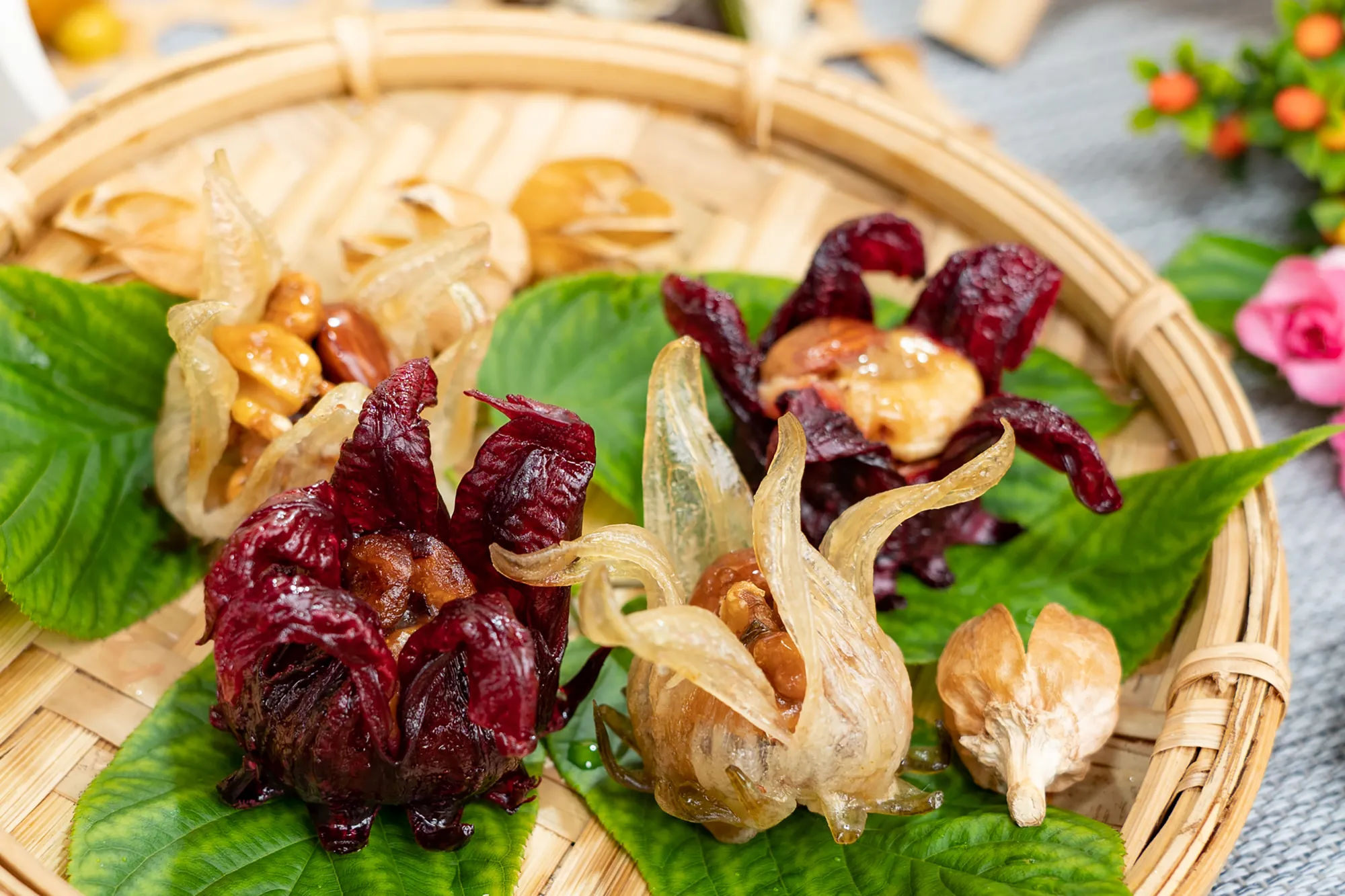
蜜餞為將水果等農作物以糖或蜂蜜醃漬所成之加工食品,在台灣,蜜餞又稱「鹹酸甜」,此三字即道盡蜜餞的風味:既帶有醃料所賦予之鹹,卻又保有水果本身的酸甜,一口咬下去,豐富的滋味隨即充滿口腔。
◤文.圖/看見台灣基金會編輯群
蜜
餞是台灣人所熟悉、陪伴諸多族群成長的零食。早年於冷藏設備尚未問世之前,先民多將水果等以醃料醃漬處理後製成蜜餞,以延長保存期限,讓水果鮮食有了不同的風味展現。
▋最早的蜜餞工廠在台南
蜜餞發展的歷史悠久,早於中國古代,《禮記.內則》 即有將水果浸漬於蜂蜜之中延長保存的記載,後亦使用石蜜(冰糖)製作,蜜餞之名即由此而來。
在台灣,據飲食作家韓良憶所述,最早的蜜餞工廠出現於100多年前清領時期古都台南,而有台南安平第一街之稱的延平街,不僅是台灣最早形成的商業街,第一家蜜餞行亦出現於此。
戰後,台灣所產製的蜜餞曾以彰化、員林為主要產區,大量製作以供應外銷。如今,台灣蜜餞產業已較過往衰退,以彰化百果山、台南安平和宜蘭礁溪為主要產地。
而隨時代變遷,蜜餞亦褪去其保存食物之主要功能,多作為小吃或零食出現於台灣人的生活之中,或作為甜點的搭配,但一口鹹酸甜的好滋味,無論是夏天的李仔鹹冰,或是夜市中的蜜餞小番茄,蜜餞成為足以代表台灣風味的食品之一。
探索更多
龍眼─柴燒龍眼乾,助吳寶春在世界烘焙賽發光
台灣物資不豐的年代,盛夏之際到龍眼樹下奮力一跳,摘下一束龍眼,撥開褐色的外皮,瞬間出現晶瑩剔透的白色果肉,隱約還可以看到中間黑色的果核,看起來像極了眼珠子,滋味甜滋滋,這就是早年台灣孩子最重要的童年回憶。
柑橘─全世界、台灣都是產量最大水果
柑橘,泛指各種芸香科柑橘屬水果,包括橘、柚、檸檬、葡萄柚等,彼此雜交出的品種約200種,台灣民眾俗稱的柑橘,其實只涉及「橘」這一類。
異鄉.家鄉味—西班牙主廚的宜蘭慢食札記
一位西班牙主廚初來台灣,即被豐饒的在地食材深深吸引。旅台17年,他實際走訪市場、農場與漁港,發掘台灣食材的無限潛力,並以西班牙料理革命為例,鼓勵大眾支持在地生產者,共同推動台灣料理的革新。(圖片來源:Daniel Negreira)