
'%20fill='%23a9976d'/%3e%3cpath%20id='Path_251'%20data-name='Path%20251'%20d='M8,35a1,1,0,0,1,1-1H23a1,1,0,0,1,0,2H9A1,1,0,0,1,8,35Z'%20transform='translate(-8%20-22)'%20fill='%23a9976d'/%3e%3cpath%20id='Path_252'%20data-name='Path%20252'%20d='M9,22a1,1,0,0,0,0,2h8a1,1,0,0,0,0-2Z'%20transform='translate(-8%20-16)'%20fill='%23a9976d'/%3e%3c/svg%3e)
'%20fill='%23a9976d'/%3e%3c/g%3e%3c/svg%3e)
'%3e%3cg%20id='Ellipse_27'%20data-name='Ellipse%2027'%20transform='translate(813%20250)'%20fill='none'%20stroke='%23ccac89'%20stroke-width='1'%3e%3ccircle%20cx='16'%20cy='16'%20r='16'%20stroke='none'/%3e%3ccircle%20cx='16'%20cy='16'%20r='15.5'%20fill='none'/%3e%3c/g%3e%3cg%20id='facebook'%20transform='translate(824.105%20258.296)'%3e%3cpath%20id='Path_243'%20data-name='Path%20243'%20d='M8.894.111V2.556H7.441a1.361,1.361,0,0,0-1.074.333,1.534,1.534,0,0,0-.278,1v1.75H8.8L8.441,8.38H6.089v7.028H3.255V8.38H.894V5.639H3.255V3.62A3.582,3.582,0,0,1,4.218.949,3.5,3.5,0,0,1,6.783,0,15.317,15.317,0,0,1,8.894.111Z'%20transform='translate(0%200)'%20fill='%23ccac89'/%3e%3c/g%3e%3c/g%3e%3c/svg%3e)

'%3e%3cg%20id='Ellipse_29'%20data-name='Ellipse%2029'%20transform='translate(901%20250)'%20fill='none'%20stroke='%23ccac89'%20stroke-width='1'%3e%3ccircle%20cx='16'%20cy='16'%20r='16'%20stroke='none'/%3e%3ccircle%20cx='16'%20cy='16'%20r='15.5'%20fill='none'/%3e%3c/g%3e%3cg%20id='link-45deg'%20transform='translate(902.607%20253.105)'%3e%3cg%20id='Group_479'%20data-name='Group%20479'%20transform='translate(7.393%205.896)'%3e%3cpath%20id='Path_241'%20data-name='Path%20241'%20d='M10.246,17.821,8.507,19.56a3.8,3.8,0,0,0,5.378,5.378L16.2,22.62a3.8,3.8,0,0,0-1.05-6.12l-.743.743a1.27,1.27,0,0,0-.2.252,2.535,2.535,0,0,1,1.091,4.23L12.99,24.042A2.536,2.536,0,0,1,9.4,20.455l1.005-1a5.093,5.093,0,0,1-.162-1.631Z'%20transform='translate(-7.393%20-12.02)'%20fill='%23ccac89'/%3e%3cpath%20id='Path_242'%20data-name='Path%20242'%20d='M18.236,9.327a3.8,3.8,0,0,0,1.05,6.12l.982-.984a2.535,2.535,0,0,1-1.136-4.241L21.448,7.9a2.536,2.536,0,1,1,3.587,3.587l-1.005,1a5.1,5.1,0,0,1,.162,1.631l1.739-1.739A3.8,3.8,0,1,0,20.553,7.01Z'%20transform='translate(-13.011%20-5.896)'%20fill='%23ccac89'/%3e%3c/g%3e%3c/g%3e%3c/g%3e%3c/svg%3e)
◤文/特約作家一Melody
前文建會主委陳郁秀於2003年倡議的「台灣紅」計畫,系統性地研究台灣傳統文化中的紅色元素。這項計畫不僅是色彩研究,更是文化認同的探索。研究發現,台灣紅的色調較中國紅更為明亮活潑,帶有獨特的溫暖感,這與台灣的氣候、地理環境及多元文化背景密切相關。在飲食文化中,這種「台灣紅」更是無所不在。
紅色,圍繞桌席的文化語法
在台灣傳統宴席上,那抹象徵吉祥的紅色成為視覺焦點。從紅色桌巾到大紅燒豬,從紅蟳米糕到紅燒獅子頭,紅色不僅象徵喜慶,更承載著台灣人對吉祥與祝福的深厚寄望。民俗學者林茂賢在《台灣民俗文化》中指出,紅色在台灣飲食文化中代表著生命力與福氣,是權力與階級的象徵,也是驅邪避凶的保護色。
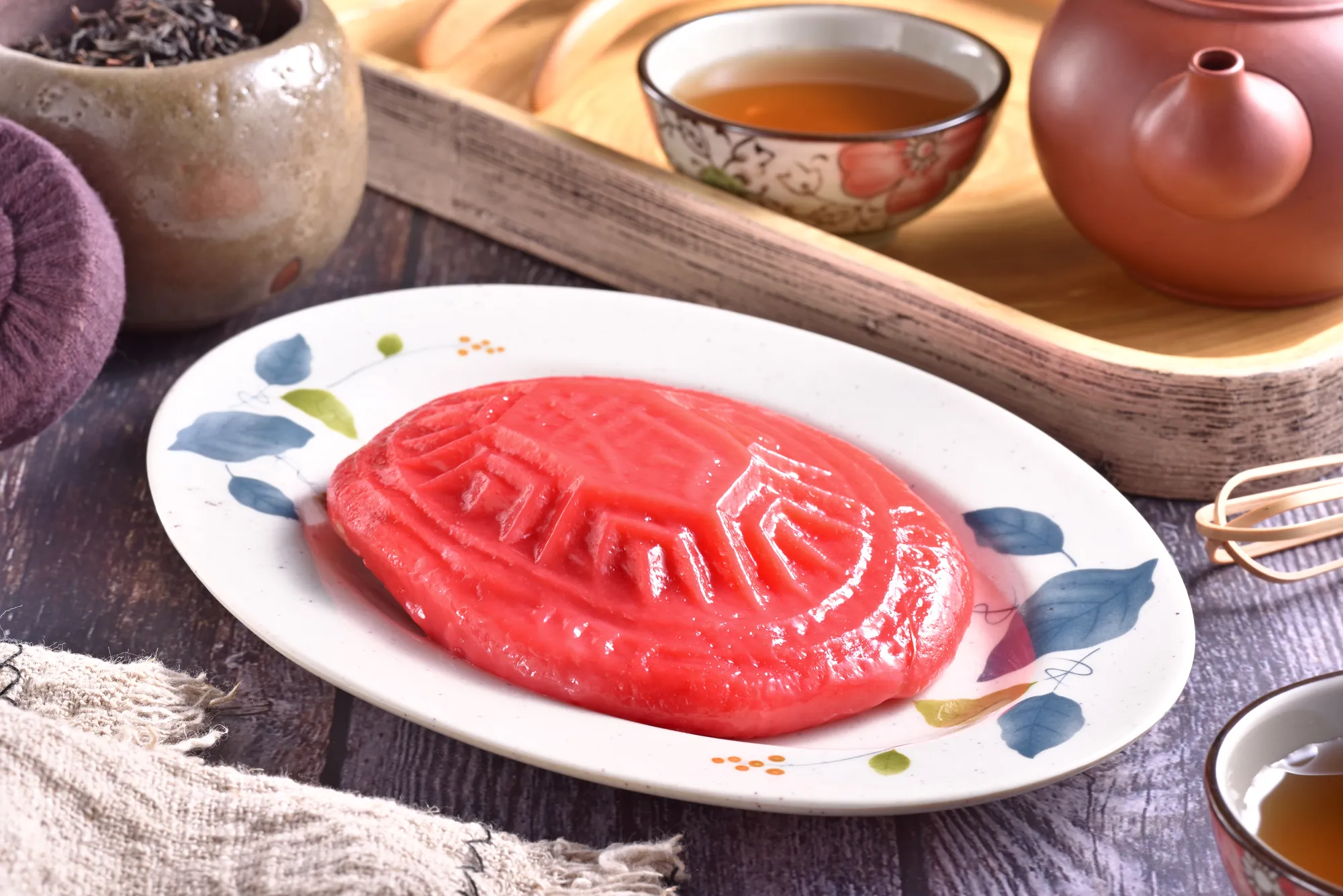
閩南族群的「紅龜粿」與客家族群的「紅粄」,雖然製作工藝與口味各異,但都以鮮豔的紅色作為基調。這種紅色來自天然的紅麴,不僅增添視覺美感,更賦予食物特殊的風味。台灣大學人類學系的研究指出,這些紅色食品在台灣傳統祭祀與節慶中扮演重要角色,是連結人與神明、生者與祖先的媒介。紅色食物在視覺上的強烈刺激,也與科學研究相呼應──紅色能促進食慾,這或許解釋了為何台灣許多傳統食品都帶有溫暖的紅色調。
「TaiwaneseTone 台灣通」色彩探索計畫則進一步深化對台灣紅的研究。這個由林佳萱和林詠智發起的計畫,透過實地調查與影像記錄,建立了台灣特有的色彩資料庫。他們發現台灣紅在飲食文化中呈現多樣性:從廟會辦桌的喜慶大紅,到夜市小吃攤的溫暖朱紅,再到傳統糕餅的柔和粉紅。這些紅色不僅是視覺符號,更是情感的載體,承載著台灣人共同的味覺記憶與文化認同。
紅龜粿的色票:從民俗到視覺人類學
國外當代藝術家也開始運用視覺語言重新詮釋傳統飲食文化中的色彩元素,例如舊金山藝術家麗特曼(Lucy Litman)以數位人類學的角度探索食物與色彩的關係,將食物與其對應的 PANTONE 色票(全球通用色彩標準系統)進行配對,強調了自然界中色彩的多樣性和美感。她也將台灣紅龜粿的紅色與PANTONE色票進行精確配對,創造出令人驚豔的視覺效果。
麗特曼將紅龜粿與 PANTONE 色票進行精確配對的行為,不只是設計實驗,更是一種文化色彩的再定義。這款來自台灣民間的傳統米製糕點,其紅色表層並非單一標準紅,而是介於朱紅、洋紅與桃紅之間的複合色。這種「非標準紅」的特質,正好體現了台灣紅色文化的多元性與細膩層次,與中國「正紅」所代表的單一官方色彩美學形成對比。
這樣的對照讓人們首次以國際色彩系統的語言,重新觀看台灣紅的文化位置,也讓傳統食物不再只是口味記憶,而是一種可視、可對話的文化語彙。紅龜粿的色彩會隨著使用的染料(天然紅麴或食用色素)、製作方式與光照條件產生微妙變化。這種不穩定的色彩狀態,象徵著台灣民俗文化本身的流動性與地域差異性。
從台灣到舊金山,色彩不僅代表了食物在視覺上的美感,更深刻地反映了當地獨特的文化內涵。在全球化的今天,「台灣紅」作為一種文化符號,正透過飲食這一最具親和力的媒介,向世界展示著台灣的文化底蘊與創新活力。這些色彩不只是調味品,更承載著台灣的土地記憶與飲食智慧。