
'%20fill='%23a9976d'/%3e%3cpath%20id='Path_251'%20data-name='Path%20251'%20d='M8,35a1,1,0,0,1,1-1H23a1,1,0,0,1,0,2H9A1,1,0,0,1,8,35Z'%20transform='translate(-8%20-22)'%20fill='%23a9976d'/%3e%3cpath%20id='Path_252'%20data-name='Path%20252'%20d='M9,22a1,1,0,0,0,0,2h8a1,1,0,0,0,0-2Z'%20transform='translate(-8%20-16)'%20fill='%23a9976d'/%3e%3c/svg%3e)
'%20fill='%23a9976d'/%3e%3c/g%3e%3c/svg%3e)
'%3e%3cg%20id='Ellipse_27'%20data-name='Ellipse%2027'%20transform='translate(813%20250)'%20fill='none'%20stroke='%23ccac89'%20stroke-width='1'%3e%3ccircle%20cx='16'%20cy='16'%20r='16'%20stroke='none'/%3e%3ccircle%20cx='16'%20cy='16'%20r='15.5'%20fill='none'/%3e%3c/g%3e%3cg%20id='facebook'%20transform='translate(824.105%20258.296)'%3e%3cpath%20id='Path_243'%20data-name='Path%20243'%20d='M8.894.111V2.556H7.441a1.361,1.361,0,0,0-1.074.333,1.534,1.534,0,0,0-.278,1v1.75H8.8L8.441,8.38H6.089v7.028H3.255V8.38H.894V5.639H3.255V3.62A3.582,3.582,0,0,1,4.218.949,3.5,3.5,0,0,1,6.783,0,15.317,15.317,0,0,1,8.894.111Z'%20transform='translate(0%200)'%20fill='%23ccac89'/%3e%3c/g%3e%3c/g%3e%3c/svg%3e)

'%3e%3cg%20id='Ellipse_29'%20data-name='Ellipse%2029'%20transform='translate(901%20250)'%20fill='none'%20stroke='%23ccac89'%20stroke-width='1'%3e%3ccircle%20cx='16'%20cy='16'%20r='16'%20stroke='none'/%3e%3ccircle%20cx='16'%20cy='16'%20r='15.5'%20fill='none'/%3e%3c/g%3e%3cg%20id='link-45deg'%20transform='translate(902.607%20253.105)'%3e%3cg%20id='Group_479'%20data-name='Group%20479'%20transform='translate(7.393%205.896)'%3e%3cpath%20id='Path_241'%20data-name='Path%20241'%20d='M10.246,17.821,8.507,19.56a3.8,3.8,0,0,0,5.378,5.378L16.2,22.62a3.8,3.8,0,0,0-1.05-6.12l-.743.743a1.27,1.27,0,0,0-.2.252,2.535,2.535,0,0,1,1.091,4.23L12.99,24.042A2.536,2.536,0,0,1,9.4,20.455l1.005-1a5.093,5.093,0,0,1-.162-1.631Z'%20transform='translate(-7.393%20-12.02)'%20fill='%23ccac89'/%3e%3cpath%20id='Path_242'%20data-name='Path%20242'%20d='M18.236,9.327a3.8,3.8,0,0,0,1.05,6.12l.982-.984a2.535,2.535,0,0,1-1.136-4.241L21.448,7.9a2.536,2.536,0,1,1,3.587,3.587l-1.005,1a5.1,5.1,0,0,1,.162,1.631l1.739-1.739A3.8,3.8,0,1,0,20.553,7.01Z'%20transform='translate(-13.011%20-5.896)'%20fill='%23ccac89'/%3e%3c/g%3e%3c/g%3e%3c/g%3e%3c/svg%3e)
◤文/特約作家一FunnyLi 李佳芳
在台灣的多元文化之中,因為移民運動所形成的民系「客家」(Hakka)是重要的文化關鍵字。
康熙22年,施琅率軍攻台,於澎湖海戰先敗後勝,台灣正式納入清領,隨後海禁解除,使大量來自閩粵的移民來台謀生,當中亦有客家移民。
1696年施琅過世,來台禁令更加放寬,從粵東移民的客家人日漸增多,深入山林墾拓,建立許多聚落,為台灣開發打下重要的基礎。
如今從台灣頭到台灣尾,都可見客家文化的蹤跡。舉凡北台灣的中壢、平鎮、龍潭、楊梅、新屋、觀音、大園、竹東、北埔、南庄,到中部的三義、東勢、石岡、新社,以及南部的美濃、內埔、六龜。不僅如此,還有許多融入其他族群的「客底」後代生活在海內外,使得客家成了具有全球辨識性的符號。
傳統保存食的墾山智慧
在歷經數百年的融合之下,客家人所帶來的宗教信仰、文學音樂、建築藝術、飲食料理等等,或濃或淡的客家生活文化,已成為台灣日常的一部分。
而說起客家文化,最使人印象深刻的,便是滋味豐富的「客家菜」了。
打開移墾發展史,那發展進程等同於客家移民的路線。早年生活環境刻苦,客家先民到異地開墾,「天有不測風雲,人有旦夕禍福」,在險象環生的環境下謀生,除了鍛練出客家人的「硬頸」精神之外,人們也把這個硬頸精神發揮在飲食上,刺激發展出極具創意的客家料理。
在交通運輸不易且種作艱難的山區,為了因應不時之需,客家先祖絞盡腦汁保存食物,衍生出「乾、泡、醃、醬」的保存食技術。此四大技術在長久發展以來,便成了「客家味」的重要根本。
所謂的「乾」,意指利用太陽曝晒或是風乾去除水分,使食材可以長期保存的手法,像是把蘿蔔切片如銅錢晒乾而成的「蘿蔔錢」、長豇豆汆燙再晒乾的「豆乾」等。至於「泡」,則是使用大量的水與鹽來浸泡食材,使其本身的天然酵素發生作用,在延長賞味之外也添增酸香滋味的變化,最熟為人知的泡菜便是一例。
品嘗四炆四炒的精神
此外,更加進階的「醃」,便是結合上述兩種手法,既乾又泡,甚至使用酒與麴來抑制細菌、添加風味。
這不只可以應用在豆腐或是蕗蕎等植物性食材,也可以應用在魚肉保存上,例如鹹醢(生醃魚)與豬肉醢(生醃豬肉),便被喻為「客家人的罐頭」。
最後,還有使用米豆醬、桔醬、醬油來醃漬蔬果的「醬」手法,白粥必備的豆腐乳與醬冬瓜便屬於此。
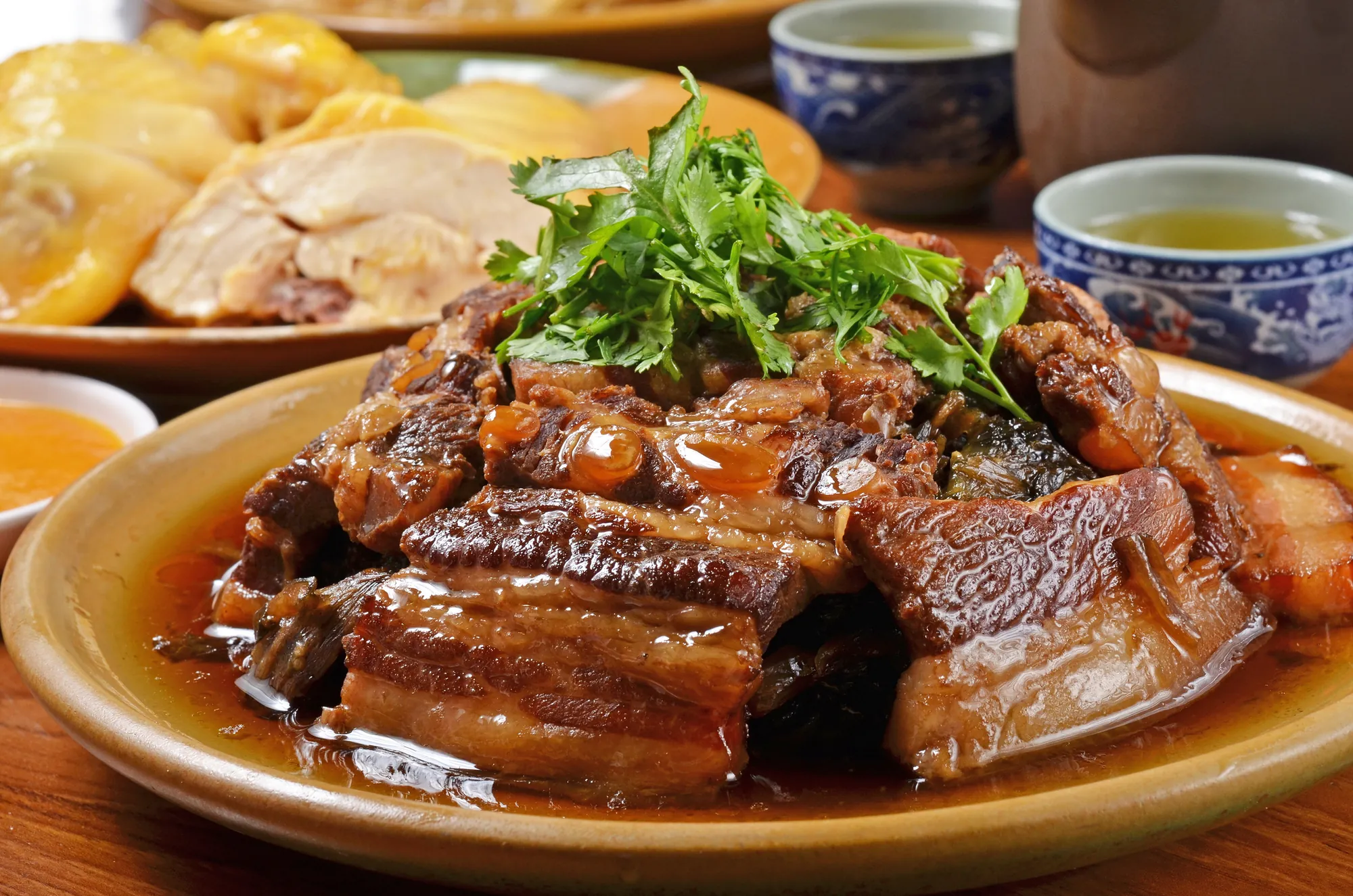
從保存食衍生的客家菜,最馳名的便是「四炆四炒」的客家宴席菜。所謂「四炆」為:炆爌肉、鹹菜炆豬肚、菜頭炆排骨、肥湯炆筍乾;「四炒」則是:客家炒肉、薑絲炒大腸、豬肺炒鳳梨木耳、紅旺炒韭菜。
富有湯汁的料理,取有「小火慢烹」意涵的「炆」字,指這四道菜色製作相當費時;後者則是乾炒熱菜。
這八道菜加上一道桌心菜「白斬雞」,以及一道代表「有餘」的魚料理,合成一桌「十全十美」,代表客家主人招待貴客的滿心誠意。
四炆四炒不只是宴席菜,這八道菜使用了豬的各部位——從豬肉、豬骨、豬腸、豬血乃至於豬油,隱含客家先祖教誨的「惜食」精神。
在善用有限食材的課題下,激發出客家人的料理想像,尤其是滋味平淡的白米到了客家人手裡,便成了花樣繁多的「粄」食。走入苗栗市南苗市場,彷彿走入米食天堂:有形如碗粿的甜鹹水粄,祭祀用的新丁粄,以及滋味甜蜜的艾草粄、紅豆粄……才知原來米的味道可以如此豐富,大開了眼界!
無限創意的新派客味
時至今日,傳統客家菜也成為台灣新派料理的重要靈感來源。在全球在地化的法菜潮流之下,就有廚師把小時候記憶的客家味融入法式料理,用梅乾菜顛覆法式肉派(Pâté)的想像,用米豆醬賦予法式鴨胸的新解,或是解構重組客家小炒,完成一道道別具新意的料理。
或用現代法式烹調技巧,拆解熟悉的家常菜,如:客家菜包、梅菜蒸魚等,重現客家料理的新意,使得客家菜給人的印象不只是傳統,也有顛覆想像的一面。