
'%20fill='%23a9976d'/%3e%3cpath%20id='Path_251'%20data-name='Path%20251'%20d='M8,35a1,1,0,0,1,1-1H23a1,1,0,0,1,0,2H9A1,1,0,0,1,8,35Z'%20transform='translate(-8%20-22)'%20fill='%23a9976d'/%3e%3cpath%20id='Path_252'%20data-name='Path%20252'%20d='M9,22a1,1,0,0,0,0,2h8a1,1,0,0,0,0-2Z'%20transform='translate(-8%20-16)'%20fill='%23a9976d'/%3e%3c/svg%3e)
'%20fill='%23a9976d'/%3e%3c/g%3e%3c/svg%3e)
肉圓─南蒸北炸,互別苗頭
主題探索
文化美食
分享
'%3e%3cg%20id='Ellipse_27'%20data-name='Ellipse%2027'%20transform='translate(813%20250)'%20fill='none'%20stroke='%23ccac89'%20stroke-width='1'%3e%3ccircle%20cx='16'%20cy='16'%20r='16'%20stroke='none'/%3e%3ccircle%20cx='16'%20cy='16'%20r='15.5'%20fill='none'/%3e%3c/g%3e%3cg%20id='facebook'%20transform='translate(824.105%20258.296)'%3e%3cpath%20id='Path_243'%20data-name='Path%20243'%20d='M8.894.111V2.556H7.441a1.361,1.361,0,0,0-1.074.333,1.534,1.534,0,0,0-.278,1v1.75H8.8L8.441,8.38H6.089v7.028H3.255V8.38H.894V5.639H3.255V3.62A3.582,3.582,0,0,1,4.218.949,3.5,3.5,0,0,1,6.783,0,15.317,15.317,0,0,1,8.894.111Z'%20transform='translate(0%200)'%20fill='%23ccac89'/%3e%3c/g%3e%3c/g%3e%3c/svg%3e)

'%3e%3cg%20id='Ellipse_29'%20data-name='Ellipse%2029'%20transform='translate(901%20250)'%20fill='none'%20stroke='%23ccac89'%20stroke-width='1'%3e%3ccircle%20cx='16'%20cy='16'%20r='16'%20stroke='none'/%3e%3ccircle%20cx='16'%20cy='16'%20r='15.5'%20fill='none'/%3e%3c/g%3e%3cg%20id='link-45deg'%20transform='translate(902.607%20253.105)'%3e%3cg%20id='Group_479'%20data-name='Group%20479'%20transform='translate(7.393%205.896)'%3e%3cpath%20id='Path_241'%20data-name='Path%20241'%20d='M10.246,17.821,8.507,19.56a3.8,3.8,0,0,0,5.378,5.378L16.2,22.62a3.8,3.8,0,0,0-1.05-6.12l-.743.743a1.27,1.27,0,0,0-.2.252,2.535,2.535,0,0,1,1.091,4.23L12.99,24.042A2.536,2.536,0,0,1,9.4,20.455l1.005-1a5.093,5.093,0,0,1-.162-1.631Z'%20transform='translate(-7.393%20-12.02)'%20fill='%23ccac89'/%3e%3cpath%20id='Path_242'%20data-name='Path%20242'%20d='M18.236,9.327a3.8,3.8,0,0,0,1.05,6.12l.982-.984a2.535,2.535,0,0,1-1.136-4.241L21.448,7.9a2.536,2.536,0,1,1,3.587,3.587l-1.005,1a5.1,5.1,0,0,1,.162,1.631l1.739-1.739A3.8,3.8,0,1,0,20.553,7.01Z'%20transform='translate(-13.011%20-5.896)'%20fill='%23ccac89'/%3e%3c/g%3e%3c/g%3e%3c/g%3e%3c/svg%3e)
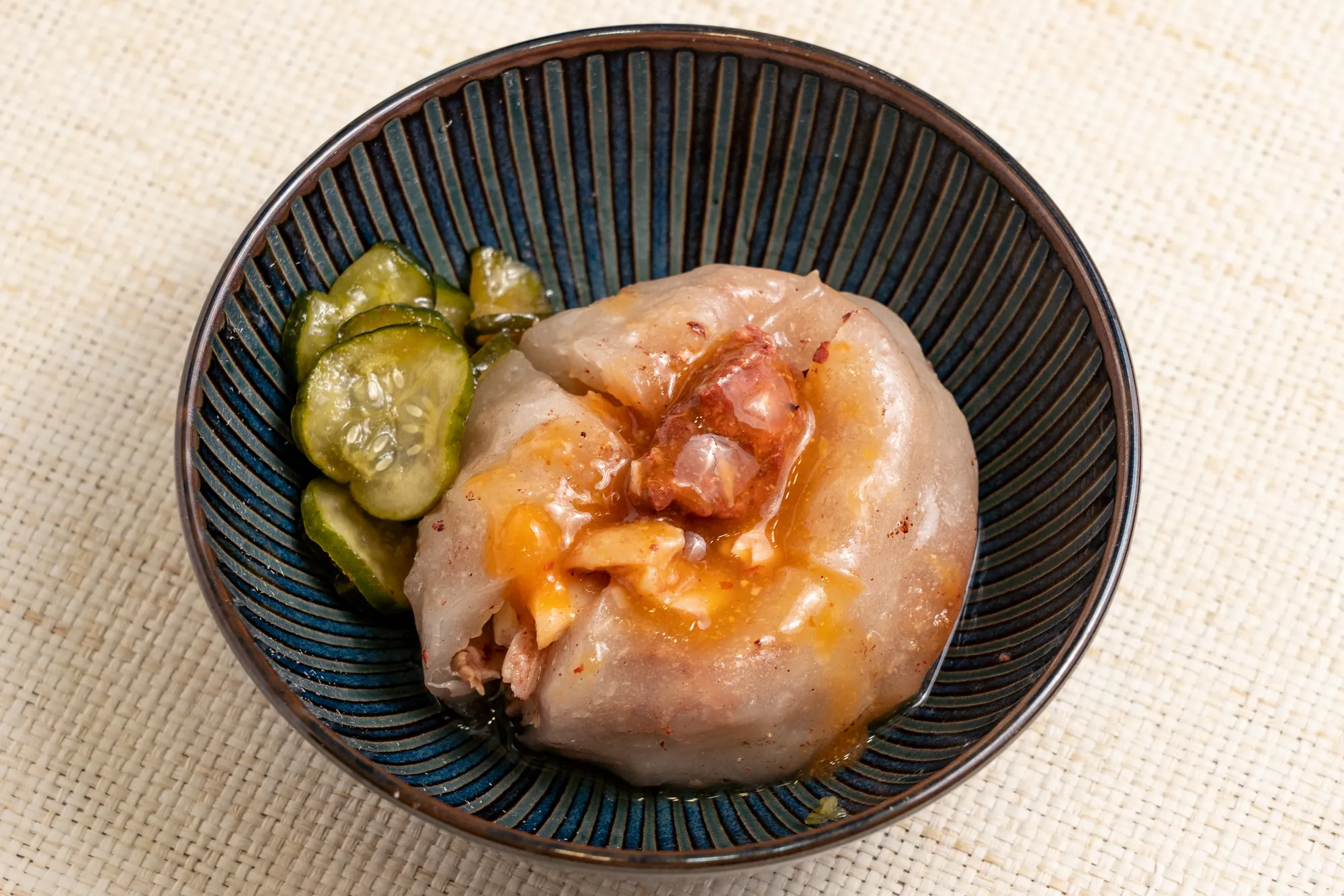
台灣諸多小吃源起不可考,但肉圓由彰化人范萬居所創的說法廣被接受,所以彰化肉圓有一定的地位。有名的彰化肉圓排隊店比比皆是,網評破萬的不在少數。
◤文.圖/看見台灣基金會編輯群
肉
圓製作方法不難,各縣市紛紛推出自己的版本,不讓彰化肉圓專美於前。新竹的「紅糟肉圓」、台中的「台中肉圓」、台南的「鮮蒸蝦仁肉圓」甚至入選必比登美食評比,實力雄厚。
肉圓外皮以地瓜粉、太白粉、樹薯粉等製成8公分左右半透明的圓形,是主流形狀,但也有三角形的。內餡以豬肉、筍為主,豪華一點的加香菇、干貝,南部特愛加蝦仁搶風頭。
如今,肉圓已成為台灣的代表性小吃,然其吃法南北有別,正如同粽子各有南北擁護者一般,各有愛好、壁壘分明。
▋安東尼.波登來台報導過
同樣是肉圓,烹煮的方式卻有「南蒸北炸」的差異。南部以蒸熟的肉圓為主,甚至還有放涼後食用的冷吃肉圓;北台灣的肉圓則多油炸,外酥內嫩。埔里亦有名店發展出特別的吃法,油炸肉圓送上後,饕客們都熟練的先將沾上甜鹹調料的外皮吃掉,留下填滿竹筍與肉塊的內餡,淋上一碗大骨湯後又是一道湯鮮味美的好菜,別具滋味。
作為台灣的經典小吃,肉圓的獨特風味就連國際傳奇名廚安東尼.波登都特別報導,他曾為《波登的世界旅遊指南》一書到訪台灣,並於基隆廟口一節寫下肉圓的故事。這單純、地道的台灣滋味,也有能力走出台灣、邁向世界。
探索更多
胡麻油─黑白芝麻油、香油用法不同
胡麻油為台灣常見油品,胡麻又稱芝麻。在人類歷史上,芝麻出現得相當早,而胡麻油亦為最古老的食用油品之一。4000多年前的埃及及蘇丹即食用芝麻,後經絲路進中國,再傳到台灣。
熱炒店──台灣版的「深夜食堂」
野島剛以日本人的視角,觀察台灣熱炒店發現許多不解之處,例如竟能自行拿飲料暢飲,以及點餐的語言障礙等。但他認為,一旦跨越這些門檻,熱炒店對日本人來說就是天堂。這裡不僅價格實惠,還能品嘗到各式各樣台灣獨有的美味佳餚。(圖片來源: pixabay )
花枝丸─澎湖產的最有名
花枝丸為台灣常見魚漿食品的一種,主要以魚漿、花枝漿包裹花枝碎肉製成,口感彈牙、風味濃郁且富有鮮味,一般家庭及夜市裡很常見。食用方式有煮湯、加入火鍋作為配料,或是油炸後加上胡椒鹽,都是深受歡迎的吃法。