
'%20fill='%23a9976d'/%3e%3cpath%20id='Path_251'%20data-name='Path%20251'%20d='M8,35a1,1,0,0,1,1-1H23a1,1,0,0,1,0,2H9A1,1,0,0,1,8,35Z'%20transform='translate(-8%20-22)'%20fill='%23a9976d'/%3e%3cpath%20id='Path_252'%20data-name='Path%20252'%20d='M9,22a1,1,0,0,0,0,2h8a1,1,0,0,0,0-2Z'%20transform='translate(-8%20-16)'%20fill='%23a9976d'/%3e%3c/svg%3e)
'%20fill='%23a9976d'/%3e%3c/g%3e%3c/svg%3e)
永續漁業─台灣是全球前 20 漁業國
主題探索
自然生態
分享
'%3e%3cg%20id='Ellipse_27'%20data-name='Ellipse%2027'%20transform='translate(813%20250)'%20fill='none'%20stroke='%23ccac89'%20stroke-width='1'%3e%3ccircle%20cx='16'%20cy='16'%20r='16'%20stroke='none'/%3e%3ccircle%20cx='16'%20cy='16'%20r='15.5'%20fill='none'/%3e%3c/g%3e%3cg%20id='facebook'%20transform='translate(824.105%20258.296)'%3e%3cpath%20id='Path_243'%20data-name='Path%20243'%20d='M8.894.111V2.556H7.441a1.361,1.361,0,0,0-1.074.333,1.534,1.534,0,0,0-.278,1v1.75H8.8L8.441,8.38H6.089v7.028H3.255V8.38H.894V5.639H3.255V3.62A3.582,3.582,0,0,1,4.218.949,3.5,3.5,0,0,1,6.783,0,15.317,15.317,0,0,1,8.894.111Z'%20transform='translate(0%200)'%20fill='%23ccac89'/%3e%3c/g%3e%3c/g%3e%3c/svg%3e)

'%3e%3cg%20id='Ellipse_29'%20data-name='Ellipse%2029'%20transform='translate(901%20250)'%20fill='none'%20stroke='%23ccac89'%20stroke-width='1'%3e%3ccircle%20cx='16'%20cy='16'%20r='16'%20stroke='none'/%3e%3ccircle%20cx='16'%20cy='16'%20r='15.5'%20fill='none'/%3e%3c/g%3e%3cg%20id='link-45deg'%20transform='translate(902.607%20253.105)'%3e%3cg%20id='Group_479'%20data-name='Group%20479'%20transform='translate(7.393%205.896)'%3e%3cpath%20id='Path_241'%20data-name='Path%20241'%20d='M10.246,17.821,8.507,19.56a3.8,3.8,0,0,0,5.378,5.378L16.2,22.62a3.8,3.8,0,0,0-1.05-6.12l-.743.743a1.27,1.27,0,0,0-.2.252,2.535,2.535,0,0,1,1.091,4.23L12.99,24.042A2.536,2.536,0,0,1,9.4,20.455l1.005-1a5.093,5.093,0,0,1-.162-1.631Z'%20transform='translate(-7.393%20-12.02)'%20fill='%23ccac89'/%3e%3cpath%20id='Path_242'%20data-name='Path%20242'%20d='M18.236,9.327a3.8,3.8,0,0,0,1.05,6.12l.982-.984a2.535,2.535,0,0,1-1.136-4.241L21.448,7.9a2.536,2.536,0,1,1,3.587,3.587l-1.005,1a5.1,5.1,0,0,1,.162,1.631l1.739-1.739A3.8,3.8,0,1,0,20.553,7.01Z'%20transform='translate(-13.011%20-5.896)'%20fill='%23ccac89'/%3e%3c/g%3e%3c/g%3e%3c/g%3e%3c/svg%3e)
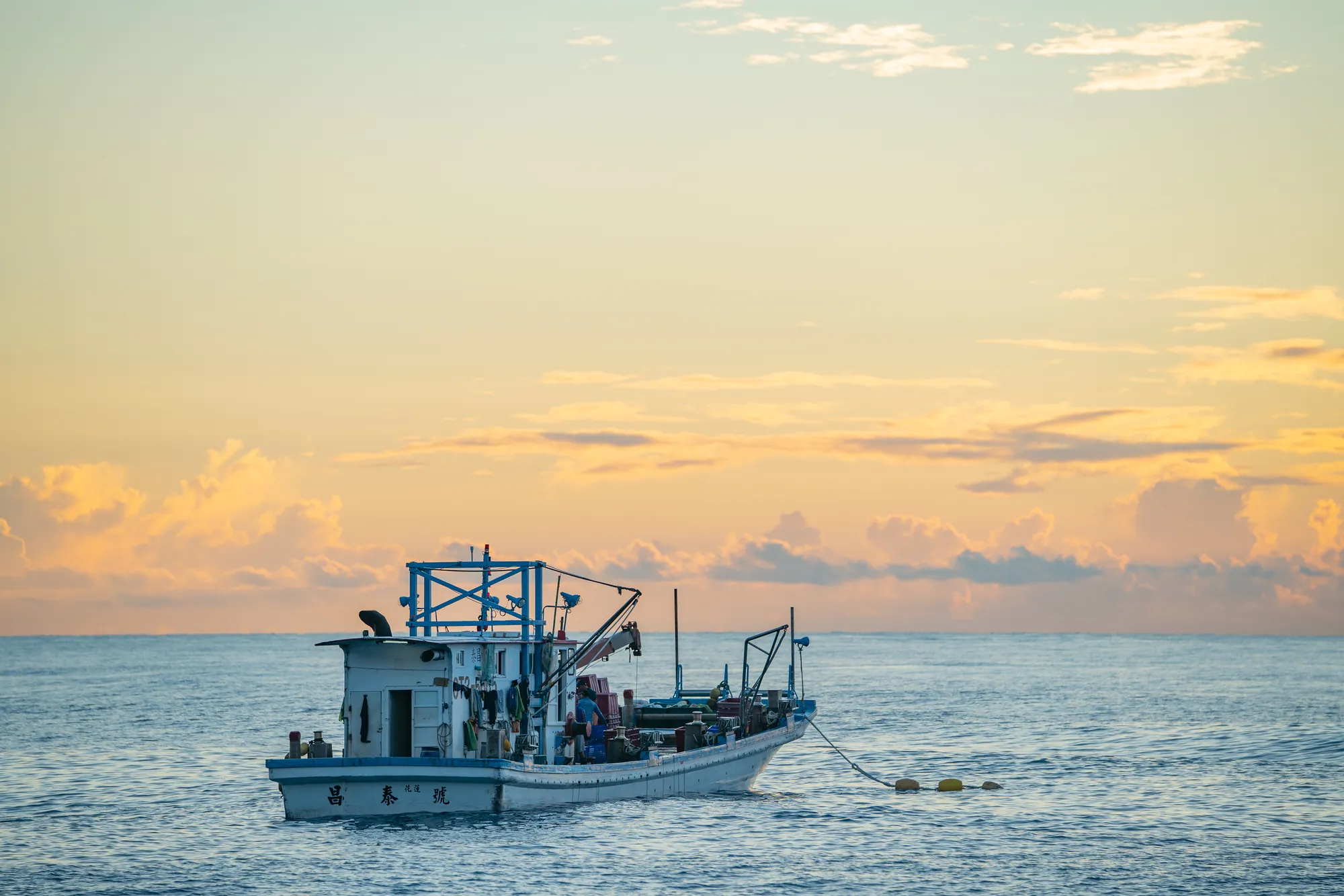
台灣四面環海,遠洋、沿近海及養殖漁業發達, 名列全球前 20 名漁業國家,秋刀魚、鰹魚、魷魚等遠洋漁獲量甚至位居全球前三名。
◤文.圖/看見台灣基金會編輯群
為
了漁業資源永續利用,我國積極參與區域性漁業管理組織,如中西太平洋漁業委員會(WCPFC)、北太平洋漁業委員會(NPFC)等,遵循漁獲配額規範進行黑鮪魚、秋刀魚等捕撈,落實漁船卸魚申報;並公告禁捕鯨鯊、鬼蝠魟等保育類物種,禁止鯊魚漁獲「割鰭棄身」等漁業行為。
遠洋漁業屬勞力密集且具高度風險的工作,聘雇外籍船員為經營常態,農業部漁業署近年推動漁業與人權行動計畫,輔導裝設船舶攝錄影系統、加強權宜船(Convenient flag ships)管理,落實勞動人權。
▋南部多處可見漁電共生案例
沿近海漁業也透過針對拖網、刺網漁船及鯖鰺魚類等劃定禁漁區,規範鎖管、鰻苗、抱卵母蟹等禁漁期,並舉辦魚苗生態放流活動,豐富海洋資源,以利海洋資源永續利用。
台灣並開發紅蟳、黑喉、鬼頭刀、土魠魚、赤鯥等水產魚蟹人工繁養殖技術;改善養殖區供、排水系統及道路基礎建設,輔導發展室內型養殖漁業,結合太陽光電「漁電共生」,強化養殖漁業因應極端氣候的韌性,以利漁業永續經營。
透過太陽能產業的發展,在嘉義、台南、高雄等都可以見到漁電共生的案例,導入相關智慧科技,並發展減碳策略。
探索更多
山葵─阿里山上的台灣綠金傳奇
山葵,原生於日本及俄羅斯遠東地區,日語音讀為「わさび(Wasabi)」,台灣常以擬音「哇沙米」稱之。
林下經濟─森林裡的小農產品
森林經營是長期的投資事業,動輒數十年,林農無法單獨靠造林的收入維持生計,從環境永續的角度思考,必須要有其他配套。
菜藕──從「老鷹手」到智慧採收的產業再生
嘉義民雄牛斗山曾是台灣菜藕重鎮,從外銷榮景到農村再生,一節帶土蓮藕,藏著產地風土、勞動技藝與「苦心」孕育出的生命滋味。