


◤Text / Funny Li
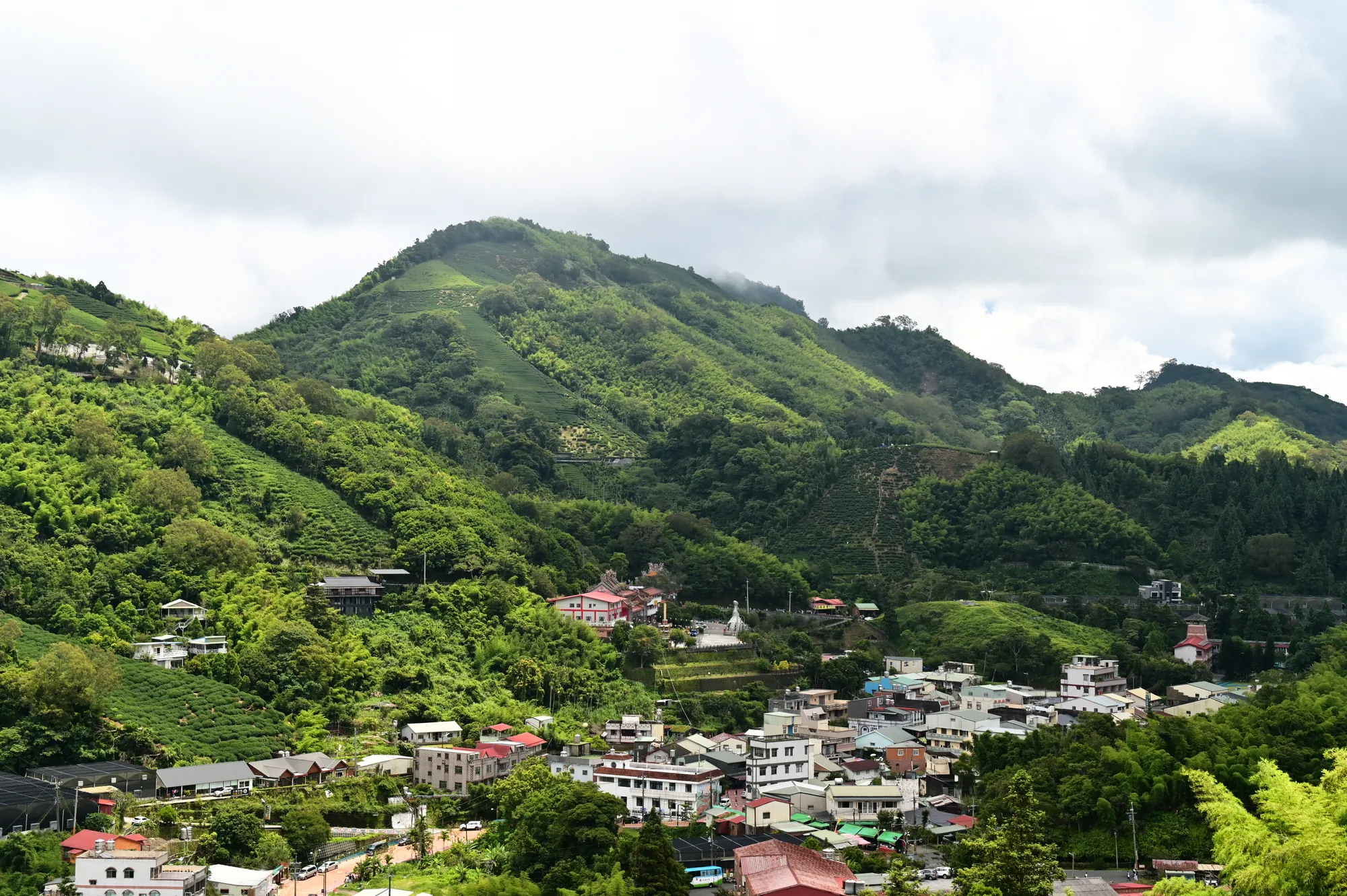
Stretching between the watersheds of the Beigang and Qingshui rivers, Meishan Township rises from flat plains to high mountain terrain across a range of elevations, giving shape to 18 villages of varied character. The township was historically known as Meiziken—"the plum hollow"—a name that speaks to its setting: a broad valley along the southern bank of the Daokong River, now the Hua Hsing River, where plum trees once blanketed the hillsides and perfumed the air each spring. It was later renamed Meishan, meaning "plum mountain." An alternate account traces the name to a vendor who settled beside the river at this well-traveled mountain waypoint and sold migao rice-cake congee—congee being mi in Hokkien—giving the settlement the name "the congee hollow," a near-homophone of Meiziken. Either way, the place took its name from what it had in abundance.
After World War II, improved transportation networks transformed Meishan into a thriving distribution hub for mountain produce.
Heading out from Meishan town along County Road 162A, the Meishan 36 Bends winds through a succession of switchbacks, each curve adorned with blessings inscribed by paper-cutting artist Yang Shi-Yi—a welcoming gesture for travelers arriving at this mist-wrapped mountain village. On Taiping Old Street, general stores that once served as trading posts for mountain goods remain in operation today, their shelves lined with dried bamboo shoots, day lily buds, dried plums, and shiitake mushrooms—each carrying the faint fragrance of an older era.
A Legacy Brand Reclaims Its Glory
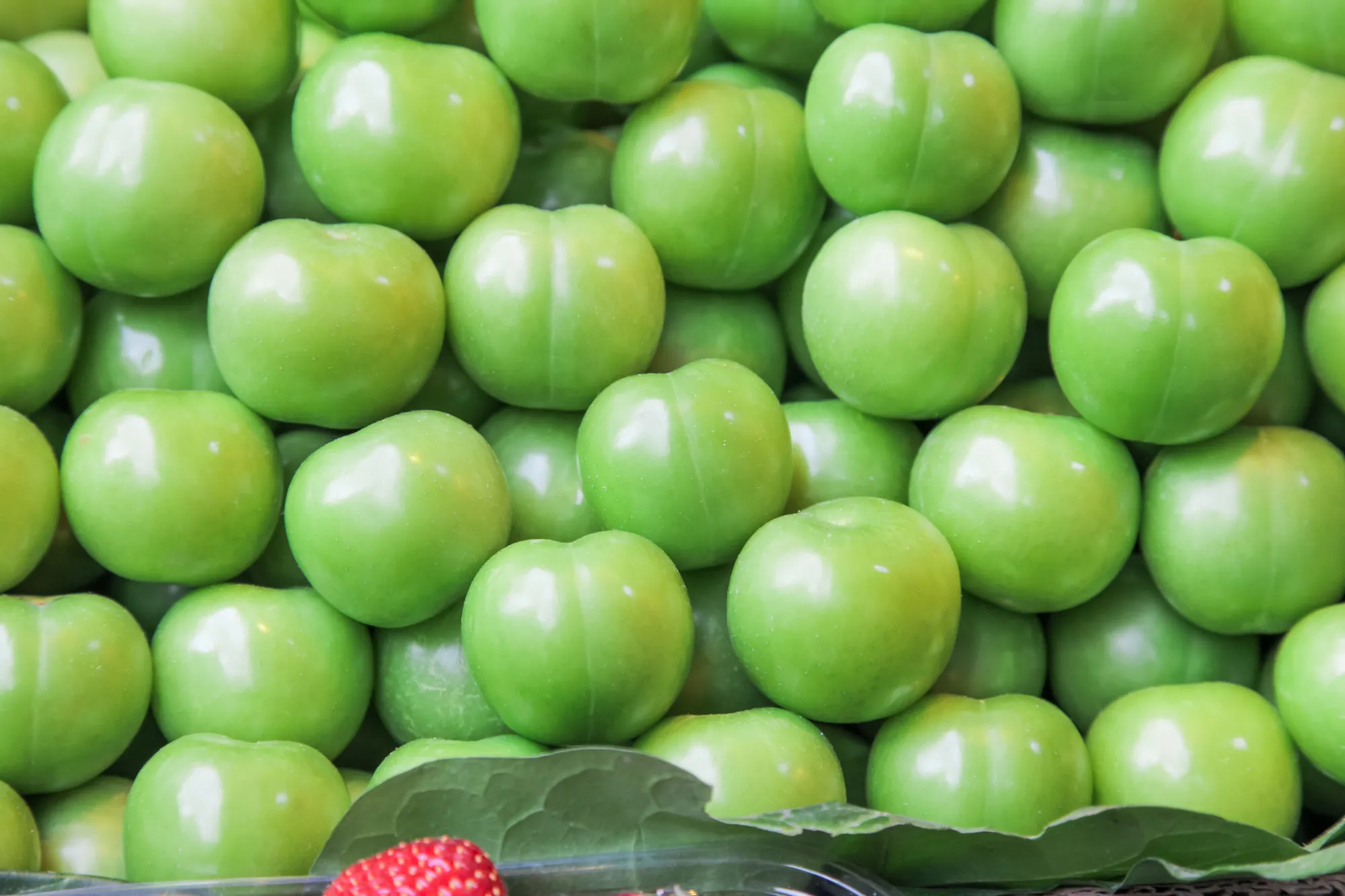
Meishan is perhaps best known for its plum industry. At its export peak in the 1980s, the township was home to numerous plum-processing operations; in front of Yu Syu Temple, Wanglai Fruit Shop still carries out pitting work on contract today. International competition eventually eroded Taiwan's green plum export market. Yet the people of Meishan never lost their taste for that flavor—bitter at first, then tart and sweet—much like the plum blossoms their forebears planted, blooming fragrant after enduring wind and frost.
Mei Wen Wu is a brand reborn from a storied past. Its predecessor, Cheng Song Tai Foods, was established in 1967 and built its reputation producing salted green plum blanks—semi-processed unripe plums intended for further processing—for export to Japan, operating factories across China and Southeast Asia at its peak. When the industry declined, the old factory fell quiet—until the founding family's first and second generations, unwilling to see the tradition disappear, returned home to start over. They launched Mei Wen Wu—"plum tonya," using the Japanese term for a wholesale merchant—as their own label, determined to restore the pride that Meishan's plum industry once carried.
In 2012, Mei Wen Wu converted the old factory into an open-production visitor center, where transparent production lines lay bare the painstaking process of plum processing—pitting, destemming, sun-drying, roasting, and more. The brand has since developed a range of products suited to contemporary tastes: pitted roasted plums flash-processed at 500°C, rich in mumefural, a compound formed during processing; savory plum sauce and sesame plum sauce for pairing with meals; and concentrated plum vinegar and sour plum concentrate for drinks.
Did You Know? Taiwan's Plums Were Once a Hit in Japan
Taiwan's plum industry reached its peak in the 1990s, with cultivation area topping 10,835 hectares in 1996 and production hitting 94,090 metric tons in 1997—generating NT$3.25 billion in value. Growing was concentrated primarily in Meishan Township in Chiayi County and Xinyi and Shuili townships in Nantou County. At its height, Taiwan exported plums in large volumes to Japan, particularly as green plum blanks—unripe plums at an early processing stage—which were highly prized in the Japanese market.
As producers in China and Southeast Asia entered the market with lower-priced fruit, however, export volumes declined steadily from a peak of 2,992 metric tons in 1990 and have hovered at a few hundred metric tons in recent years. To move up the value chain, producers across Taiwan have developed a range of plum-derived products. In Meishan, Chiayi, Mei Wen Wu offers pitted roasted plums flash-processed at 500°C, alongside savory plum sauce, sesame plum sauce, concentrated plum vinegar, and sour plum concentrate for drinks. In Nantou, Plum Dream Factory combines traditional methods with contemporary techniques to produce plum wine, plum vinegar, and concentrated plum extract.
Sour-Sweet Memories on the Plate
Meishan's local plums still find their way onto restaurant menus throughout town. On the old street, Bā Yuè Design puts a creative spin on traditional flavors, serving dishes that weave plum into the cooking—braised plum chicken and wild vegetables tossed in perilla plum sauce—letting food carry the memory forward.
The Erjianshan Trail winds through tea gardens where rows of bushes follow the contour lines up the hillside, tracing elegant curves across the slope. At just 380 meters, the path makes for an easy walk to the ridgeline, where the view opens wide in every direction. In earlier times, the surrounding hills were dense with longan trees; the trail itself began as a working path, worn into the earth by laborers who built kilns, felled timber, and hauled charcoal down the mountain. As industries shifted, the longan groves gave way to tea gardens, and those well-worn routes became a beloved hiking trail.
Not far from the trailhead, the unassuming Dingjian Tourist Farm has earned a quiet reputation among hikers, passed along by word of mouth until the mountain retreat became something of a destination. Its menu draws heavily on local ingredients. The standout is the plum chicken—black-skinned silkie, braised, then fried and finished with a pickled plum glaze, sour, sweet, and fragrant all at once. Equally compelling is the camellia oil chicken, prepared with mountain-grown camellia oil and aged ginger, cooked using a technique that is part sauté and part shallow-fry, yielding crisp skin and remarkably juicy meat.
The bamboo shoot dishes deserve equal attention: pickled bamboo shoots with egg, pickled bamboo shoots with milkfish, Makino bamboo shoots braised with preserved mustard greens, Makino bamboo shoots braised with pork knuckle, and crisp young shoots served on their own. Wild vegetable dishes round out the table—wild ginger flower omelette, deep-fried tea leaves, and crispy tofu rolls—a meal that fully embodies the mountain-kitchen philosophy of eating what the land provides.
Walking Among the Clouds: Meishan's New Landmarks
Beyond its food, Meishan Township has developed a handful of striking attractions in recent years. Taiping Suspension Bridge, opened in 2017 in Taiping Village, spans 281 meters at an elevation of roughly 1,000 meters—one of Chiayi County's most recognizable landmarks. The bridge crosses the valley between Taiping and Longan villages; from its midpoint, the Chianan Plain and Meishan's layered peaks stretch out below, and on clear days it offers a front-row view of seas of clouds, sunrise, and sunset.
Another of the township's draws is Happy Hill, a former abandoned tea garden remade into a relaxed hillside retreat with a café and viewing platform. From the platform, Meishan's mountain panorama unfolds in full—most dramatically at dusk, when golden light floods the valley.
For those drawn to history, Taiping Old Street rewards a slow walk. The street preserves the architectural character of the Japanese colonial period and has witnessed Meishan's many transformations. Most of the old shophouses have been adapted into specialty stores or restaurants, but their original facades remain largely intact.