
'%20fill='%23a9976d'/%3e%3cpath%20id='Path_251'%20data-name='Path%20251'%20d='M8,35a1,1,0,0,1,1-1H23a1,1,0,0,1,0,2H9A1,1,0,0,1,8,35Z'%20transform='translate(-8%20-22)'%20fill='%23a9976d'/%3e%3cpath%20id='Path_252'%20data-name='Path%20252'%20d='M9,22a1,1,0,0,0,0,2h8a1,1,0,0,0,0-2Z'%20transform='translate(-8%20-16)'%20fill='%23a9976d'/%3e%3c/svg%3e)
'%20fill='%23a9976d'/%3e%3c/g%3e%3c/svg%3e)
'%3e%3cg%20id='Ellipse_27'%20data-name='Ellipse%2027'%20transform='translate(813%20250)'%20fill='none'%20stroke='%23ccac89'%20stroke-width='1'%3e%3ccircle%20cx='16'%20cy='16'%20r='16'%20stroke='none'/%3e%3ccircle%20cx='16'%20cy='16'%20r='15.5'%20fill='none'/%3e%3c/g%3e%3cg%20id='facebook'%20transform='translate(824.105%20258.296)'%3e%3cpath%20id='Path_243'%20data-name='Path%20243'%20d='M8.894.111V2.556H7.441a1.361,1.361,0,0,0-1.074.333,1.534,1.534,0,0,0-.278,1v1.75H8.8L8.441,8.38H6.089v7.028H3.255V8.38H.894V5.639H3.255V3.62A3.582,3.582,0,0,1,4.218.949,3.5,3.5,0,0,1,6.783,0,15.317,15.317,0,0,1,8.894.111Z'%20transform='translate(0%200)'%20fill='%23ccac89'/%3e%3c/g%3e%3c/g%3e%3c/svg%3e)

'%3e%3cg%20id='Ellipse_29'%20data-name='Ellipse%2029'%20transform='translate(901%20250)'%20fill='none'%20stroke='%23ccac89'%20stroke-width='1'%3e%3ccircle%20cx='16'%20cy='16'%20r='16'%20stroke='none'/%3e%3ccircle%20cx='16'%20cy='16'%20r='15.5'%20fill='none'/%3e%3c/g%3e%3cg%20id='link-45deg'%20transform='translate(902.607%20253.105)'%3e%3cg%20id='Group_479'%20data-name='Group%20479'%20transform='translate(7.393%205.896)'%3e%3cpath%20id='Path_241'%20data-name='Path%20241'%20d='M10.246,17.821,8.507,19.56a3.8,3.8,0,0,0,5.378,5.378L16.2,22.62a3.8,3.8,0,0,0-1.05-6.12l-.743.743a1.27,1.27,0,0,0-.2.252,2.535,2.535,0,0,1,1.091,4.23L12.99,24.042A2.536,2.536,0,0,1,9.4,20.455l1.005-1a5.093,5.093,0,0,1-.162-1.631Z'%20transform='translate(-7.393%20-12.02)'%20fill='%23ccac89'/%3e%3cpath%20id='Path_242'%20data-name='Path%20242'%20d='M18.236,9.327a3.8,3.8,0,0,0,1.05,6.12l.982-.984a2.535,2.535,0,0,1-1.136-4.241L21.448,7.9a2.536,2.536,0,1,1,3.587,3.587l-1.005,1a5.1,5.1,0,0,1,.162,1.631l1.739-1.739A3.8,3.8,0,1,0,20.553,7.01Z'%20transform='translate(-13.011%20-5.896)'%20fill='%23ccac89'/%3e%3c/g%3e%3c/g%3e%3c/g%3e%3c/svg%3e)
◤文/看見台灣基金會編輯群
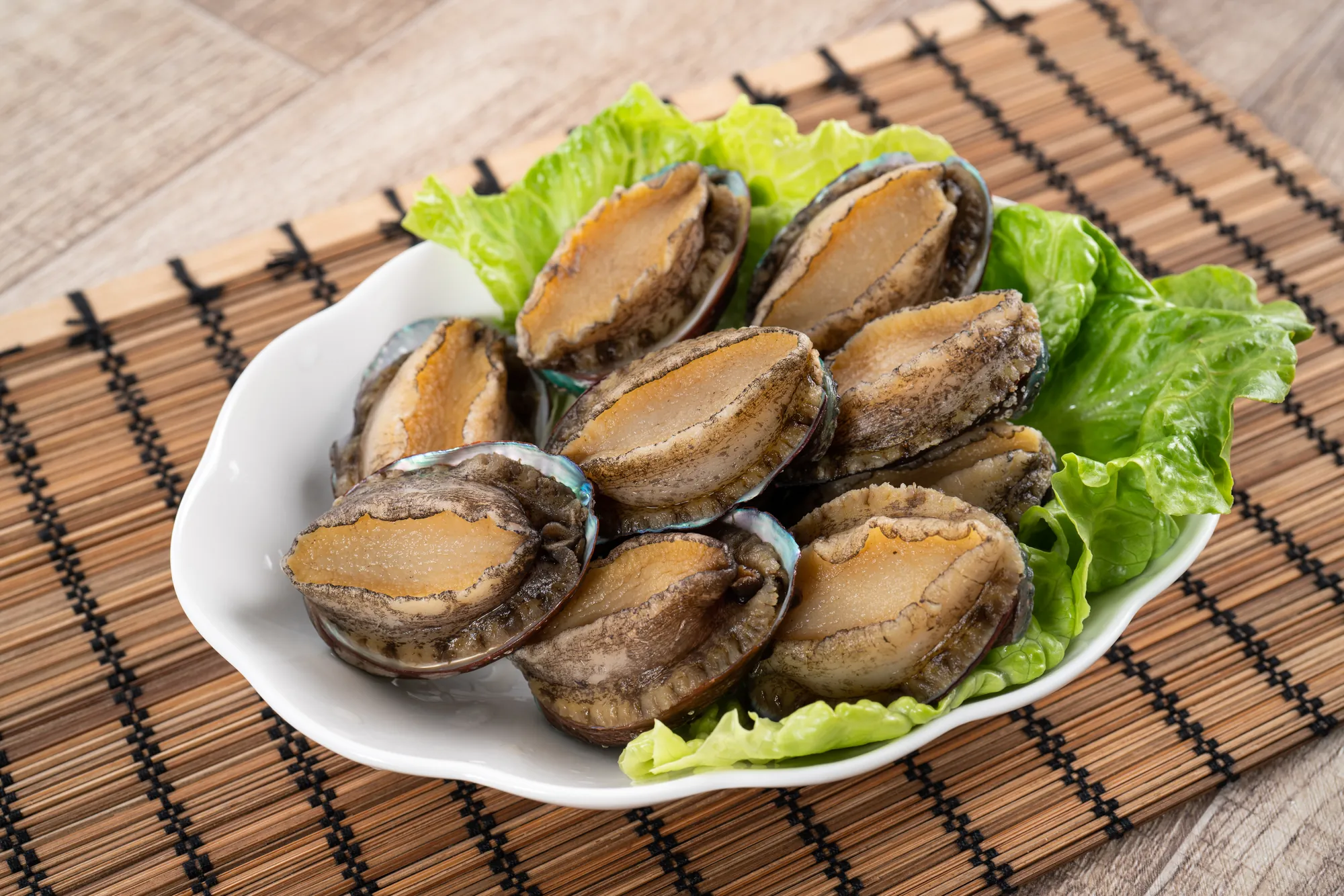
九孔螺(學名:Haliotis diversicolor)俗稱九孔、台灣鮑,又稱雜色鮑,其外殼紅褐色,內有珍珠光澤,用於中藥被稱為「石決明」。九孔螺殼面扁平,其上有7至10個孔洞,用以呼吸及排泄,中文「九」有表示「多」之意涵,故得名九孔。九孔螺養殖自1980年代以來在台灣沿海陸續發展,其中新北市貢寮沿岸因潮間帶與水質條件,成為九孔鮑養殖的代表性區域。
相較於大型鮑魚,九孔螺體型雖小,口感卻彈韌有嚼勁,早期是台灣常見的水產。九孔螺的食用歷史悠久,在台灣東北角一帶的漁村,無論是家庭料理或節慶宴客,都可見其身影。九孔螺料理包括滷九孔螺、蒜香辣炒、薑絲米酒清蒸與九孔螺湯。
貢寮九孔產業由盛轉衰,再復甦
貢寮地區曾是九孔螺養殖重鎮,養殖戶分工明確,產業興盛,2000年前後產量一度達到近2,500公噸。未料其後產量突然斷崖式陡降,養殖九孔螺因病毒、細菌感染與環境壓力,大量死亡,產量最低時僅剩下不到80公噸,許多養殖戶血本無歸,最終淡出市場。
近年來,在政府與漁會的努力下,九孔螺養殖產業逐漸復甦。新北市政府與貢寮區漁會推出「貢寮鮑」品牌,透過嚴格的檢驗認證,重新建立消費者信心。同時,漁會也積極推動產地旅遊,結合九孔螺養殖體驗與在地美食,開創產業的新價值。
早期九孔螺採粗放式養殖(投入較少人力、設備,主要依賴天然環境與自然資源來生產),曾對海洋生態造成一定程度的影響;近年來,越來越多養殖戶開始導入更友善環境的養殖技術。例如,控制養殖密度,加強水質監測,以確保九孔螺的健康與海洋環境的平衡。