
'%20fill='%23a9976d'/%3e%3cpath%20id='Path_251'%20data-name='Path%20251'%20d='M8,35a1,1,0,0,1,1-1H23a1,1,0,0,1,0,2H9A1,1,0,0,1,8,35Z'%20transform='translate(-8%20-22)'%20fill='%23a9976d'/%3e%3cpath%20id='Path_252'%20data-name='Path%20252'%20d='M9,22a1,1,0,0,0,0,2h8a1,1,0,0,0,0-2Z'%20transform='translate(-8%20-16)'%20fill='%23a9976d'/%3e%3c/svg%3e)
'%20fill='%23a9976d'/%3e%3c/g%3e%3c/svg%3e)
'%3e%3cg%20id='Ellipse_27'%20data-name='Ellipse%2027'%20transform='translate(813%20250)'%20fill='none'%20stroke='%23ccac89'%20stroke-width='1'%3e%3ccircle%20cx='16'%20cy='16'%20r='16'%20stroke='none'/%3e%3ccircle%20cx='16'%20cy='16'%20r='15.5'%20fill='none'/%3e%3c/g%3e%3cg%20id='facebook'%20transform='translate(824.105%20258.296)'%3e%3cpath%20id='Path_243'%20data-name='Path%20243'%20d='M8.894.111V2.556H7.441a1.361,1.361,0,0,0-1.074.333,1.534,1.534,0,0,0-.278,1v1.75H8.8L8.441,8.38H6.089v7.028H3.255V8.38H.894V5.639H3.255V3.62A3.582,3.582,0,0,1,4.218.949,3.5,3.5,0,0,1,6.783,0,15.317,15.317,0,0,1,8.894.111Z'%20transform='translate(0%200)'%20fill='%23ccac89'/%3e%3c/g%3e%3c/g%3e%3c/svg%3e)

'%3e%3cg%20id='Ellipse_29'%20data-name='Ellipse%2029'%20transform='translate(901%20250)'%20fill='none'%20stroke='%23ccac89'%20stroke-width='1'%3e%3ccircle%20cx='16'%20cy='16'%20r='16'%20stroke='none'/%3e%3ccircle%20cx='16'%20cy='16'%20r='15.5'%20fill='none'/%3e%3c/g%3e%3cg%20id='link-45deg'%20transform='translate(902.607%20253.105)'%3e%3cg%20id='Group_479'%20data-name='Group%20479'%20transform='translate(7.393%205.896)'%3e%3cpath%20id='Path_241'%20data-name='Path%20241'%20d='M10.246,17.821,8.507,19.56a3.8,3.8,0,0,0,5.378,5.378L16.2,22.62a3.8,3.8,0,0,0-1.05-6.12l-.743.743a1.27,1.27,0,0,0-.2.252,2.535,2.535,0,0,1,1.091,4.23L12.99,24.042A2.536,2.536,0,0,1,9.4,20.455l1.005-1a5.093,5.093,0,0,1-.162-1.631Z'%20transform='translate(-7.393%20-12.02)'%20fill='%23ccac89'/%3e%3cpath%20id='Path_242'%20data-name='Path%20242'%20d='M18.236,9.327a3.8,3.8,0,0,0,1.05,6.12l.982-.984a2.535,2.535,0,0,1-1.136-4.241L21.448,7.9a2.536,2.536,0,1,1,3.587,3.587l-1.005,1a5.1,5.1,0,0,1,.162,1.631l1.739-1.739A3.8,3.8,0,1,0,20.553,7.01Z'%20transform='translate(-13.011%20-5.896)'%20fill='%23ccac89'/%3e%3c/g%3e%3c/g%3e%3c/g%3e%3c/svg%3e)
◤文.圖/看見台灣基金會編輯群
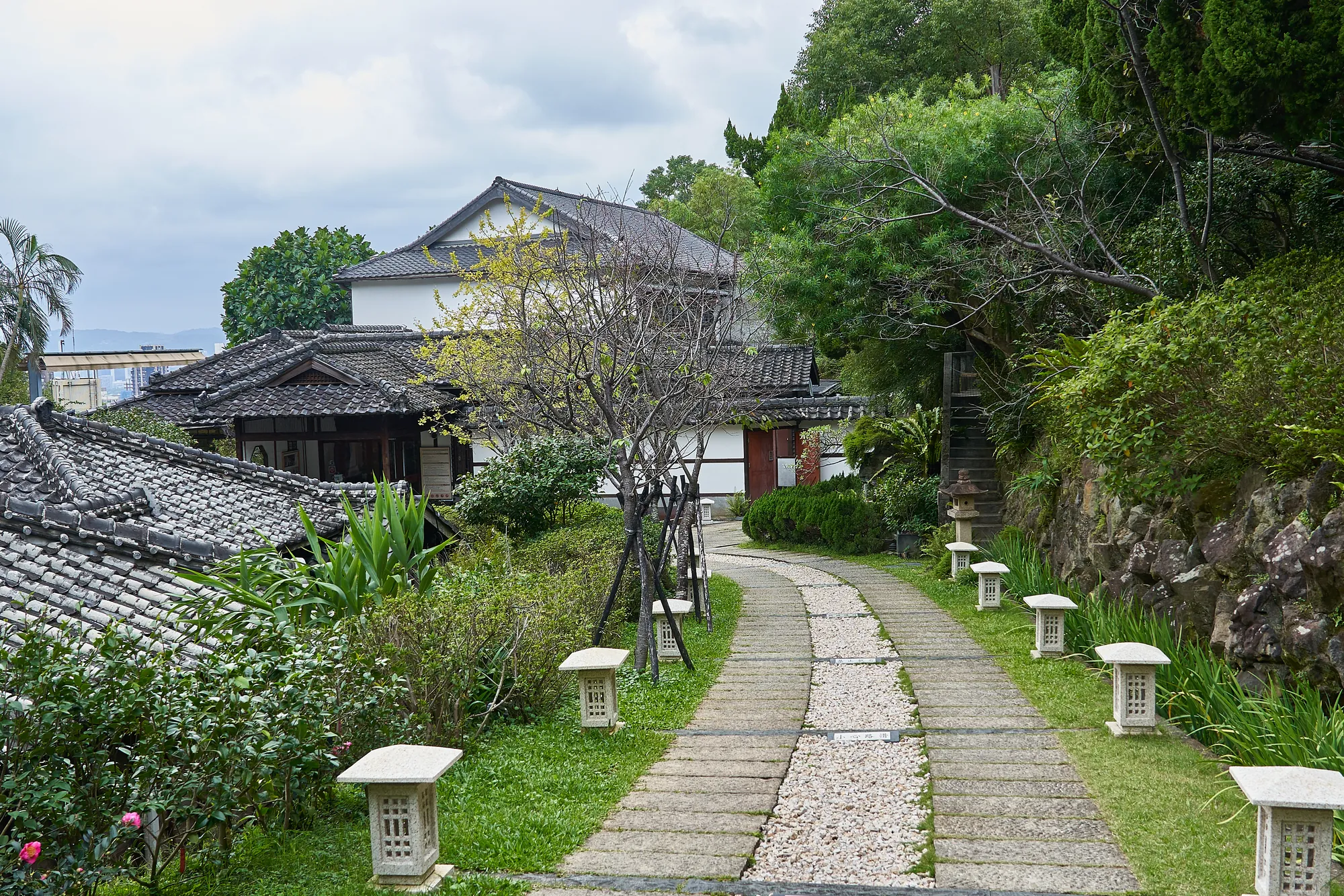
興建於1921年的北投文物館,前身為北投最高級的佳山旅館,以日式木構建築與俯瞰觀音山的視野著稱。走入榻榻米長廊,時間彷彿靜止,而這棟建築也確實伴隨北投近百年的風華與轉折。館長洪侃說道,近年解密資料顯示,旅館於戰後曾被美軍租用三年,作為不對外的神秘俱樂部。之後建物作為外交部官員宿舍與貴賓招待所,1965年售予民間後,因空間氛圍獨特,成為電影拍攝熱門場景,映照北投曾被稱為「台灣好萊塢」的一頁,更於1998年,被台北市政府登錄為市定古蹟。
以飲食策展,打造特色餐點
1984年,空間轉型為私人博物館,藏有六千多件常民文化與原住民文物,但館長洪侃認為「最珍貴的是建築本體」。為守護文化資產,團隊耗時五年以古蹟工法修復,並於2008年以複合式經營重新開館,提供餐飲及活動場地等服務。既然要在文物館內提供飲食,「就要在這個硬體上充分彰顯它的價值。」館長洪侃說,沒有哪個活動可以如飲食般包含五感的體驗。古蹟禁用明火,因而發展出以「蒸、煮、燉、烤」為核心的料理風格,貼近日本時代旅館的飲食樣貌,也符合當代養生的飲食趨勢。
餐廳以季節食材打造套餐,例如初春以在地筍子入菜、秋冬推出香氣內斂的菇物,讓四季景致透過味覺在舌尖展開。而主廚也會依展覽主題研發菜式,如在「台灣玩具特展」期間,茶碗蒸裡點綴以紅蘿蔔雕成的小魚,「好像在夜市撈金魚一樣」,客人看到莫不會心一笑。
北投文物館曾是名流方能進出的領域,如今則轉向成為「常民的博物館」。因收藏多以常民生活物件為主,館方推動與生命禮俗結合的活動,如抓周、滿月酒、長輩壽宴,未來也可能規劃成年禮,使百年古蹟成為家庭生命故事的重要場景。這些不僅是活動,更是文化在今日的延伸與再創造。