


◤Text and Images / iSee Taiwan Foundation Editorial Team
Each year, from April to June and again from September to November, mahi-mahi ride the warm Kuroshio Current through the waters off Taiwan's eastern coast, chasing schools of flying fish, sardines, and other surface-dwelling prey. This oceanic migratory species-known scientifically as Coryphaena hippurus-ranks among the most important catches along the east coast, and nowhere more so than in Chenggong Township, Taitung County, where it is one of Chenggong Township's most representative commercially important fish species.
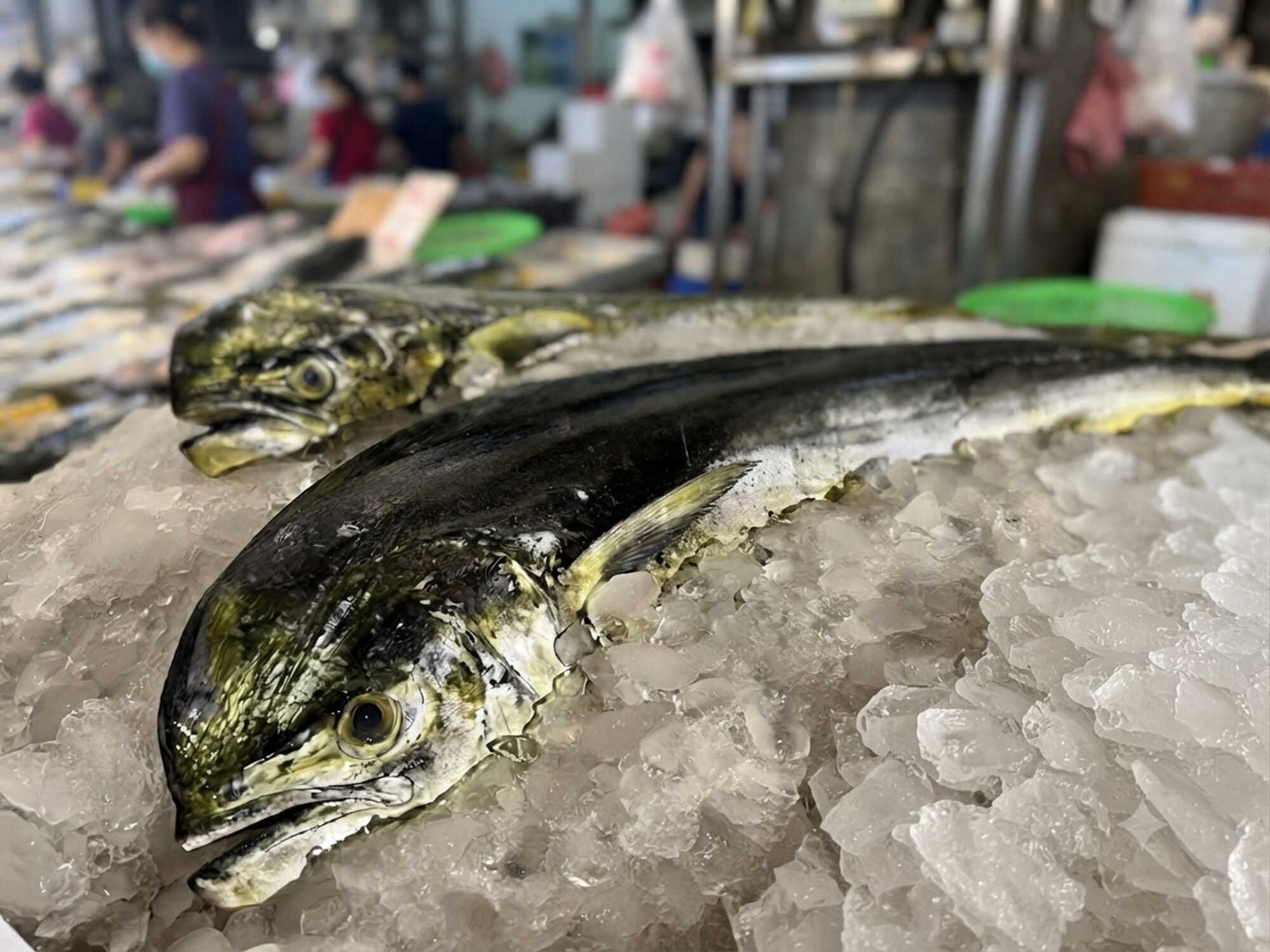
The adult male is unmistakable: a steeply rising forehead that nearly forms a right angle, paired with dazzling speed. Mahi-mahi are relentless surface hunters, and their habit of pursuing flying fish earned them the Taiwanese nickname pue-oo-hóo-literally "flying-fish tiger." The Qing-dynasty writer Yu Yonghe also described flying fish in his Taiwan Zhuzhi Ci, writing of them leaping above the waves and following fishing boats. The image echoes the marine ecology in which mahi-mahi pursue flying fish near the surface.
Cold-Chain Advances Improve Fish Quality
Mahi-mahi are caught throughout Taiwan's coastal waters and offshore islands, but the eastern seas-warmed by the Kuroshio-yield the largest and most consistent harvests. Two peak seasons define the fishing calendar: April to June and September to November, with the spring run typically the more abundant of the two. Taiwan is one of the world's leading producers of the species, and Chenggong's Singang Fishing Port is among the country's primary landing ports. In 2024 alone, Singang recorded more than 1,200 metric tons of mahi-mahi.
For years, most of the catch was processed for export, leaving domestic consumers with little familiarity with the fish. Limitations in fresh-fish storage and distribution also contributed to weak prices in the domestic market. That has since changed. The Singang District Fishermen's Association and local processors have invested in blast freezers, vacuum-seal technology, and cold-chain distribution, enabling chilled mahi-mahi fillets to reach markets across the island. The result: a fish prized for its snow-white, firm flesh is finally earning recognition at home. High in protein and low in fat, mahi-mahi also has a short life cycle; available data indicates relatively low heavy-metal levels in the flesh.
Mahi-mahi can be pan-seared, steamed, braised, made into fish soup, or deep-fried as fish steaks, each preparation bringing out a different character. Along the Taitung coast, fish fillets, fish balls, and a growing range of local preparations are staking their claim as signature regional seafood. Beneath the surface, mahi-mahi flash gold, green, and blue as they streak through the current-embodying the very vitality of the Kuroshio itself. More than a prized catch, this fish tells the story of Taitung's abundant seas and of a fishing industry finding its way from tradition to brand and toward something more sustainable.