


◤Text and Images / iSee Taiwan Foundation Editorial Team
Nestled in the southern stretch of the East Longitudinal Valley between the Central Mountain Range and the Coastal Mountain Range, Chishang Township in Taitung County is one of Taiwan's most celebrated rice-growing regions. Its clean water sources, significant day-to-night temperature swings, and fertile paddy soil have long made it ideal for cultivating exceptional rice. But Chishang's rise to national recognition owes as much to a humble wooden bento box as it does to those famous golden rice fields. The Chishang bento-rice, provenance, and railway nostalgia packed into one-has become one of the most iconic expressions of local food culture in Taiwan.
The origins of the Chishang bento are commonly traced to the years around 1940, during the Japanese colonial era, at Chishang Station. Rail journeys between Hualien and Taitung were lengthy at the time, and hungry passengers were a given. A couple named Li Yuedian and Lin Laifu began selling sweet potato cakes on the platform. After the war, vendors shifted to Chishang rice, shaping it into triangular rice balls wrapped in shell ginger or bamboo leaves. Early accompaniments included braised pork, pickled radish, dried roasted meat, pork liver, egg crepe, fried shrimp cake, and pickled plum. As trains pulled in, the calls of vendors and the mingling aromas of rice and side dishes became woven into the living memory of the Taitung rail line.
The Wooden Box That Keeps the Rice Just Right
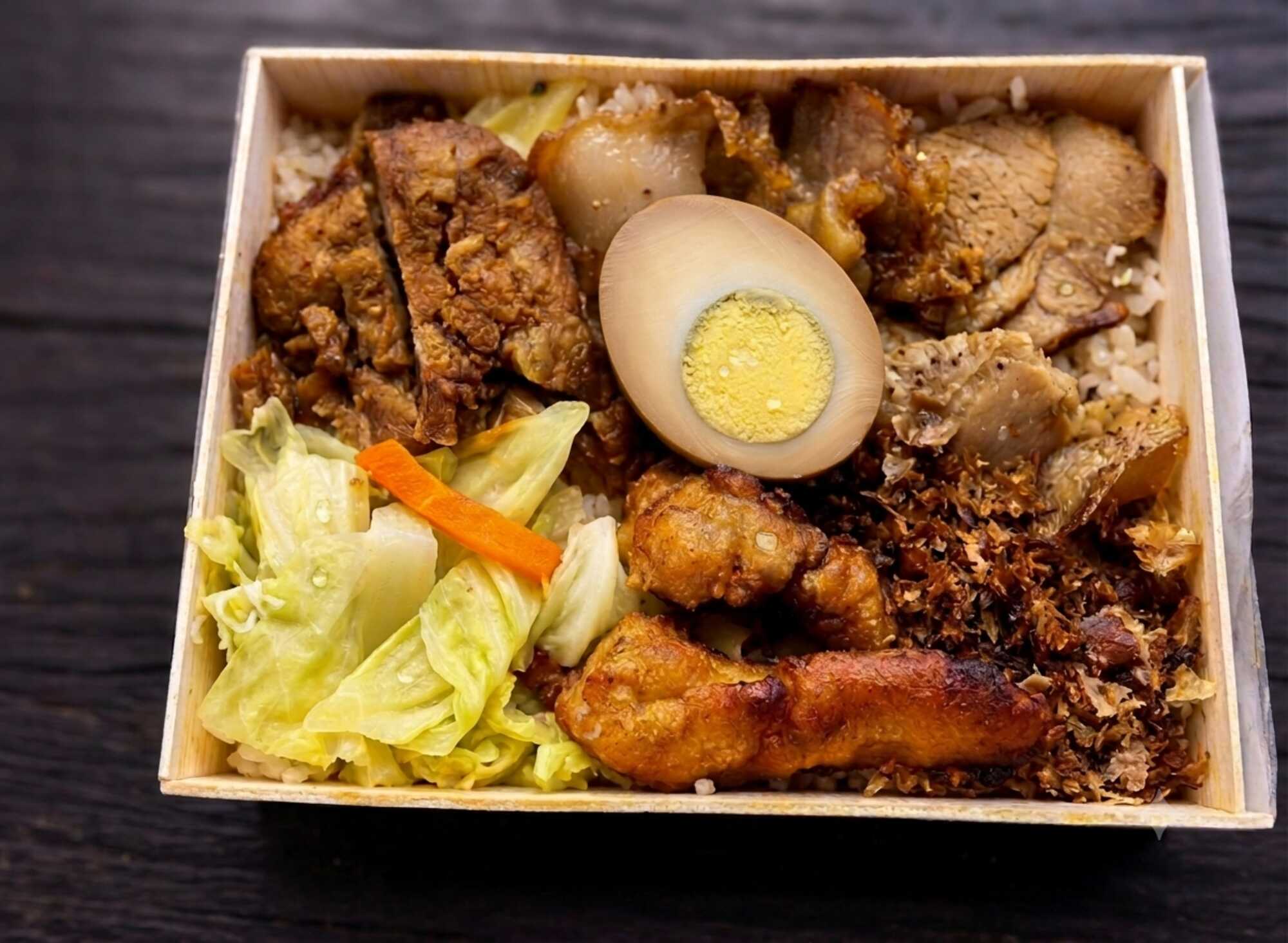
As the Chishang bento evolved from rice balls into a packaged meal, its wrapping shifted from leaves to thin wooden boxes-and the change was anything but cosmetic. When hot rice is sealed in an airtight container, condensation seeps back into the grains, leaving them soggy. The wooden box absorbs excess moisture while allowing the rice to breathe, keeping each grain distinct. It also retains warmth and imparts a faint woodsy fragrance that layers with the scents of white rice, braised pork, and pickled vegetables-creating a sensory signature closely associated with the Chishang Bento.
Today's Chishang bento varies from shop to shop, but the through line remains: fragrant white rice as the centerpiece, a generous spread of savory sides. Common items include fried pok bah (a local deep-fried pork strips), braised pork slices, char siu or grilled pork, sliced sausage, braised egg, stir-fried cabbage, dried bamboo shoots, dried radish, pickled cucumber, young ginger, and bonito flakes. No single dish dominates; instead, braised, fried, roasted, and pickled flavors spread across the rice in layers, each one drawing out the natural fragrance of Chishang grain. Among the best-known vendors today is Wu-tau, a Chishang bento institution that has established a cultural story house to preserve the history of the bento through a dedicated exhibition space; Chuang Mei Hang Chishang Railway Platform Bento, located steps from the station, carries on the original platform-side tradition.
From sweet potato cakes to platform rice balls to the wooden bento box, the Chishang bento has gathered the valley's rice culture, railway memory, home-style cooking, and certified local provenance into a single meal. In every bite, there is something of the small town's landscape-and of Taiwan's own agricultural transformation.