
'%20fill='%23a9976d'/%3e%3cpath%20id='Path_251'%20data-name='Path%20251'%20d='M8,35a1,1,0,0,1,1-1H23a1,1,0,0,1,0,2H9A1,1,0,0,1,8,35Z'%20transform='translate(-8%20-22)'%20fill='%23a9976d'/%3e%3cpath%20id='Path_252'%20data-name='Path%20252'%20d='M9,22a1,1,0,0,0,0,2h8a1,1,0,0,0,0-2Z'%20transform='translate(-8%20-16)'%20fill='%23a9976d'/%3e%3c/svg%3e)
'%20fill='%23a9976d'/%3e%3c/g%3e%3c/svg%3e)
芋頭─我正式名字叫「芋艿」
主題探索
文化美食
分享
'%3e%3cg%20id='Ellipse_27'%20data-name='Ellipse%2027'%20transform='translate(813%20250)'%20fill='none'%20stroke='%23ccac89'%20stroke-width='1'%3e%3ccircle%20cx='16'%20cy='16'%20r='16'%20stroke='none'/%3e%3ccircle%20cx='16'%20cy='16'%20r='15.5'%20fill='none'/%3e%3c/g%3e%3cg%20id='facebook'%20transform='translate(824.105%20258.296)'%3e%3cpath%20id='Path_243'%20data-name='Path%20243'%20d='M8.894.111V2.556H7.441a1.361,1.361,0,0,0-1.074.333,1.534,1.534,0,0,0-.278,1v1.75H8.8L8.441,8.38H6.089v7.028H3.255V8.38H.894V5.639H3.255V3.62A3.582,3.582,0,0,1,4.218.949,3.5,3.5,0,0,1,6.783,0,15.317,15.317,0,0,1,8.894.111Z'%20transform='translate(0%200)'%20fill='%23ccac89'/%3e%3c/g%3e%3c/g%3e%3c/svg%3e)

'%3e%3cg%20id='Ellipse_29'%20data-name='Ellipse%2029'%20transform='translate(901%20250)'%20fill='none'%20stroke='%23ccac89'%20stroke-width='1'%3e%3ccircle%20cx='16'%20cy='16'%20r='16'%20stroke='none'/%3e%3ccircle%20cx='16'%20cy='16'%20r='15.5'%20fill='none'/%3e%3c/g%3e%3cg%20id='link-45deg'%20transform='translate(902.607%20253.105)'%3e%3cg%20id='Group_479'%20data-name='Group%20479'%20transform='translate(7.393%205.896)'%3e%3cpath%20id='Path_241'%20data-name='Path%20241'%20d='M10.246,17.821,8.507,19.56a3.8,3.8,0,0,0,5.378,5.378L16.2,22.62a3.8,3.8,0,0,0-1.05-6.12l-.743.743a1.27,1.27,0,0,0-.2.252,2.535,2.535,0,0,1,1.091,4.23L12.99,24.042A2.536,2.536,0,0,1,9.4,20.455l1.005-1a5.093,5.093,0,0,1-.162-1.631Z'%20transform='translate(-7.393%20-12.02)'%20fill='%23ccac89'/%3e%3cpath%20id='Path_242'%20data-name='Path%20242'%20d='M18.236,9.327a3.8,3.8,0,0,0,1.05,6.12l.982-.984a2.535,2.535,0,0,1-1.136-4.241L21.448,7.9a2.536,2.536,0,1,1,3.587,3.587l-1.005,1a5.1,5.1,0,0,1,.162,1.631l1.739-1.739A3.8,3.8,0,1,0,20.553,7.01Z'%20transform='translate(-13.011%20-5.896)'%20fill='%23ccac89'/%3e%3c/g%3e%3c/g%3e%3c/g%3e%3c/svg%3e)
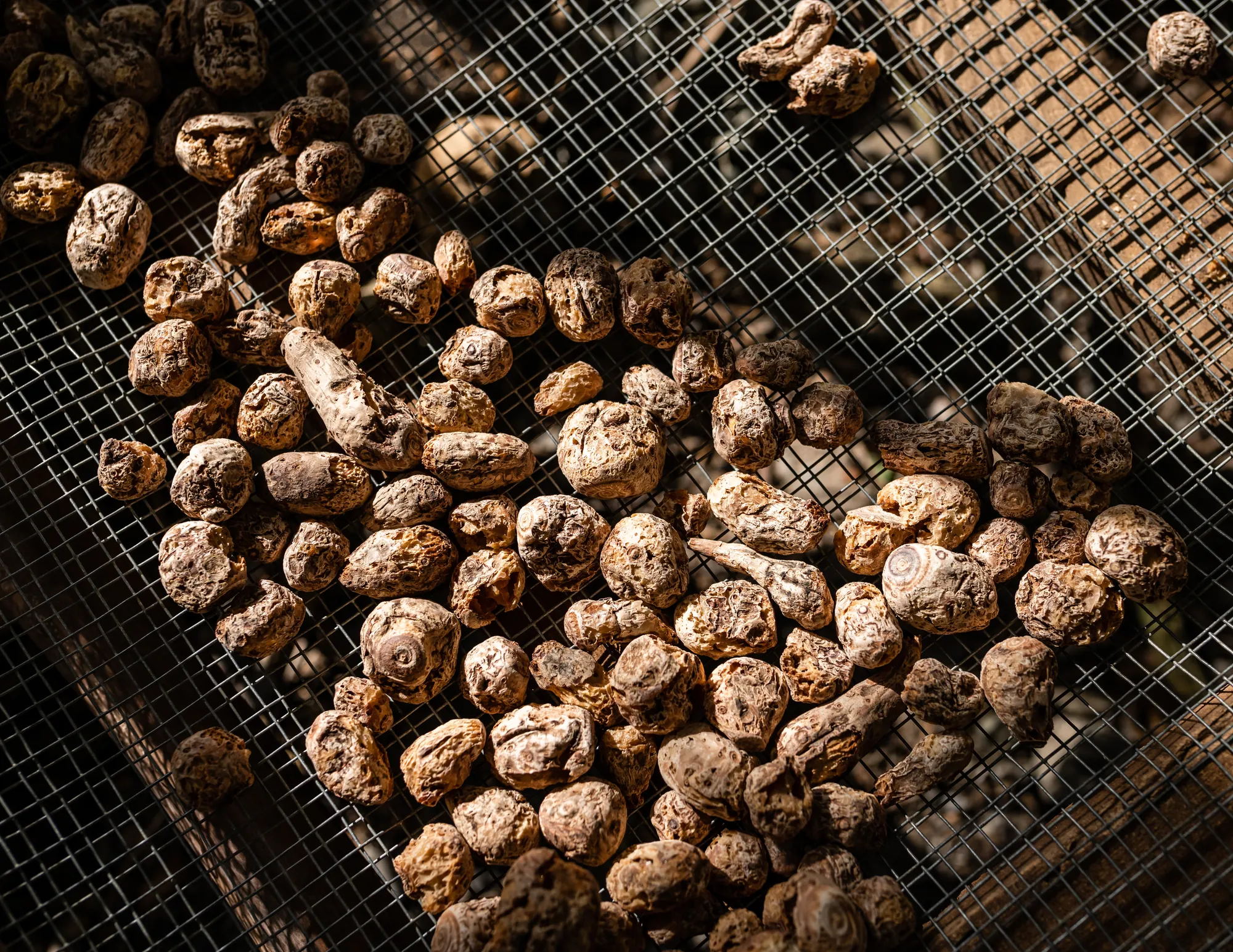
芋頭,正式的名稱應為「芋」或「芋艿」,然台灣社會少以此稱呼,一般多以芋頭稱之。芋頭的球狀地下莖可食用、亦可入藥,芋頭含豐富澱粉,適合各種烹調,也是人類最早馴化的農作物之一,關於芋頭最早的栽種紀錄,可追溯至西元前5000年的印度。
◤文.圖/看見台灣基金會編輯群
芋
頭主要分布於濕暖的熱帶、亞熱帶地區,在東亞、南亞、東南亞、埃及、希臘、西非、加勒比海,以至於太平洋諸島都是相當普遍的食材。
▋原住民的芋頭文化歷史久遠
芋頭為天南星科芋屬植物,在台灣,原住民素來便有耕種芋頭的文化,種植芋頭歷史源流已不可考,最早的文字記載則見於1603年明朝人陳第所著之《東番記》。
台灣的原住民族所種植的芋頭品種眾多,可粗分為種植於山坡地之山芋(或稱旱芋)以及種植於平地水田中的水芋,各部族皆有其區域品系。
例如排灣族藝術家撒古流.巴瓦瓦隆所撰之《山芋頭:部落教室2》一書即記載,僅排灣族一族所保留芋頭品種便有15種之多;蘭嶼達悟族則種植水芋,其所種芋頭品種更達21種。
目前在台灣平地,芋頭主要栽種的品種為檳榔心芋,產量頗豐;台中大甲是芋頭最著名的產區,清明之後就由屏東高樹芋頭接力。
台灣人食用芋頭的方式有鹹有甜,作為主食或入菜皆可,可作為甜品,亦時常以火鍋料的方式出現於餐桌上。無論是芋頭排骨湯、芋頭粥、芋頭米粉湯等鹹食吃法,或是芋頭西米露、芋頭蛋糕、芋仔冰則為甜食吃法,各自精彩創新。
探索更多
太陽餅─餅皮要超過百層,才是名餅
台中名產太陽餅,內餡為麥芽糖,但厲害的是餅皮,名店的做工精細,最多可達上百層,比紙還薄,摸起來有彈性,吃起來酥脆甜蜜。
絲瓜─《本草綱目》:「其瓤有絡」
絲瓜又稱菜瓜,《本草綱目》就提到「其瓤有絡」,指瓜體布滿絲絡。
柿子─連泰國皇室也被圈粉
台灣小學二年級國語課本《小鎮的柿餅節》,形容秋天來了,新竹新埔小鎮滿是柿餅的香氣,還有前來小旅行觀光客的鼎沸人聲。