
'%20fill='%23a9976d'/%3e%3cpath%20id='Path_251'%20data-name='Path%20251'%20d='M8,35a1,1,0,0,1,1-1H23a1,1,0,0,1,0,2H9A1,1,0,0,1,8,35Z'%20transform='translate(-8%20-22)'%20fill='%23a9976d'/%3e%3cpath%20id='Path_252'%20data-name='Path%20252'%20d='M9,22a1,1,0,0,0,0,2h8a1,1,0,0,0,0-2Z'%20transform='translate(-8%20-16)'%20fill='%23a9976d'/%3e%3c/svg%3e)
'%20fill='%23a9976d'/%3e%3c/g%3e%3c/svg%3e)
豬─古字為豕,無豬「不成家」
主題探索
文化美食
分享
'%3e%3cg%20id='Ellipse_27'%20data-name='Ellipse%2027'%20transform='translate(813%20250)'%20fill='none'%20stroke='%23ccac89'%20stroke-width='1'%3e%3ccircle%20cx='16'%20cy='16'%20r='16'%20stroke='none'/%3e%3ccircle%20cx='16'%20cy='16'%20r='15.5'%20fill='none'/%3e%3c/g%3e%3cg%20id='facebook'%20transform='translate(824.105%20258.296)'%3e%3cpath%20id='Path_243'%20data-name='Path%20243'%20d='M8.894.111V2.556H7.441a1.361,1.361,0,0,0-1.074.333,1.534,1.534,0,0,0-.278,1v1.75H8.8L8.441,8.38H6.089v7.028H3.255V8.38H.894V5.639H3.255V3.62A3.582,3.582,0,0,1,4.218.949,3.5,3.5,0,0,1,6.783,0,15.317,15.317,0,0,1,8.894.111Z'%20transform='translate(0%200)'%20fill='%23ccac89'/%3e%3c/g%3e%3c/g%3e%3c/svg%3e)

'%3e%3cg%20id='Ellipse_29'%20data-name='Ellipse%2029'%20transform='translate(901%20250)'%20fill='none'%20stroke='%23ccac89'%20stroke-width='1'%3e%3ccircle%20cx='16'%20cy='16'%20r='16'%20stroke='none'/%3e%3ccircle%20cx='16'%20cy='16'%20r='15.5'%20fill='none'/%3e%3c/g%3e%3cg%20id='link-45deg'%20transform='translate(902.607%20253.105)'%3e%3cg%20id='Group_479'%20data-name='Group%20479'%20transform='translate(7.393%205.896)'%3e%3cpath%20id='Path_241'%20data-name='Path%20241'%20d='M10.246,17.821,8.507,19.56a3.8,3.8,0,0,0,5.378,5.378L16.2,22.62a3.8,3.8,0,0,0-1.05-6.12l-.743.743a1.27,1.27,0,0,0-.2.252,2.535,2.535,0,0,1,1.091,4.23L12.99,24.042A2.536,2.536,0,0,1,9.4,20.455l1.005-1a5.093,5.093,0,0,1-.162-1.631Z'%20transform='translate(-7.393%20-12.02)'%20fill='%23ccac89'/%3e%3cpath%20id='Path_242'%20data-name='Path%20242'%20d='M18.236,9.327a3.8,3.8,0,0,0,1.05,6.12l.982-.984a2.535,2.535,0,0,1-1.136-4.241L21.448,7.9a2.536,2.536,0,1,1,3.587,3.587l-1.005,1a5.1,5.1,0,0,1,.162,1.631l1.739-1.739A3.8,3.8,0,1,0,20.553,7.01Z'%20transform='translate(-13.011%20-5.896)'%20fill='%23ccac89'/%3e%3c/g%3e%3c/g%3e%3c/g%3e%3c/svg%3e)
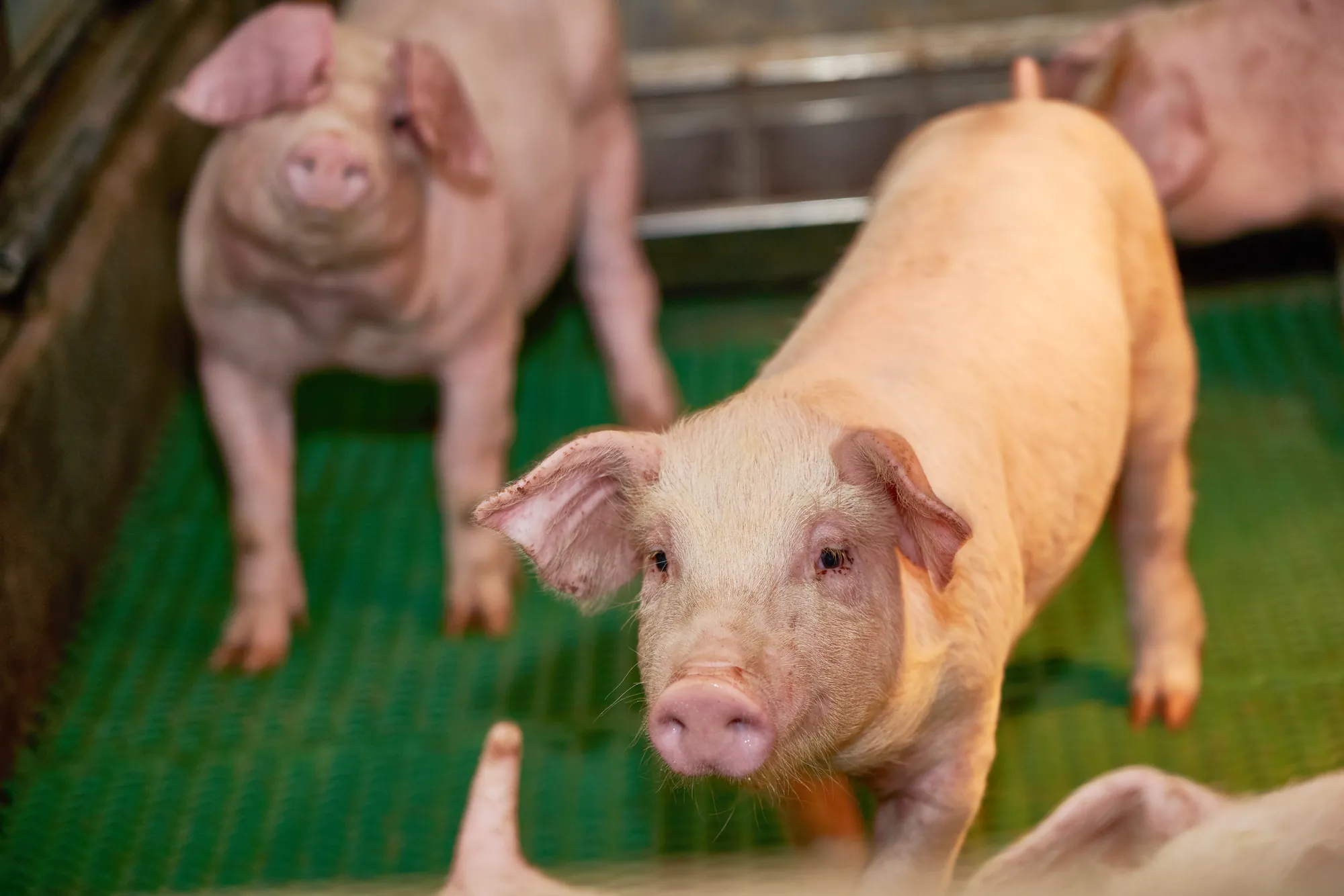
豬在台灣不僅是重要的農畜產業,也深植於飲食文化。從各式料理到宗教祭祀,豬扮演著多重角色。
◤文.圖/看見台灣基金會編輯群
在
華人地區,一隻豬的食用部位相當多元,如豬頭皮、嘴邊肉、豬肝等,連外國人避之唯恐不及的大小腸,都能成為高檔佳餚。
台灣國產豬肉的自給率超過9成,養豬業的產值向來是畜牧業中最高的,但隨著台灣飲食習慣變化,雞比豬受歡迎,養豬數量愈來愈少。
在文化範疇裡,豬則有著重要地位。「家」這個字中的「豕」是象形字,古人認為,家庭中要有豬,無豬就不成「家」了。
然而在社會上,豬的意涵卻被「汙名化」,用來罵人胖、好吃懶做等,奇特的是,西方也有相似的意涵。
民俗文化方面,客家地區及三峽還保有神豬競賽活動,目的為獻給神明,神豬要來參賽,500公斤起跳。2012年三峽祖師廟祭典,甚至出現1061公斤的重量級;但這有人道疑慮,英國《每日郵報》曾為文批評。
▋台灣黑豬肉質鮮甜不膩口
台灣常見豬種可略分為本土與西洋豬種,主要的肉豬來源為外國的藍瑞斯、約克夏、杜洛克混種之「LYD豬」。然而,台灣本土豬種仍占有一席之地,常見之本土豬種可分為本土黑豬和台灣野豬。
本土黑豬以桃園豬、六堆黑豬為主。桃園豬俗稱台灣黑豬,於清代時自廣東引入,後因日本人改良,以致現在的桃園豬種血統較為複雜。
而六堆黑豬是早期先民自中國帶入的黑豬,經歷長期改良與保種,其成豬肉質鮮甜、油脂不膩、口感脆爽,已是屏東的代表性特產。
探索更多
日月老茶廠──從產量導向到尊重土地的轉型
日月老茶廠曾見證紅茶外銷的輝煌與沉寂,2003年毅然啟動有機轉型,以自然農法修護土地,將紅玉紅茶的薄荷肉桂香氣,轉化為深度飲食體驗與永續生活的文化基地。
跟著《臺灣漫遊錄》吃美食:麻薏──苦中回甘,台中人的綠色鄉愁
一碗翠綠微苦、尾韻回甘的麻薏湯,是許多台中人夏季熟悉的家常滋味。這道以黃麻嫩葉製作的地方料理,不僅承載農村惜物的生活智慧,也逐漸成為台中飲食文化的重要記憶。近年來,隨著楊双子小說《臺灣漫遊錄》掀起熱潮,麻薏這項台中特有的風土滋味,也再次走入更多人的視野。
新化生活故事博物館──嘗一口水果餅,感受昔日風情
在台南新化老街的叫賣聲中,「水果餅」(昔稱水餅)不僅是地瓜與柑橘交織的在地滋味,更承載了「八保七廟」信仰與添丁謝神的深厚人情。這道以「新化五寶」地瓜為核心的點心,正透過地方創生轉型為「生活博物館」的靈魂。