
'%20fill='%23a9976d'/%3e%3cpath%20id='Path_251'%20data-name='Path%20251'%20d='M8,35a1,1,0,0,1,1-1H23a1,1,0,0,1,0,2H9A1,1,0,0,1,8,35Z'%20transform='translate(-8%20-22)'%20fill='%23a9976d'/%3e%3cpath%20id='Path_252'%20data-name='Path%20252'%20d='M9,22a1,1,0,0,0,0,2h8a1,1,0,0,0,0-2Z'%20transform='translate(-8%20-16)'%20fill='%23a9976d'/%3e%3c/svg%3e)
'%20fill='%23a9976d'/%3e%3c/g%3e%3c/svg%3e)
柿子─連泰國皇室也被圈粉
地方探索
主題探索
北部
文化美食
分享
'%3e%3cg%20id='Ellipse_27'%20data-name='Ellipse%2027'%20transform='translate(813%20250)'%20fill='none'%20stroke='%23ccac89'%20stroke-width='1'%3e%3ccircle%20cx='16'%20cy='16'%20r='16'%20stroke='none'/%3e%3ccircle%20cx='16'%20cy='16'%20r='15.5'%20fill='none'/%3e%3c/g%3e%3cg%20id='facebook'%20transform='translate(824.105%20258.296)'%3e%3cpath%20id='Path_243'%20data-name='Path%20243'%20d='M8.894.111V2.556H7.441a1.361,1.361,0,0,0-1.074.333,1.534,1.534,0,0,0-.278,1v1.75H8.8L8.441,8.38H6.089v7.028H3.255V8.38H.894V5.639H3.255V3.62A3.582,3.582,0,0,1,4.218.949,3.5,3.5,0,0,1,6.783,0,15.317,15.317,0,0,1,8.894.111Z'%20transform='translate(0%200)'%20fill='%23ccac89'/%3e%3c/g%3e%3c/g%3e%3c/svg%3e)

'%3e%3cg%20id='Ellipse_29'%20data-name='Ellipse%2029'%20transform='translate(901%20250)'%20fill='none'%20stroke='%23ccac89'%20stroke-width='1'%3e%3ccircle%20cx='16'%20cy='16'%20r='16'%20stroke='none'/%3e%3ccircle%20cx='16'%20cy='16'%20r='15.5'%20fill='none'/%3e%3c/g%3e%3cg%20id='link-45deg'%20transform='translate(902.607%20253.105)'%3e%3cg%20id='Group_479'%20data-name='Group%20479'%20transform='translate(7.393%205.896)'%3e%3cpath%20id='Path_241'%20data-name='Path%20241'%20d='M10.246,17.821,8.507,19.56a3.8,3.8,0,0,0,5.378,5.378L16.2,22.62a3.8,3.8,0,0,0-1.05-6.12l-.743.743a1.27,1.27,0,0,0-.2.252,2.535,2.535,0,0,1,1.091,4.23L12.99,24.042A2.536,2.536,0,0,1,9.4,20.455l1.005-1a5.093,5.093,0,0,1-.162-1.631Z'%20transform='translate(-7.393%20-12.02)'%20fill='%23ccac89'/%3e%3cpath%20id='Path_242'%20data-name='Path%20242'%20d='M18.236,9.327a3.8,3.8,0,0,0,1.05,6.12l.982-.984a2.535,2.535,0,0,1-1.136-4.241L21.448,7.9a2.536,2.536,0,1,1,3.587,3.587l-1.005,1a5.1,5.1,0,0,1,.162,1.631l1.739-1.739A3.8,3.8,0,1,0,20.553,7.01Z'%20transform='translate(-13.011%20-5.896)'%20fill='%23ccac89'/%3e%3c/g%3e%3c/g%3e%3c/g%3e%3c/svg%3e)
台灣小學二年級國語課本《小鎮的柿餅節》,形容秋天來了,新竹新埔小鎮滿是柿餅的香氣,還有前來小旅行觀光客的鼎沸人聲。
◤文.圖/看見台灣基金會編輯群
「
秋
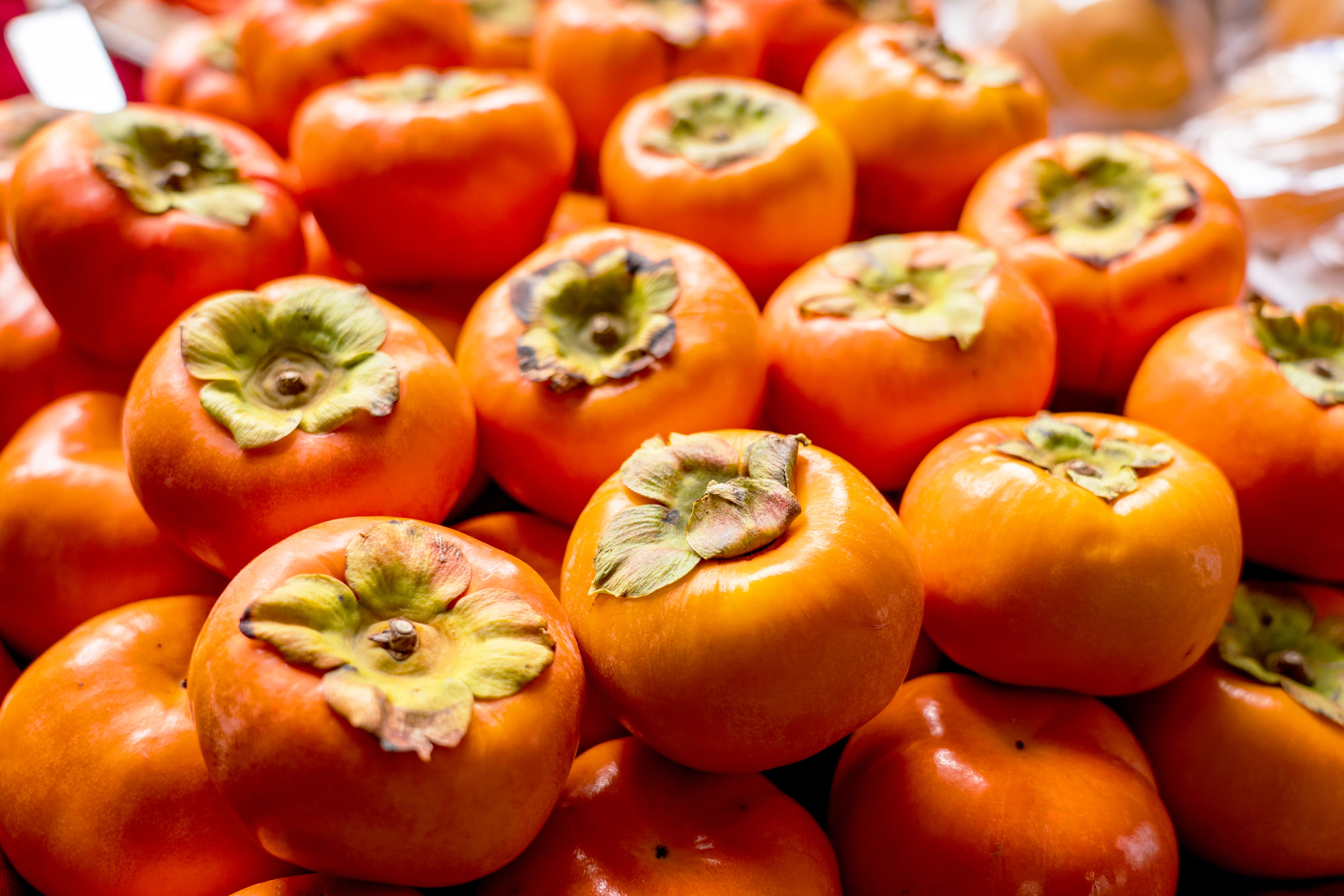
分時節,柿子紅了」已經是全台小學生最熟悉的台灣在地風情,幾乎每個小學生都曾經在每年9到12月柿子成熟盛產的季節「跟著課本去旅行」,造訪柿園。
1685年所編撰的《台灣府志》已有柿子在台灣栽種的紀錄;甜柿則於1974年自日本引進,經鑽研改良後甜柿不需脫澀即可食用,從而使栽培面積逐漸擴大。
根據農委會統計,台中東勢、嘉義番路、苗栗公館、台東卑南及新竹北埔及新埔等,是台灣柿子的主要產地。其中,新竹北埔因為有得天獨厚的丘陵地形,乾旱、溼度低,適合曬柿餅,台灣8成以上的柿餅產量集中於此,在陽光穿越曬柿子的棚架下拍照,成為秋天絕佳的景致。
▋年節吉祥水果,「柿柿如意」好運到
台灣的柿子分為「澀柿」及「甜柿」二類,澀柿果形大而端正,須經脫澀處理,口感爽脆故稱為脆柿,多加工成柿餅。
甜柿則不需要人工脫澀,在樹上熟了就可以吃。台中和平區海拔800~1000公尺的摩天嶺,是全台最早開始種植甜柿的地區,因為海拔較高、日夜溫差大,甜柿更容易累積糖分,口感也更清脆,連泰國皇室都指名進口這裡的甜柿。
台灣甜柿的主要品種有:富有、次郎、花御所。富有果肉細緻多汁又甜美;次郎質地細緻但口感扎實,果汁較少但甜度較高;花御所果肉細密多汁但栽培不易,產量少。
三種甜柿各有忠實鐵粉。由於產季鄰近農曆春節,甜柿又有「事事如意」的諧音,經常作為年節待客之應景果品。
探索更多
麻糬─中國?日本?客家?身世成謎
麻糬是由糯米製成的小甜食,流行於台灣、日本、韓國、大陸華南地區,名稱各異。台灣常見的麻糬,具體反映多元文化對台灣飲食的影響。
小麥─第二大糧食穀物,自給率千分之三
在只見稻田、幾乎見不到小麥田的台灣,麵粉卻是台灣民眾穀物糧食的第二名,因此麵粉原料小麥超過9成必須進口。根據2023年農業部統計,國產小麥年產量只有區區4000公噸,占全年用量約千分之三。
刈包─虎咬豬諧音「福咬住」
問:如何向台灣人介紹漢堡?答:「美國的刈包。」問:如何向美國人形容刈包?答:「台灣的漢堡。」