


◤Text and Images / iSee Taiwan Foundation Editorial Team
In earlier times, sweet potatoes were widely grown mainly for their tuberous roots, and the stems and leaves were treated as a by-product, fed to household pigs and other livestock, which is how they earned the nickname "pig vegetable." But as eating habits changed and market demand grew, sweet potato leaves were gradually reappraised, moving from a rural by-product to an edible vegetable and becoming a concrete example of putting resources to new use. The shift reflects not only an adjustment in how farm crops are used but also a reassessment of an ingredient's value within Taiwanese food culture.
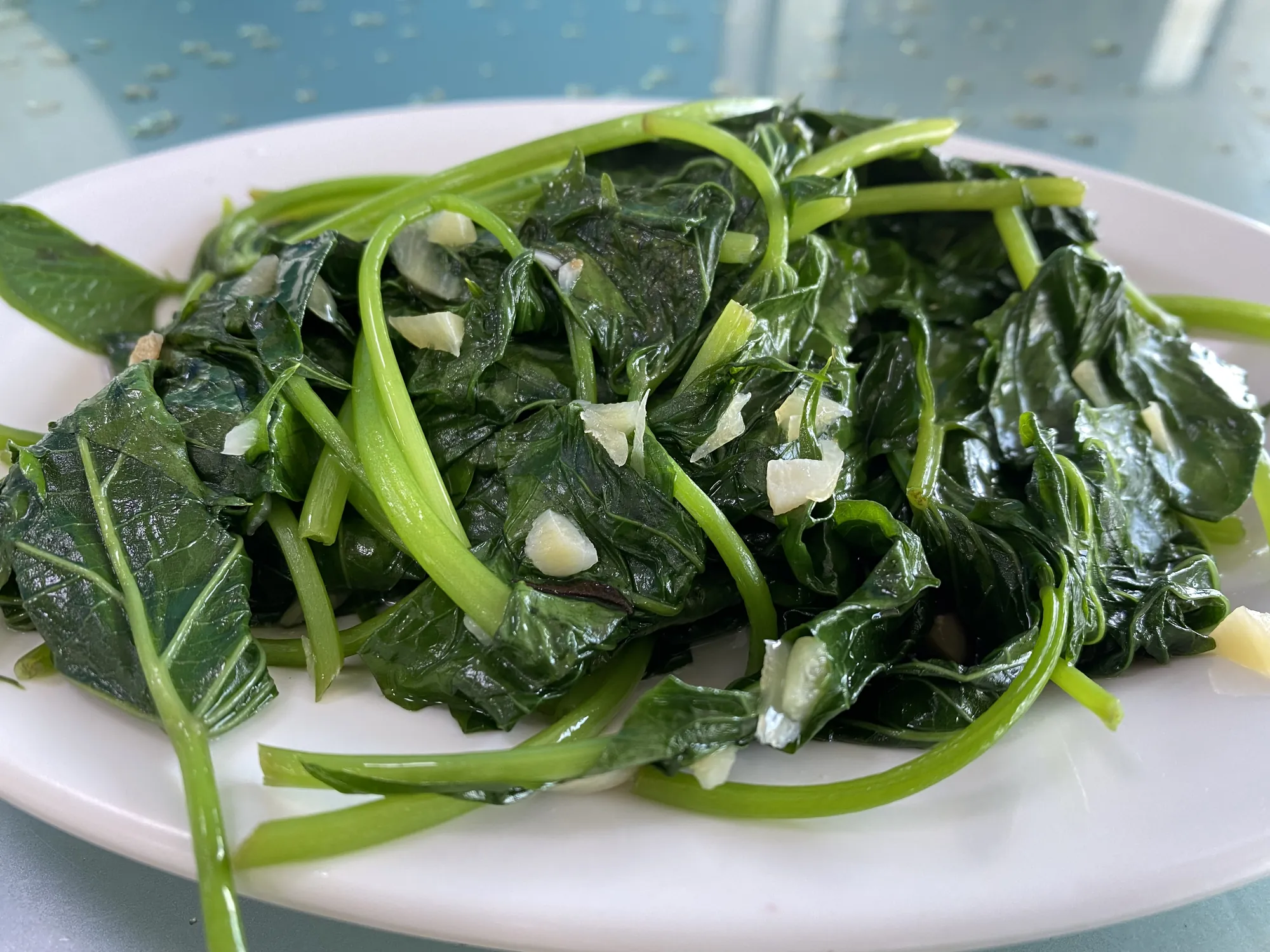
Sweet potato leaves are nutrient-rich, high in vitamins A and C, dietary fiber, and a range of phytochemicals, and are regarded as a quality vegetable for antioxidant benefits, blood sugar control, and chronic disease prevention, which has gradually raised their profile. Being easy to find and affordable, they appear widely in home cooking and at eateries. Whether quickly stir-fried over high heat with garlic to bring out the fragrance of the oil and the greens' own flavor, or blanched and simply dressed with soy sauce and minced garlic, they show a tender texture and a natural sweetness. In traditional cooking, they are often stir-fried with dried small fish and fermented black beans for a layered, savory saltiness; some households add shredded ginger or rice wine for a different note. In recent years, as eating has turned toward high-fiber, low-calorie fare, the ways of cooking sweet potato leaves have grown more varied-beyond a stir-fried side dish, they now often appear on blanched-vegetable platters and even in clear soups, congees, and salads.
Leaf-Vegetable Sweet Potato and a Modern Dietary Shift
The sweet potato leaves on the market today come from improved varieties-mostly "vegetable sweet potatoes" bred specifically for their edible leaves, distinct from the varieties grown chiefly for tuberous roots. These leaf-vegetable types have been improved for leaf texture, yield, and repeat harvesting; cultivars such as Tai Nong 71 and Taoyuan 2 produce tender leaves that can be eaten without peeling the stalk and are better suited to mechanical harvesting and long-term supply. The development of such varieties has officially transformed the sweet potato leaf from a by-product into a component of agricultural production.
As healthy-eating ideas have spread, sweet potato leaves have come to be seen as an important vegetable option, and nutritionists and health experts often list them as a high-value-for-money green. However, because their potassium content is relatively high, people with impaired kidney function who need to limit potassium are still advised to eat them in moderation.
From the pigsty to the table, the sweet potato leaf's change of role shows not only a rediscovery of an ingredient's worth but also how Taiwanese food culture adjusts and carries on through changing times.